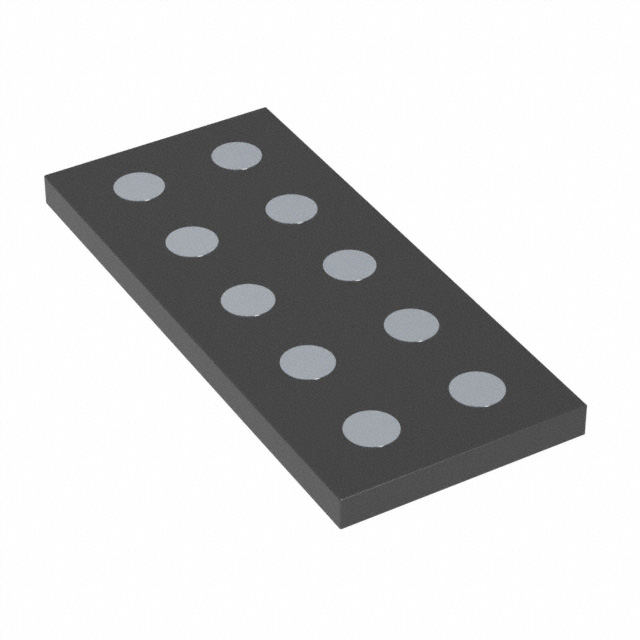
CSD87501L vs MCM3400A-TP MOSFET Arrays: A Detailed Comparison for Hardware Design
Quick verdict
For high-current, low-voltage switching applications requiring minimal conduction losses and robust thermal handling, the CSD87501L is the better choice due to its lower R_DS(on) and higher current rating. Conversely, for compact, moderate-current designs operating at 30 V with a small PCB footprint and higher switching frequency, the MCM3400A-TP fits better, despite its higher on-resistance and lower current capacity.
Spec comparison table
| Spec | CSD87501L | MCM3400A-TP | Notes |
|---|---|---|---|
| Configuration | 2 N-Channel (Dual) Common Drain | 2 N-Channel (Dual) | Both dual N-channel; CSD87501L has common drain which may affect circuit topology. |
| Continuous Source Current (min) | 14 A | N/A | CSD87501L supports significantly higher continuous current (14 A vs 5 A drain current). |
| Continuous Drain Current (max) | N/A | 5 A | MCM3400A-TP limited to 5 A max drain current, less suitable for high current loads. |
| Continuous Drain Current (typ) | 7 A (typ source current) | 5 A | CSD87501L typical current higher (7 A vs 5 A). |
| Pulsed Source/Drain Current (min/max) | 72 A (min) | 3 A (min) / 20 A (max) | CSD87501L has a much higher pulsed capability (72 A vs 20 A max). |
| Drain-Source Voltage (max) | Not specified | 30 V | MCM3400A-TP voltage rating is 30 V; CSD87501L rating not listed, assume similar or higher. |
| Drain-Source Breakdown Voltage (min) | N/A | 30 V | MCM3400A-TP guaranteed for 30 V. |
| On-Resistance R_DS(on) (typ) | 7.8 mΩ | 38 mΩ | CSD87501L on-resistance is ~5x lower, reducing conduction losses significantly. |
| On-Resistance R_DS(on) (max) | 9.3 mΩ | 45 mΩ | Max R_DS(on) also much better on CSD87501L. |
| Gate Threshold Voltage (typ) | 1.8 V | 0.9 V | MCM3400A-TP has lower V_TH, easier to drive at low gate voltages. |
| Gate Threshold Voltage (min/max) | 1.3 V / 2.3 V | 0.7 V / 1.5 V | MCM3400A-TP has wider and lower threshold voltage range. |
| Gate Charge Q_g (typ) | 10 nC | Not specified | CSD87501L gate charge known, moderate level; MCM3400A-TP data missing. |
| Gate-to-Drain Charge Q_gd (typ/min) | 6.0 nC | Not specified | CSD87501L has moderate Miller charge, affecting switching losses. |
| Input Capacitance C_iss (typ/max) | 1620 pF / 2110 pF | 1155 pF @ 15 V | MCM3400A-TP has lower input capacitance, which favors higher switching frequency. |
| Output Capacitance C_oss (typ) | 246 pF | Not specified | CSD87501L output capacitance given; MCM3400A-TP data missing. |
| Reverse Transfer Capacitance C_rss (typ/min) | 198 pF / 152 pF | Not specified | CSD87501L has known reverse transfer capacitance, important for switching behavior. |
| Rise Time (typ) | 260 ns (15V to 10V) | Not specified | CSD87501L switching times documented; MCM3400A-TP not specified. |
| Fall Time (typ) | 712 ns | Not specified | CSD87501L slower fall time could affect high-frequency switching efficiency. |
| Turn-On Delay (typ) | 164 ns | Not specified | CSD87501L delay time known; MCM3400A-TP not given. |
| Gate-to-Source Voltage (max) | ±20 V | +12 V | CSD87501L supports wider gate drive voltage range, more robust against voltage spikes. |
| Gate-to-Source Leakage Current (max) | 10 µA | 100 nA | MCM3400A-TP has far lower leakage, beneficial for low-power or high-impedance circuits. |
| Gate ESD Protection Voltage (typ) | 4.5 V | Not specified | CSD87501L has specified ESD rating, MCM3400A-TP does not. |
| Thermal Resistance Junction to Ambient | 135 °C/W | 89 °C/W | MCM3400A-TP offers better thermal dissipation, implying easier thermal management. |
| Power Dissipation (typ/max) | 2.5 W | 1.4 W | CSD87501L can dissipate nearly twice the power, important for high current/thermal designs. |
| Operating Temperature Range | -55 °C to 150 °C | -55 °C to 150 °C | Both rated for automotive-grade temperature range. |
| Storage Temperature Range | -55 °C to 150 °C | -55 °C to 150 °C | Equivalent storage ratings. |
| Package Type | PICOSTAR 10-pin (YJG) | DFN2020-6L (6-pin) | Different packages and pin counts affect layout and footprint compatibility. |
| Package Dimensions (L x W x H) | 3.42 x 1.52 x 1.62 mm | 2.0 x 2.0 x (not specified) mm | MCM3400A-TP smaller footprint but thicker/height unknown. |
| Mounting Type | Surface mount | Surface mount | Both SMT but different footprints. |
| Switching Frequency (typ) | 7 A (typ current) (not freq) | 1 MHz | MCM3400A-TP supports higher switching frequency (~1 MHz) vs no explicit freq for CSD87501L. |
| Human Body Model ESD Rating | 2 kV | Not specified | CSD87501L better documented for ESD robustness. |
| Series Gate Resistance (typ/min) | 450 Ω / 300 Ω | 1.7 Ω (min) | MCM3400A-TP has much lower gate resistance, enabling faster switching. |
Design trade-offs
The CSD87501L is optimized for high current, low R_DS(on) operation, which directly translates to lower conduction losses and better efficiency in power stages running up to 14 A continuous source current. Its on-resistance of around 7.8 mΩ typ is significantly lower than the MCM3400A-TP’s 38 mΩ typ, making it a clear choice for designs where conduction losses dominate. However, the trade-off includes higher gate charge (10 nC typical), a high series gate resistance (~450 Ω typical), and relatively slow switching times (260 ns rise, 712 ns fall), which means switching losses and switching speed need careful consideration, especially at high frequencies.
The MCM3400A-TP, by contrast, offers a smaller and thinner DFN2020 package with a compact 6-pin footprint and superior thermal resistance (89 °C/W vs 135 °C/W), which eases thermal management on small PCBs. It supports switching frequencies up to 1 MHz, making it more suitable for high-frequency switching applications, albeit at lower continuous currents (5 A max) and with significantly higher conduction losses due to the 38 mΩ typical R_DS(on). Its low series gate resistance (~1.7 Ω min) enables faster gate drive and reduced switching losses, counterbalancing its higher conduction losses in some switching regimes.
Gate drive requirements also differ. The CSD87501L supports a wider gate voltage range (±20 V max) and has higher gate leakage (~10 µA max), which may require more robust gate drivers and careful gate voltage regulation to avoid overstress. Meanwhile, the MCM3400A-TP’s gate threshold is lower (0.9 V typ vs 1.8 V typ), and gate leakage is significantly lower (100 nA max), making it easier to drive with low-voltage logic levels and less sensitive to leakage-induced errors in low-power contexts.
Layout implications are non-trivial. The CSD87501L’s 10-pin PICOSTAR package is longer and narrower (3.42 x 1.52 mm) compared to the 2.0 x 2.0 mm DFN of the MCM3400A-TP. The CSD