Comparison: Infineon 6ED003L02F2XUMA1 vs STMicroelectronics STGAP2SICSNTR
Quick verdict
For multi-phase inverting half-bridge gate driving, especially in industrial motor control where six channels and high bootstrap voltage are required, the Infineon 6ED003L02F2XUMA1 is the clear choice. For isolated single-channel gate driving with very high isolation voltage and peak output current up to 4 A, especially in applications requiring galvanic isolation and capacitive coupling, the STMicroelectronics STGAP2SICSNTR is more suitable.
Spec comparison table
| Spec | 6ED003L02F2XUMA1 | STGAP2SICSNTR | Notes |
|---|---|---|---|
| Channel type | 3-Phase (6 drivers) | 1 Channel | Infineon supports multi-phase drives; ST is single channel, limiting multi-phase use. |
| Current peak output source/sink | Not specified in source data | 4 A @ 25 °C | ST supports high peak current, suitable for high gate charge MOSFETs/IGBTs; Infineon unknown. |
| Driven configuration | Half-Bridge | Not specified in source data | Infineon explicitly half-bridge; ST likely single low/high side driver, but not specified. |
| Gate type compatibility | IGBT, MOSFET (N-Channel, P-Channel) | Not specified in source data | Infineon supports both IGBTs and MOSFETs; ST datasheet does not specify explicitly. |
| High side voltage max bootstrap | 620 V | Not applicable (isolated driver) | Infineon bootstrap voltage supports high voltage half-bridge topologies; ST is isolated driver. |
| Input type | Inverting | Not specified in source data | Infineon input is inverting; ST input polarity not explicitly stated. |
| Logic voltage (V_IL, V_IH) | 1.1 V (Low), 1.7 V (High) | 3.1 V to 5.5 V operating range | ST supports standard TTL/CMOS levels with hysteresis; Infineon logic thresholds lower. |
| Mounting type | Surface Mount | Surface Mount | Both SMT; package styles differ (see below). |
| Number of drivers | 6 | 1 | Infineon integrates six drivers; ST is single channel only. |
| Operating temperature range (TJ) | -40°C to 125°C | -40°C to 125°C | Both have same operating junction temperature range. |
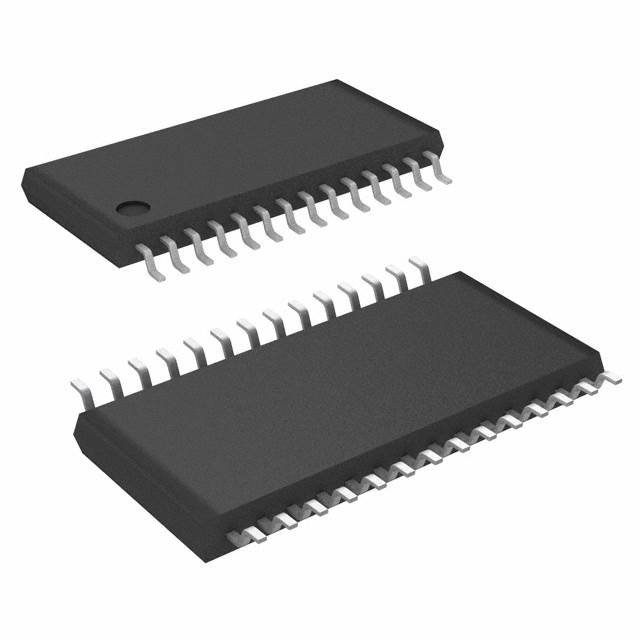
| Package case | 28-TSSOP (0.173”, 4.40mm width) | 8-SOIC (0.154”, 3.90mm width) | ST package smaller footprint; Infineon package larger due to more channels. |
| Rise/fall time (typ) | 60 ns rise, 26 ns fall | 30 ns rise, 30 ns fall | ST has faster and more symmetric rise/fall times, beneficial for switching speed control. |
| Voltage supply (V) | 13 V to 17.5 V | 16.4 V to 26 V | ST supports wider and higher supply voltage range; Infineon narrower and lower. |
| Isolation voltage | Not specified in source data | 4000 Vrms (typ), 4800 VPEAK | ST features galvanic isolation with high isolation rating; Infineon has none specified. |
| Creepage distance | Not specified in source data | 4 mm minimum | ST designed for safety isolation; Infineon does not specify creepage. |
| Common mode transient immunity | Not specified in source data | 100 V/ns minimum | ST specified for high dv/dt immunity, important for isolated drivers in noisy environments. |
| Propagation delay (typ/max) | Not specified in source data | 75 ns typical, 90 ns max | ST delay well characterized; Infineon data not specified. |
| Switching frequency max (typ) | Not specified in source data | 200 kHz max, 150 kHz typical | ST specified switching frequency suitable for most motor drives; Infineon not specified. |
| Thermal resistance junction-to-ambient | Not specified in source data | 123 °C/W typical | ST thermal resistance known; Infineon not specified, but larger package may dissipate better. |
| Junction temperature max (TJ) | 125°C | 150°C max (storage), 125°C operating | Both rated for typical industrial temperatures. |
| ESD rating (HBM) | Not specified in source data | 2 kV max | ST specifies ESD rating; Infineon not specified. |
| Power consumption quiescent/standby | Not specified in source data | IQHU typical 1.8 mA | ST datasheet quantifies quiescent current; Infineon does not. |
| Voltage output supply range | 13 V to 17.5 V | 16.4 V to 26 V | ST supports higher output voltages, enabling higher gate voltages for MOSFETs/IGBTs. |
| Safe state definition | Not specified in source data | GOFF=ON, GON=High Z, CLAMP=ON (variant) | ST defines safe states for fault conditions; Infineon not specified. |
| Wake-up time typical | Not specified in source data | 20 µs typical | ST wake-up time relevant for low power or startup sequencing; Infineon no data. |
| Package height (typ) | Not specified in source data | 0.5 mm typical | ST low-profile package; Infineon package height not specified. |
Design trade-offs
The Infineon 6ED003L02F2XUMA1 and STMicroelectronics STGAP2SICSNTR serve fundamentally different architectural roles. The Infineon device is a multi-channel half-bridge driver chip designed for direct driving of three-phase inverter topologies, with dedicated high- and low-side drivers supporting bootstrap voltages up to 620 V. This makes it suitable for typical industrial motor drives with IGBTs or MOSFETs, where multiple channels reduce component count significantly.
In contrast, the STGAP2SICSNTR is a single-channel isolated gate driver utilizing capacitive coupling technology, offering galvanic isolation up to 4000 Vrms and very high transient immunity (100 V/ns). This isolation is critical in safety-critical or high-voltage applications where ground potential differences or noise coupling must be minimized. The ST device’s 4 A peak output current capability is clearly specified, allowing it to drive high gate charge devices aggressively, whereas the Infineon’s output current is not specified in source data, leaving uncertainty in high gate charge scenarios.
Thermal considerations also differ: the Infineon integrates six drivers in a 28-TSSOP package, which is physically larger and likely better at heat dissipation across multiple channels; the ST device is a single-channel 8-SOIC with a thermal resistance of 123 °C/W, which is relatively high and could limit continuous high-current operation if not managed carefully. The ST device supports a higher supply voltage range (16.4 V to 26 V) compared to Infineon’s 13 V to 17.5 V, offering more flexibility in driving gate voltages but also requiring compatible power rails.
From a board layout perspective, the Infineon’s non-isolated nature demands careful attention to bootstrap capacitor placement and high-side node routing to minimize EMI and voltage spikes. The ST device’s internal capacitive isolation simplifies isolation barrier design but imposes creepage and clearance constraints (minimum 4 mm) that can impact PCB dimensions and cost. The ST driver’s faster rise/fall times (30 ns versus 60/26 ns for Infineon) allow for tighter switching control but also increase the risk of voltage overshoot and EMI unless gate resistors or snubbers are properly selected.
Firmware design must also account for input logic differences. The Infineon driver uses inverting inputs with lower logic thresholds (1.1 V low, 1.7 V high), suitable for direct interfacing with certain microcontrollers or FPGA outputs. The ST device expects standard TTL/CMOS inputs with hysteresis (3.3 to 5 V), which may simplify interface design but requires compatible logic level translation.
Finally, cost considerations favor the Infineon device for multi-phase drives due to integrated six drivers, reducing component count and BOM complexity. The ST device’s isolation and single-channel nature make it more expensive per channel but essential in designs where isolation is mandatory.
Use-case fit
Choose 6ED003L02F2XUMA1 when…
- Designing a three-phase inverter or motor drive requiring six gate drivers integrated into a single IC.
- Operating with IGBTs or MOSFETs where bootstrap high-side voltages up to 620 V are needed.
- Logic inputs are inverting and compatible with lower voltage thresholds (1.1 V low, 1.7 V