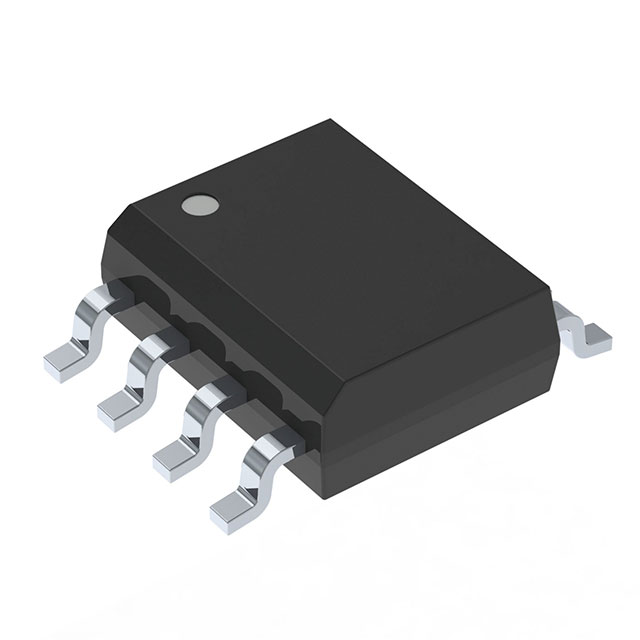
Comparison: Infineon 2EDN7533RXTMA1 vs 1EDI40I12AFXUMA1 Gate Drivers
Quick verdict
For low-side MOSFET or GaN FET drive in cost-sensitive, compact applications requiring fast switching and strong drive capability, the 2EDN7533RXTMA1 is the better choice due to its 5A peak source/sink current, dual-channel output, and low propagation delays. In contrast, when galvanic isolation and higher voltage output supply are mandatory—such as in isolated gate driver stages or systems with challenging ground referencing—the 1EDI40I12AFXUMA1 magnetic-coupling driver is preferable despite its slower switching times and single channel.
Spec comparison table
| Spec | 2EDN7533RXTMA1 | 1EDI40I12AFXUMA1 | Notes |
|---|---|---|---|
| Channel type | Independent (2 channels) | Single channel | 2EDN7533RXTMA1 offers dual outputs, useful for multi-FET or half-bridge configurations. |
| Current peak output (source/sink) | 5A / 5A | Not specified | 2EDN7533RXTMA1 provides defined strong drive current; 1EDI40I12AFXUMA1 unspecified, likely lower. |
| Driven configuration | Low-Side | Not explicitly stated | 2EDN7533RXTMA1 explicitly for low-side drive; 1EDI40I12AFXUMA1 used for isolated drive. |
| Gate type | GaN FET, MOSFET (N-Channel) | Not specified | 2EDN7533RXTMA1 optimized for modern N-channel devices. |
| High-side max bootstrap voltage | 20 V | Not applicable | Relevant only for bootstrap drivers; 2EDN7533RXTMA1 supports bootstrap node voltages up to 20V. |
| Input logic type | Inverting | Not specified | 2EDN7533RXTMA1 has defined inverting input; 1EDI40I12AFXUMA1 input polarity requires checking. |
| Logic voltage thresholds (VIL/VIH) | 1.4 V / 1.9 V | Not specified | 2EDN7533RXTMA1 logic thresholds suitable for 3.3V/5V CMOS inputs; 1EDI40I12AFXUMA1 unknown. |
| Mounting type | Surface Mount | Surface Mount | Both standard SMT packages. |
| Number of drivers | 2 | 1 | 2EDN7533RXTMA1 offers two independent drivers, doubling flexibility. |
| Operating temperature range | -40°C to 150°C (TJ) | -40°C to 150°C (TJ) | Equivalent thermal range for typical industrial applications. |
| Package case | 8-TSSOP, 8-MSOP (3.00 mm width) | 8-SOIC (3.90 mm width) | 2EDN7533RXTMA1 smaller footprint, beneficial for dense layouts. |
| Rise/fall time (typical) | 8.6 ns / 6 ns | 10 ns / 9 ns | 2EDN7533RXTMA1 features faster switching edges, reducing switching losses and EMI. |
| Supply voltage range | 4.5 V to 20 V | 13 V to 35 V | 2EDN7533RXTMA1 supports lower supply voltages; 1EDI40I12AFXUMA1 designed for higher voltages, suitable for isolated supplies. |
| Technology | Semiconductor-based gate driver IC | Magnetic coupling isolation | Magnetic coupling provides galvanic isolation but adds propagation delay and design complexity. |
Design trade-offs
The 2EDN7533RXTMA1 is a classic low-side driver IC optimized for fast, low-voltage MOSFET and GaN FET gate driving. Its 5A peak current capability ensures rapid charging and discharging of gate capacitance, directly translating into reduced switching losses and lower EMI in high-frequency switching applications. The dual independent channels allow compact implementation of half-bridge or dual-FET configurations without external driver ICs. Its small PG-TSSOP-8 package (3.0 mm width) facilitates tight PCB layouts, critical in high-density designs.
Thermally, the 2EDN7533RXTMA1’s high peak current means significant transient power dissipation during switching events, so careful attention to copper area and thermal vias in the PCB is necessary. The 4.5–20V supply range offers flexibility for logic-level compatibility and bootstrap biasing in half-bridge topologies, but the max bootstrap voltage limit of 20 V restricts its use in some higher voltage half-bridge configurations.
In contrast, the 1EDI40I12AFXUMA1 uses magnetic coupling to achieve galvanic isolation between input and output, a major advantage in applications requiring protection of low-voltage control logic from high-voltage power stages or noisy grounds. The trade-off is a reduced switching speed (typical rise/fall times of 10 ns and 9 ns) and a single channel, limiting it to simpler or isolated gate drive scenarios. The wider 8-SOIC package (3.9 mm width) reflects the internal transformer and isolation barrier, increasing PCB space and potentially cost.
The 1EDI40I12AFXUMA1’s supply voltage range of 13–35 V aligns with common isolated gate driver supplies, allowing direct drive of high-voltage MOSFETs or IGBTs without bootstrap circuits. However, the lack of specified output peak current makes it difficult to evaluate its capability for very fast gate charging; magnetic coupling drivers often have lower drive strength, increasing switching losses and thermal stress in high-frequency designs.
From a layout standpoint, the 2EDN7533RXTMA1 requires careful routing to minimize parasitic inductance for the fast gate drive pulses, whereas the 1EDI40I12AFXUMA1’s isolation relaxes ground referencing but demands attention to creepage and clearance distances on the PCB. Firmware complexity is minimal for both, but the inverted input logic of the 2EDN7533RXTMA1 requires signal polarity consideration.
Cost-wise, the 2EDN7533RXTMA1 is generally less expensive, given its simpler internal structure and smaller package, making it suitable for volume-sensitive consumer or industrial applications. The 1EDI40I12AFXUMA1’s isolation and magnetic coupling increase BOM cost and complexity but can be necessary for safety and EMI compliance.
Use-case fit
Choose 2EDN7533RXTMA1 when…
- Designing low-side drivers for N-channel MOSFETs or GaN FETs in DC-DC converters or motor drives where fast switching (sub-10 ns edges) reduces losses and EMI.
- Implementing half-bridge or dual-FET configurations requiring two independent gate drivers in a compact footprint.
- Power supply voltages are below 20 V and bootstrap circuits are used for high-side drive.
- Cost sensitivity and PCB space constraints prioritize a small PG-TSSOP-8 package.
- Input logic signals are available with standard CMOS levels and can accommodate an inverting input.
Choose 1EDI40I12AFXUMA1 when…
- Galvanic isolation between control and power stages is mandatory for safety or noise immunity, e.g., in isolated gate drivers for industrial inverters.
- The gate driver supply voltage is in the 13–35 V range, typical for isolated or high-voltage gate drive rails.
- Single-channel isolated gate drive suffices, such as for isolated low-side or high-side switches.
- System design requires simplified isolation without external transformers or optocouplers.
- PCB layout can accommodate larger 8-SOIC package and ensure proper creepage distances.
Drop-in compatibility
These two devices are not pin- or footprint-compatible. The 2EDN7533RXTMA1 comes in an 8-pin PG-TSSOP or MSOP package (3.00 mm width), while the 1EDI40I12AFXUMA1 is housed in an 8-pin SOIC package (3.90 mm width) with different internal architecture (magnetic coupling isolation). Pin assignments and electrical characteristics differ significantly, so substituting one for the other requires board redesign and firmware adjustments. No direct drop-in replacement is possible without hardware changes.
Alternatives to consider
- UCC37322 (Texas Instruments) – High-speed, dual low-side MOSFET driver with 4A source/sink capability, suitable for similar low-voltage gate drive applications with a proven track record.
- Si8233 (Silicon Labs) – Isolated gate driver IC with integrated digital isolator, offering galvanic isolation and high-side/low-side drive capability in a compact package.
- IR2110 (Infineon / International Rectifier) – Popular high- and low-side driver IC with bootstrap support for half-bridge configurations, widely used in industrial motor drives.