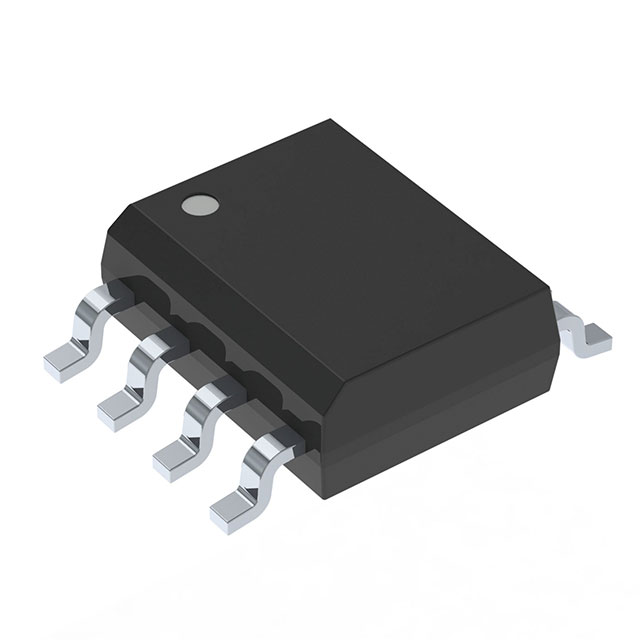
2EDN7524FXTMA1 vs A89506KESSR-J: Gate Driver IC Comparison
Quick verdict
For low-side single MOSFET gate drive applications requiring high peak drive current and fast switching, the Infineon 2EDN7524FXTMA1 outperforms due to its 5A peak source/sink capability and fast rise/fall times. Conversely, for full-bridge synchronous MOSFET configurations where integrated half-bridge control and multiple drivers are required, the Allegro A89506KESSR-J is the better fit, offering four drivers in a compact QFN package designed for full-bridge topologies.
Spec comparison table
| Spec | 2EDN7524FXTMA1 | A89506KESSR-J | Notes |
|---|---|---|---|
| Channel Type | Independent | Synchronous | Full-bridge synchronous channels on A89506KESSR-J reduce external logic complexity. |
| Peak Output Current (Source/Sink) | 5A / 5A | Not Specified | 2EDN7524FXTMA1 provides explicit 5A peak current, critical for fast switching and large MOSFET gates. |
| Programmable (Digikey Verified) | Not Verified | Not Verified | No clear advantage; neither claims programmability here. |
| Driven Configuration | Low-Side | Full-Bridge | 2EDN7524FXTMA1 is single low-side driver; A89506KESSR-J integrates full-bridge control. |
| Gate Type | MOSFET (N-Channel) | MOSFET (N-Channel) | Equivalent; both target N-Channel MOSFETs. |
| Input Type | Non-Inverting | Non-Inverting | Both accept non-inverting inputs; no difference. |
| Logic Voltage (V_IL, V_IH) | Not Specified | 0.8V (max V_IL), 2V (min V_IH) | Allegro’s defined logic thresholds aid predictable interface with 3.3V/5V logic. |
| Mounting Type | Surface Mount | Surface Mount | Both are SMT, standard for modern designs. |
| Number of Drivers | 2 | 4 | A89506KESSR-J supports 4 channels, enabling full-bridge or dual half-bridge configurations. |
| Operating Temperature Range | -40°C to 150°C (junction) | -40°C to 135°C (ambient) | Infineon’s higher TJ rating allows more thermal headroom in harsh environments. |
| Package Case | 8-SOIC (0.154”, 3.90mm wide) | 20-QFN-EP (4x4 mm) | QFN offers better thermal and electrical performance; SOIC easier for prototyping. |
| Rise/Fall Time (typical) | 5.3ns / 4.5ns | Not Specified | Infineon’s fast switching edges reduce switching losses and improve efficiency. |
| Supplier Device Package | PG-DSO-8-60 | 20-QFN-EP (4x4) | Package differences impact layout and thermal dissipation capabilities. |
| Voltage Supply Range | 4.5V to 20V | Not Specified | Infineon supports a wide supply range, increasing design flexibility. |
Design trade-offs
The 2EDN7524FXTMA1’s primary advantage lies in its high peak output current (5A source/sink) and fast rise/fall times (~5 ns), which enable rapid charging and discharging of MOSFET gates. This translates directly to lower switching losses, especially important in high-frequency or high-current low-side MOSFET drive applications. The independent dual-channel configuration supports driving two separate low-side MOSFETs, but it lacks integrated half-bridge or synchronous drive features, requiring external circuitry for more complex topologies.
In contrast, the A89506KESSR-J integrates a full-bridge driver with four synchronous drivers, simplifying gate drive requirements for half-bridge or full-bridge stages. This reduces external component count and gate driver logic complexity. However, the datasheet does not specify peak drive current or rise/fall times, which suggests it may be optimized for moderate switching speeds and currents rather than pushing MOSFETs at the edge of their switching capability. The defined logic input thresholds (0.8V max for low, 2V min for high) provide more predictable digital interface behavior, which is helpful when integrating with microcontrollers or FPGAs running at 3.3V or 5V levels.
Thermally, the 2EDN7524FXTMA1’s SOIC package is generally less thermally efficient than the Allegro’s 20-QFN-EP with exposed pad, which aids heat dissipation in compact layouts. However, the Infineon device’s wider junction temperature range (up to 150°C TJ) offers more tolerance for thermal stress, beneficial in automotive or industrial applications with high ambient temperatures. The Allegro’s 135°C TA rating is typical for commercial grade devices, suitable for most consumer or industrial uses but with less margin.
From a PCB layout standpoint, the Allegro’s QFN package with an exposed pad facilitates lower inductance gate drive loops and better ground return paths, which can improve switching performance and EMI. The SOIC package of the Infineon device is easier to hand solder and prototype but may require more careful layout to minimize parasitic inductances and capacitances.
Cost-wise, the simpler function and smaller pin count of the 2EDN7524FXTMA1 typically means lower unit cost, especially in volume, compared to the more complex full-bridge A89506KESSR-J. However, this can be offset by the need for additional gate driver ICs or external half-bridge logic when using the Infineon device in complex topologies.
Use-case fit
Choose 2EDN7524FXTMA1 when…
- Designing a low-side gate driver stage for discrete N-channel MOSFETs requiring high peak current (5A) to minimize switching losses.
- Operating in harsh environments needing junction temperature operation up to 150°C.
- Prototyping or low-volume production where SOIC package ease of soldering is advantageous.
- The application involves independent dual low-side MOSFET drive rather than integrated half-bridge control.
- Supply voltage flexibility from 4.5V to 20V is needed to accommodate diverse power rails.
Choose A89506KESSR-J when…
- Implementing a full-bridge or dual half-bridge MOSFET driver stage with integrated synchronous control.
- PCB space constraints favor a compact 4x4 mm QFN footprint with exposed pad for thermal management.
- Operating with 3.3V or 5V logic inputs benefits from clearly defined logic input thresholds (0.8V/2V).
- Simplifying gate driver logic by leveraging integrated four drivers reduces BOM and complexity.
- Thermal dissipation requirements favor package-level heat sinking via exposed pad and low parasitic inductance layout.
Drop-in compatibility
There is no indication that the 2EDN7524FXTMA1 and A89506KESSR-J are pin-compatible or footprint-compatible. The Infineon part comes in an 8-pin SOIC package, designed for dual independent low-side drive, whereas the Allegro device is a 20-pin QFN with integrated full-bridge functionality. Substituting one for the other would require significant PCB redesign, firmware changes to accommodate input/output logic differences, and potentially external components to replicate missing functions.
Alternatives to consider
- Texas Instruments UCC37322: High peak current dual low-side gate driver with fast switching, suitable alternative to 2EDN7524FXTMA1 in single/dual low-side applications.
- Infineon 1EDN8550: Integrated full-bridge driver offering synchronous MOSFET control, comparable to A89506KESSR-J but with detailed switching performance data.
- Analog Devices ADuM4223: Isolated dual MOSFET driver for applications requiring galvanic isolation and robust driving capability.