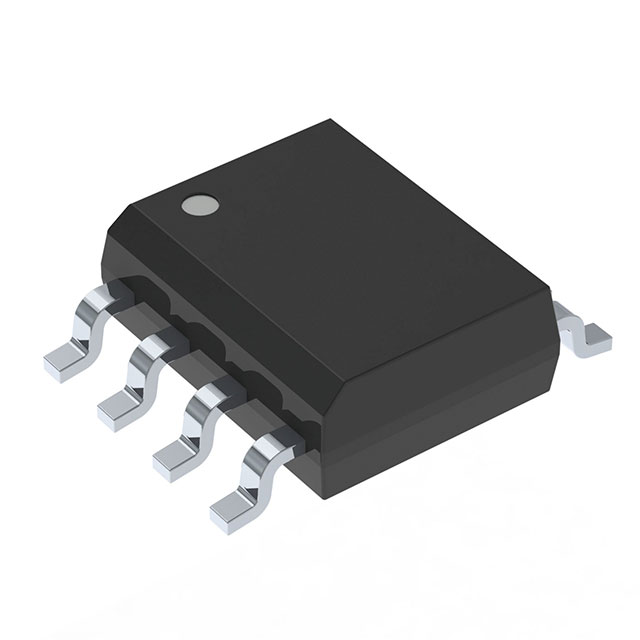
Comparing Infineon 2EDN7434RXTMA1 vs 2EDN8533RXTMA1 Low-Side Gate Drivers
Quick verdict
For low-side MOSFET or GaN FET gate driving where a non-inverting logic interface aligns with your control scheme, the 2EDN7434RXTMA1 is the straightforward choice, avoiding the need for signal inversion in firmware or gate drive logic. Conversely, if your design requires or prefers an inverting input stage—often to simplify dead-time control or integrate with existing inverted PWM signals—the 2EDN8533RXTMA1 is the better fit. Both deliver identical drive strength and switching speed, so the choice hinges on signal polarity compatibility.
Spec comparison table
| Spec | 2EDN7434RXTMA1 | 2EDN8533RXTMA1 | Notes |
|---|---|---|---|
| Channel type | Independent | Independent | Identical; no difference. |
| Peak output current (source/sink) | 5 A / 5 A | 5 A / 5 A | Equal drive strength; no advantage. |
| Programmable | Not Verified | Not Verified | No difference; neither documented as programmable. |
| Driven configuration | Low-Side | Low-Side | Both optimized for low-side drive; no difference. |
| Gate type | GaN FET, MOSFET (N-Channel) | GaN FET, MOSFET (N-Channel) | Supports same transistor types; no difference. |
| Max high-side bootstrap voltage | 20 V | 20 V | Equal voltage rating; no difference. |
| Input type | Non-Inverting | Inverting | Key difference: logic input polarity differs, impacting firmware and circuit design. |
| Logic voltage thresholds (V_IL, V_IH) | 1.4 V / 1.9 V | 1.4 V / 1.9 V | Identical thresholds; no difference. |
| Mounting type | Surface Mount | Surface Mount | Same mounting style; no difference. |
| Number of drivers | 2 | 2 | Same channel count; no difference. |
| Operating temperature range (TJ) | -40°C to 150°C | -40°C to 150°C | Equal thermal range; no difference. |
| Package / Case | PG-TSSOP-8 (8-TSSOP, 3.00mm) | PG-TSSOP-8 (8-TSSOP, 3.00mm) | Identical package; no difference. |
| Typical rise/fall time (t_r / t_f) | 8.6 ns / 6 ns | 8.6 ns / 6 ns | Same switching speed; no difference. |
| Supply voltage range | 4.5 V to 20 V | 4.5 V to 20 V | Same supply range; no difference. |
Design trade-offs
The primary distinguishing factor between the 2EDN7434RXTMA1 and the 2EDN8533RXTMA1 is the input logic polarity: the former is non-inverting, the latter inverting. This seemingly small detail has significant design implications. For example, if your controller outputs a PWM signal directly compatible with a non-inverting driver, the 2EDN7434RXTMA1 simplifies firmware and board-level logic, allowing a direct connection without additional signal inversion or logic gates. Conversely, if your architecture or dead-time insertion strategy requires an inverted gate drive signal, the 2EDN8533RXTMA1 avoids the need for external inverters or software inversion, reducing component count and potential latency.
Both devices share identical peak source and sink currents of 5 A, supporting fast switching of MOSFETs and GaN FETs in low-side configurations. The rise and fall times—8.6 ns and 6 ns respectively—indicate similar switching speed capability, which means neither offers an inherent advantage in switching losses or EMI due to driver speed. Thermal performance and operating temperature range (-40°C to 150°C junction) are also matched, so thermal management approaches remain unchanged between the two.
From a PCB layout perspective, the identical 8-pin TSSOP package and pinout imply minimal differences; however, care must be taken to ensure input signals align correctly with the driver’s logic polarity. Substituting one driver for the other without adjusting signal polarity will result in inverted gate drive timing, potentially causing shoot-through or inefficient switching.
Cost at volume is not provided here, but given their similar specifications and packaging, pricing differences will likely be minimal and driven more by supply chain factors than technical merit.
Use-case fit
Choose 2EDN7434RXTMA1 when…
- Your PWM controller outputs non-inverted gate drive signals and you want to avoid adding external signal inversion.
- The gate driver input is directly controlled by MCU or DSP GPIOs configured for active-high PWM signals.
- You aim to simplify firmware logic by matching driver input polarity with control signal polarity.
- Your design calls for low-side N-channel MOSFET or GaN FET switching with minimal gate driver complexity.
- You want to minimize BOM count by eliminating external inverters or additional gate drive logic.
Choose 2EDN8533RXTMA1 when…
- Your existing gate drive control signals are inverted or you want to implement dead-time control via inverted PWM outputs.
- The gate driver input must complement an inverting logic stage in your power stage or control architecture.
- Your PWM source inherently produces active-low control signals for the low-side switch.
- You want to avoid adding discrete logic inverters or software inversion overhead in firmware.
- Your system design involves complementary gate drive signals where the low-side driver input polarity must be inverted relative to the high-side.
Drop-in compatibility
Both the 2EDN7434RXTMA1 and 2EDN8533RXTMA1 share the same PG-TSSOP-8 package and appear to have identical pinouts, as suggested by the datasheets. This indicates they are footprint-compatible and likely pin-to-pin compatible. However, substituting one for the other without adjusting the input signal polarity will invert the gate drive output relative to the input PWM, which can cause malfunction or damage in the power stage. Therefore, while mechanically a drop-in replacement, electrically you must invert the input signal or modify firmware accordingly. No other changes to supply, layout, or gate drive components are expected.
Alternatives to consider
- Infineon 2EDN7417RXTMA1: Another low-side gate driver with slightly lower peak current (3 A), suitable for lower power MOSFETs and potentially lower-cost designs.
- Texas Instruments UCC37322: A dual non-inverting low-side driver with 3 A peak current, widely used and well-documented for MOSFET driving.
- ON Semiconductor NCP81074: Integrated dual low-side driver, with built-in dead-time control and protection features, for applications needing more integrated functionality.