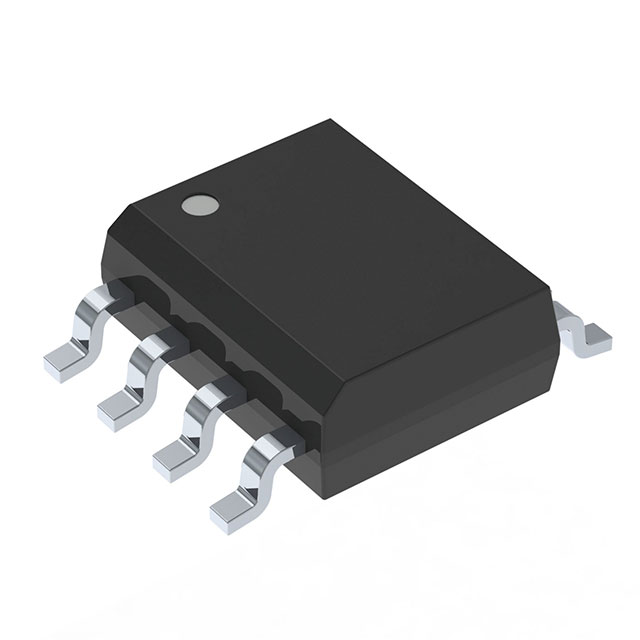
Component Comparison: 2EDN7434RXTMA1 vs 2EDN7533RXTMA1
Quick verdict
For low-side MOSFET or GaN FET gate drive with straightforward signal polarity, the 2EDN7434RXTMA1 is preferable due to its non-inverting input, simplifying control logic and firmware. Conversely, the 2EDN7533RXTMA1 excels when an inverted gate drive signal is required, avoiding external inverters and reducing BOM complexity in designs where active-low gating is standard or preferred.
Spec comparison table
| Spec | 2EDN7434RXTMA1 | 2EDN7533RXTMA1 | Notes |
|---|---|---|---|
| Channel Type | Independent | Independent | Equal — both support independent dual drivers. |
| Peak Output Current (Source/Sink) | 5A / 5A | 5A / 5A | Equal — both provide strong drive capability for fast switching. |
| Input Type | Non-Inverting | Inverting | Depends on control logic polarity — pick non-inverting for active-high signals, inverting for active-low. |
| Driven Configuration | Low-Side | Low-Side | Equal — both intended for low-side FET drive. |
| Gate Type | GaN FET, N-Channel MOSFET | GaN FET, N-Channel MOSFET | Equal — compatible with same transistor types. |
| High-Side Voltage Max Bootstrap | 20 V | 20 V | Equal — no difference for bootstrap voltage limits. |
| Logic Voltage Thresholds (VIL/VIH) | 1.4 V / 1.9 V | 1.4 V / 1.9 V | Equal — input logic thresholds match, simplifying interface compatibility. |
| Supply Voltage Range | 4.5 V ~ 20 V | 4.5 V ~ 20 V | Equal — same voltage flexibility. |
| Number of Drivers | 2 | 2 | Equal — dual channel output per IC. |
| Operating Temperature Range | -40°C to 150°C (TJ) | -40°C to 150°C (TJ) | Equal — both suitable for automotive and industrial ranges. |
| Rise / Fall Time (typical) | 8.6 ns / 6 ns | 8.6 ns / 6 ns | Equal — switching speed is identical, no advantage. |
| Mounting Type | Surface Mount | Surface Mount | Equal — standard package type. |
| Package Case | 8-TSSOP, 8-MSOP (3.00mm width) | 8-TSSOP, 8-MSOP (3.00mm width) | Equal — footprint and package dimensions are the same. |
| Supplier Device Package | PG-TSSOP-8 | PG-TSSOP-8 | Equal — same packaging simplifies layout reuse. |
| Digi-Key Programmable | Not Verified | Not Verified | Equal — no programmable features. |
Design trade-offs
The primary design difference between these two devices is the input polarity: 2EDN7434RXTMA1 has a non-inverting input stage, while 2EDN7533RXTMA1 is inverting. This subtle distinction has practical consequences for control logic, firmware, and PCB layout. Using the correct polarity gate driver eliminates the need for external logic inversion, reducing component count, board area, and potential signal propagation delays.
Both devices provide 5A peak source and sink currents, sufficient for fast switching of low-side N-channel MOSFETs and GaN FETs. The identical rise and fall times (8.6 ns and 6 ns typical) mean neither offers an inherent speed advantage, so switching losses and EMI performance should be comparable assuming similar transistor and layout choices.
Operating voltage and temperature ranges are identical, supporting wide industrial and automotive applications. Both support a broad supply range of 4.5 V to 20 V, allowing flexible power supply configurations without concern for voltage margin differences.
From a thermal perspective, with similar drive currents and switching speeds, power dissipation differences will be negligible unless controlled by differing input logic or switching patterns driven by the input polarity. Neither device inherently offers thermal advantages.
In volume production, pricing and availability should be similar given both are from the same Infineon product family and share package options. The choice between them should not be driven by cost but by control system compatibility.
Use-case fit
Choose 2EDN7434RXTMA1 when…
- Your gate drive control signals are active-high and non-inverted, matching the driver’s input polarity without additional logic.
- You want to avoid adding external inverters or firmware signal inversion, simplifying driver code and improving timing predictability.
- You are designing a system with standard low-side gate drive configurations where the MOSFET’s gate is driven directly by the MCU or controller output.
- Your PCB layout constraints favor minimal component count and straightforward signal routing.
- You require a dual driver package for two independent low-side MOSFETs with fast switching characteristics.
Choose 2EDN7533RXTMA1 when…
- Your control signals are active-low or inverted by design, such as in certain half-bridge or synchronous rectifier control schemes.
- You aim to reduce external logic gates or firmware complexity by using an inverting gate driver to match existing signal polarity.
- Your application demands low-side FET drive with inverting logic, for example in legacy systems or when interfacing with inverting optocouplers or isolation stages.
- You want to simplify debugging and signal tracing by having the driver’s output inverse the input directly.
- You need a dual independent driver in a compact, surface-mount package with fast switching times and robust drive current.
Drop-in compatibility
Both devices share the same package (8-TSSOP / 8-MSOP), pin count, and likely pin assignments given their similar specs and product family. However, the critical functional difference in input polarity means that while they are physically interchangeable in the same footprint, substituting one for the other without updating control logic or signal inversion will cause unexpected gate drive behavior (e.g., MOSFET on/off states inverted).
Datasheets do not explicitly confirm pin-to-pin compatibility, so engineers should verify the pinout matches exactly before assuming drop-in replacement capability. If the pinout is identical, the only design change when swapping devices is logic inversion in the gate drive signal.
Alternatives to consider
- 2EDN3424R: A similar low-side driver with slightly lower peak drive current, suitable for less demanding switching speed applications.
- IR2110 (International Rectifier): Industry-standard high-voltage low-side/high-side driver with proven reliability but slower switching times.
- UCC37322 (Texas Instruments): High-speed low-side MOSFET driver with comparable peak current and established ecosystem support.
This comparison focuses strictly on electrical and functional characteristics relevant to real hardware designs, avoiding marketing claims and emphasizing practical engineering considerations.