Key Specs
| Spec | Value | Condition | Source |
|---|---|---|---|
| Channel Type | Independent | Digi-Key | |
| Current Peak Output Source Sink | 4A, 4A | Digi-Key | |
| Digikey Programmable | Not Verified | Digi-Key | |
| Driven Configuration | High-Side, Low-Side | Digi-Key | |
| Gate Type | MOSFET (N-Channel) | Digi-Key | |
| High Side Voltage Max Bootstrap | 90 V | Digi-Key | |
| Input Type | Non-Inverting | Digi-Key | |
| Logic Voltage Vil Vih | - | Digi-Key | |
| Mounting Type | Surface Mount | Digi-Key | |
| Number Of Drivers | 2 | Digi-Key | |
| Operating Temperature Range | -40°C ~ 125°C (TJ) | Digi-Key | |
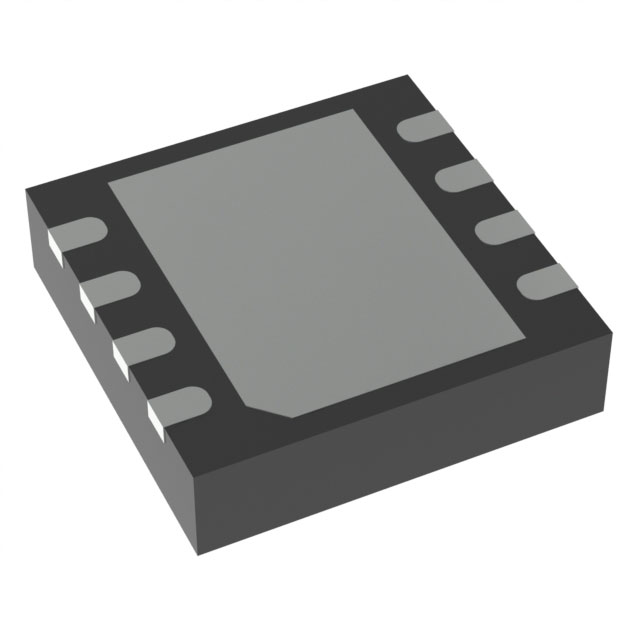
| Package Case | 8-VDFN Exposed Pad | Digi-Key | |
| Rise Fall Time (Typ) | 45ns, 45ns | Digi-Key | |
| Supplier Device Package | PG-VDSON-8-4 | Digi-Key | |
| Voltage Supply | 8V ~ 17V | Digi-Key |
When To Use
Use the 2EDL8124GXUMA1 in applications requiring independent dual high-side and low-side MOSFET gate driving with peak source and sink currents of 4A, such as synchronous buck converters or motor drives operating within an 8V to 17V supply voltage range. Its 45ns rise and fall times make it suitable for switching frequencies where fast gate transitions reduce switching losses. The device is ideal when a compact surface mount solution with an 8-VDFN exposed pad package is needed, and operation across a wide temperature range from -40°C to 125°C is required.
When Not To Use
Do not use the 2EDL8124GXUMA1 in applications requiring logic-level input types other than non-inverting signals or where the supply voltage exceeds 17V or falls below 8V. Avoid this driver if a programmable logic input or integrated level shifting is needed, as this part does not support these features. For applications demanding higher peak gate currents than 4A or operation beyond 125°C junction temperature, consider alternative drivers designed for higher current capability or extended temperature ranges.
Application Notes
The MOSFET gate nodes driven by the 2EDL8124GXUMA1 switch rapidly and must have minimized loop area to reduce electromagnetic interference and voltage overshoot. The input pins are noise-sensitive; therefore, input signals should be clean and properly filtered to avoid false triggering. Although the 8-VDFN exposed pad package offers good thermal conduction, a heatsink or adequate PCB copper area is recommended when operating near the maximum junction temperature of 125°C at high switching frequencies or continuous high peak currents to maintain device reliability.
Gotchas
-
[Bootstrap voltage overshoot ignored]: Designers may assume the 90 V bootstrap max is a hard rail, but switching node ringing can cause transient spikes exceeding this voltage, damaging the high-side MOSFET gate. Symptom: intermittent gate oxide breakdown, erratic switching, or sudden driver failure. Fix: Use a snubber or clamp diode on the bootstrap line and verify ringing with a high-bandwidth scope probe.
-
[Logic input noise coupling]: Routing logic input pins too close to the SW node or power ground return path can induce false triggering or jitter, causing unstable switching waveforms. Symptom: output voltage ripple increases, or switching frequency varies under load. Fix: Add small gate resistors (10–22 Ω) and use careful layout separation with ground shielding.
-
[Unbalanced switching node parasitics]: Unequal PCB trace inductances on high-side and low-side MOSFET gates cause dead-time mismatch, potentially leading to shoot-through or excessive body diode conduction. Symptom: elevated device temperature and reduced efficiency. Fix: Match gate drive trace lengths and minimize loop inductance symmetrically.
-
[Startup sequencing without minimum load]: The driver may not properly engage the high-side MOSFET gate if the load is purely capacitive with no minimum current path, causing output voltage rise delay or oscillation at startup. Symptom: output voltage oscillates or never reaches target level. Fix: Add a small bleed resistor or minimum load to ensure stable startup conditions.