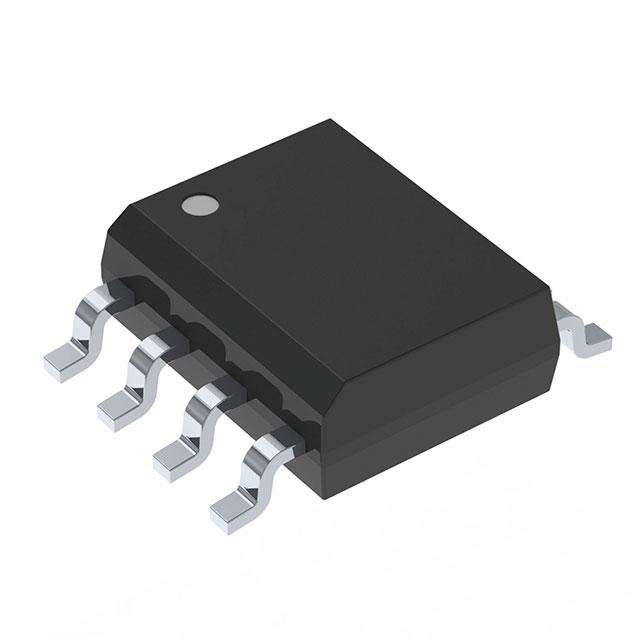
Comparison: Infineon 1ED21271S65FXUMA1 vs STMicroelectronics STGAP2SICSACTR
Quick verdict
For demanding industrial SiC MOSFET high-side gate driving with robust isolation and a compact footprint, the Infineon 1ED21271S65FXUMA1 offers a cleaner, integrated bootstrap design and better propagation delay specs, making it preferable for high-frequency, high-voltage applications with tight layout constraints. The STMicroelectronics STGAP2SICSACTR excels in applications requiring galvanic isolation up to 6 kV and automotive-grade qualification (AEC-Q100), making it more suitable for isolated topologies and automotive environments where isolation and functional safety are critical.
Spec comparison table
| Spec | 1ED21271S65FXUMA1 | STGAP2SICSACTR | Notes |
|---|---|---|---|
| Ambient temperature range | -40°C to +125°C (max) | -40°C to +125°C (max) | Equal operating temperature range. |
| Junction temperature range | -150°C to +150°C (max) | -40°C to +150°C (max) | Infineon specifies wider junction temp min, but practical range similar. |
| Package type | PG-DSO-8 (8-pin) | SO-8W (8-pin wide body) | Infineon’s package is narrower (3.9mm vs 7.5mm width), better for space-constrained boards. |
| Package power dissipation max | 0.625 W | Not specified | Infineon provides explicit power dissipation; ST’s thermal resistance is 130 °C/W (higher, indicating less efficient thermal path). |
| Output peak current | 4 A source / 4 A sink | 4 A source / 4 A sink | Equivalent peak drive capability at 25°C. |
| Output current max (continuous) | Not explicitly specified | 200 mA max | ST datasheet states 200 mA max continuous, implying pulse drive; Infineon lacks explicit continuous current spec, but typical operation supports high peak currents. |
| Input voltage (logic) | 0 V to 5 V (logic input voltage min/max) | 0.29·VDD to 0.39·VDD (logic input voltage min/max) | Infineon supports standard 5 V logic input; ST requires scaled logic input tied to VDD (3.1 V typical), more restrictive. |
| Supply voltage range | 7.2 V to 22 V | VH supply: up to 28 V; VDD logic: 3.1 V typical, max 6 V | ST allows higher supply voltage on high side; Infineon limited to 22 V max. |
| Isolation voltage | Not specified (bootstrap, high-side rated to 650 V) | 3530 Vrms galvanic isolation (6 kV rated) | ST offers galvanic isolation via capacitive coupling; Infineon relies on bootstrap approach, no galvanic isolation. |
| ESD rating (HBM) | 2.0 kV | 2.0 kV | Equal human body model ESD protection. |
| Common mode transient immunity (CMTI) | -50 V/ns (minimum) | 100 V/ns (typical) | ST supports twice the CMTI, better for noisy environments. |
| Propagation delay (turn-on/off) | Typical 55 ns on/off | Typical 60 ns on/off | Comparable switching speed; Infineon slightly faster in datasheet typical values. |
| Rise/fall times | 12 ns / 12 ns | 30 ns / 30 ns | Infineon significantly faster switching edges, beneficial for efficiency and EMI. |
| UVLO thresholds (high side) | 6.2 V to 8.0 V (typ 7.2 V) | Turn-on 14.5 V to 16.4 V (typ 15.6 V) | Infineon UVLO threshold is lower; ST requires higher voltage for high-side supply UVLO. |
| Bootstrap diode forward current | Typ 71 mA | Not applicable (capacitive coupling) | Infineon integrates bootstrap diode; ST uses isolated capacitive coupling, no bootstrap diode. |
| Input filter time (CS input) | Typical 170 ns | Standby filter typical 280 ns | ST has longer input filter, could reduce noise sensitivity but increase latency. |
| Fault clear time | Typ 450 ns | Not specified | Infineon provides fault clear timing; ST does not specify. |
| Standby quiescent current | Typical 65 µA (logic side) | Typical 65 µA (standby) | Comparable low-power standby currents. |
| Quiescent supply current | Typical 1.3 mA | Typical 1.3 mA | Similar quiescent current in operating mode. |
| Overcurrent protection | Not specified | Internal current sensing with clamp voltage 1.3 V to 2.6 V | ST supports built-in clamp-based current protection; Infineon does not specify OCP. |
| Isolation test voltage (VISO) | Not specified | 3535 Vrms (typ), 6000 VPEAK surge | ST explicitly qualified for high-voltage isolation. |
| Safe state output | Not applicable | Forced low during fault or UVLO | ST drives output low on fault/UVLO; Infineon behavior not specified. |
| Input hysteresis | Not specified | 3.3 V typical | ST input has hysteresis for noise immunity. |
| Human body model (HBM) ESD | 2.0 kV | 2.0 kV | Equal. |
| Moisture sensitivity level (MSL) | MSL2 | Not specified | Infineon specifies MSL; ST does not. |
| Grade | Industrial | Automotive (AEC-Q100) | ST is automotive qualified, Infineon industrial only. |
| Mounting | Surface mount | Surface mount | Same. |
| Release year | Not specified | 2023 | ST is newer device. |
| Wake-up time | Not specified | Typical 20 µs | ST has defined wake-up time; Infineon silent on this. |
Design trade-offs
The 1ED21271S65FXUMA1 and STGAP2SICSACTR both target high-side SiC MOSFET gate driving but approach the problem differently. Infineon uses a traditional bootstrap supply with integrated bootstrap diode and a high-side floating well rated to 650 V, focusing on compact size and fast switching performance. The ST device employs galvanic isolation through capacitive coupling, rated for 3530 Vrms isolation and surge up to 6 kV, enabling safer operation in systems requiring reinforced isolation.
From a layout perspective, the Infineon’s narrow PG-DSO-8 package (3.9 mm width) allows tighter PCB real estate usage compared to the wider SO-8W (7.5 mm) package of the ST device. The bootstrap approach requires careful bootstrap capacitor sizing and routing to avoid voltage spikes, whereas the ST’s capacitive coupling isolates the driver from high voltages, simplifying isolation barrier design but demanding a higher supply voltage (up to 28 V) on the high side rail.
Thermally, Infineon’s device specifies a power dissipation of 0.625 W max with a thermal resistance lower than that implied by the ST’s 130 °C/W, suggesting the Infineon part may handle heat dissipation more efficiently, or at least allows more straightforward thermal management in dense layouts. The ST’s wider package and isolation architecture will require additional PCB area for creepage and clearance, potentially increasing cost and complexity in compact designs.
Switching speed and efficiency also differ: Infineon’s 12 ns rise/fall times are significantly faster than ST’s 30 ns, which can reduce switching losses and improve efficiency, especially in high-frequency applications above 100 kHz. However, ST’s higher common-mode transient immunity (100 V/ns vs. Infineon’s -50 V/ns) makes it more robust in electrically noisy environments, common in automotive or industrial systems with large common-mode voltage slew rates.
The ST part’s automotive qualification (AEC-Q100) and integrated fault safe state output (forced low) make it a safer choice for automotive or safety-critical applications, where certification and predictable fault behavior are mandatory. Infineon’s industrial qualification and unspecified fault behavior may limit its use in those scenarios but are sufficient for many industrial drives.
Finally, the input specifications show ST requiring logic input voltages scaled to the logic supply (around 3.1 V typical), with input hysteresis, which is good for noise immunity but less flexible than Infineon’s standard 5 V CMOS logic input levels. Firmware and driver design must account for this difference.
Use-case fit
Choose 1ED21271S65FXUMA1 when…
- You need a compact, fast-switching high-side gate driver for SiC MOSFETs in industrial inverters or power supplies with bootstrap power supply.
- Your design prioritizes minimal PCB space and lower power dissipation with a narrow 8-pin PG-DSO package.
- Switching frequencies above 100 kHz require fast 12 ns rise/fall times to reduce losses and EMI.
- You do not require galvanic isolation but need high voltage ratings (650 V bootstrap voltage) for high-voltage industrial applications.
- The system environment is electrically noisy but with moderate common-mode transient slew rates (<50 V/ns).
Choose STGAP2SICSACTR when…
- Galvanic isolation of at least 3.5 kVrms (6 kV surge) is mandatory, such as in automotive, grid-tied inverters