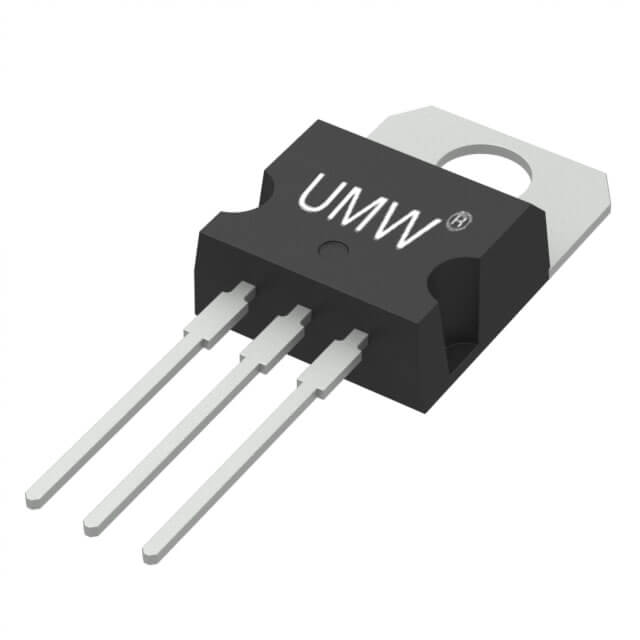
Key Specs
No verified spec values available.
When To Use
-
60V automotive accessory supply → 12V @ 20A: The 60V minimum drain-source voltage rating cleanly covers typical 12V automotive loads including load dump spikes. The low Rds(on) max of 21 mΩ minimizes conduction losses and heat, avoiding thermal runaway common in higher-Rds(on) MOSFETs under continuous high current.
-
Battery-powered DC motor driver @ 50A peak: The typical pulsed drain current rating of 200A and max energy avalanche rating of 64 mJ enable robust handling of motor stall and transient conditions. Using a MOSFET without adequate avalanche energy rating risks destructive latch-up under inductive load kickbacks.
-
Synchronous rectification in 48V telecom intermediate bus: The low gate charge (typ 50 nC) and gate-drain charge (15 nC) reduce switching losses at moderate frequencies, enabling efficient synchronous rectification. A device with higher gate charge would cause excessive switching loss and increased thermal stress, limiting system reliability.
When Not To Use
-
High-frequency switching > 500 kHz: The typical total gate charge of 50 nC and switching delays (td(on) 7.5 ns, td(off) 28.4 ns) limit switching speed and efficiency. Use a high-frequency buck controller designed for fast gate drivers and low gate charge devices instead.
-
Output current > 33 A continuous: The maximum continuous drain current of 33 A constrains applications requiring sustained output currents beyond this rating. Use a multi-phase buck controller or high-current synchronous buck with external FETs for current sharing and thermal management.
-
Low dropout linear regulation with noise-sensitive loads: The relatively high Rds(on) min of 16 mΩ results in significant voltage drop and power dissipation at low input-output differentials. Use an LDO regulator when the input-output differential is less than 1 V and low noise is critical.
Application Notes
-
The switching node (SW) must have minimal parasitic inductance; use a low-inductance PCB layout with wide copper area and short traces to control voltage spikes and ringing caused by the 64 mJ avalanche energy capability.
-
the Gate pin and the Drain pin are noise-sensitive and should have dedicated gate resistors and decoupling to prevent oscillations during switching transitions, especially given the qgd_typ of 15 nC.
-
The device’s low gate threshold voltage (typ 1.6 V) requires careful gate drive voltage management; operating below threshold causes partial conduction and excessive heating.
-
Include a Kelvin source connection if possible to improve gate voltage sensing accuracy and reduce measurement errors due to source lead inductance.
-
Guard routing around the gate and drain pins helps mitigate coupling noise into the gate driver, preventing erratic switching and potential shoot-through.
Gotchas
-
[Avalanche energy margin misunderstood]: Designers may assume the 64 mJ max avalanche energy rating allows unlimited inductive switching without derating. In reality, avalanche energy derates significantly with junction temperature and repetitive switching frequency. Ignoring this leads to device destruction under repetitive flyback events. Fix: Verify avalanche energy derating curves from the full datasheet and limit inductive energy per switching cycle accordingly.
-
[Gate drive overshoot causing latch-up]: The typical gate-drain charge (qgd_typ 15 nC) combined with fast switching edges can induce gate voltage overshoot above the 20 V max rating if gate resistors are omitted. This triggers parasitic transistor conduction and latch-up, seen as sudden device failure with shorted drain-source. Fix: Use a gate resistor sized to critically damp gate ringing and clamp gate voltage with a zener diode or dedicated driver.
-
[High output capacitor ESR destabilizing the MOSFET]: Using output capacitors with excessively high ESR can cause oscillations in the MOSFET’s switching waveform due to interaction with the device’s output capacitance (coss_typ 141 pF) and reverse recovery charge (qrr_typ 42 nC). Symptoms include erratic output voltage and increased switching losses. Fix: Select low-ESR ceramic capacitors and verify stability on the bench with an oscilloscope.
-
[No minimum load leading to incomplete turn-off]: In synchronous rectification or low-load conditions, the device may enter a sub-threshold conduction region due to the low threshold voltage, causing higher than expected quiescent current and thermal dissipation. This manifests as elevated device temperature and reduced efficiency at no/low load. Fix: Include a minimum load resistor or implement load injection during startup to ensure full turn-off.