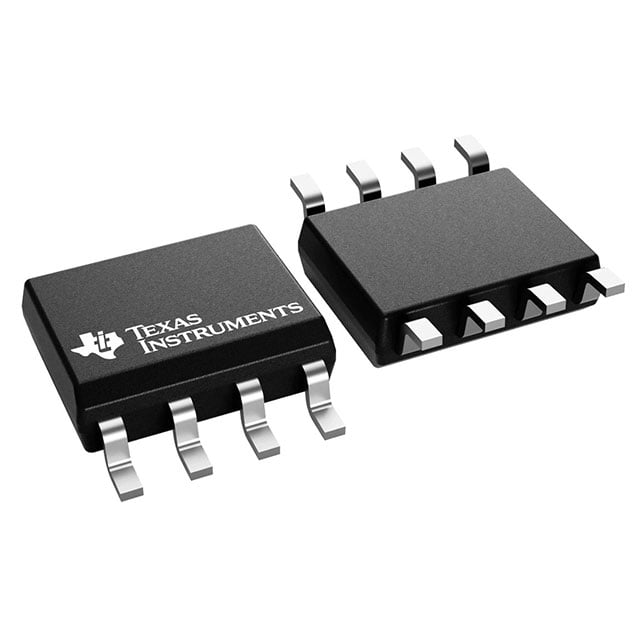
Key Specs
No verified spec values available.
When To Use
Use the UCC28C44QDRQ1 in isolated flyback or forward converter applications requiring precise switching frequency control (typical 53 kHz), low standby current (typical 100 µA), and robust overcurrent protection with cycle-by-cycle limiting (35 ns response). Its operating junction temperature range from -40°C to 150°C and output drive current capability of ±1 A make it suitable for automotive and industrial power supplies that require reliability over wide temperature ranges.
Do not use this device when the application demands switching frequencies above 1 MHz or output currents exceeding ±1 A peak, as the device’s maximum switching frequency and output drive current limits will be exceeded. For higher frequency or higher current applications, consider alternative controllers designed for MHz-range operation and higher peak drive capability.
When Not To Use
-
Output current > 4 A continuous: The ±1 A peak output driver current and typical short-circuit current limit (~45 mA) restrict this controller’s use with high-current loads. Instead, choose a multi-phase buck controller to distribute current and reduce thermal stress.
-
Battery-powered, ultra-low standby current (<1 μA) needed: With a standby current of 50–100 μA typical, this device is too power hungry for coin cell or long-life battery applications. Use a low-IQ PFM buck optimized for μA-level quiescent currents instead.
-
Non-isolated synchronous step-down with maximum efficiency priority: The internal totem pole driver and lack of external synchronous MOSFET control limit efficiency gains at high load currents. Opt for a high-current synchronous buck with external FETs to achieve lower conduction losses and better thermal management.
Application Notes
- The switching node connected to the external MOSFET drain is the highest dv/dt node and must have the smallest possible loop area to minimize EMI and voltage ringing. Keep the gate drive loop short and use proper PCB layout techniques.
- The current sense input pin is noise-sensitive; route its trace away from high-frequency switching nodes and use a low
Gotchas
-
Incorrect Timing Resistor or Capacitor Selection:
- Mistake: Using a non-precision or out-of-spec timing resistor or capacitor (e.g., resistor not 1% tolerance or capacitor with high ESR).
- Failure Mode: Oscillator frequency drifts from the typical 53 kHz, causing unstable switching frequency, increased output ripple, and potential loss of regulation.
- Fix: Use a 15.4 kΩ ±1% resistor and a 1000 pF low-ESR ceramic capacitor (C0G/NP0) to maintain frequency stability.
-
Insufficient VDD Bypass Capacitance:
- Mistake: Omitting or undersizing the 120 µF ceramic VDD bypass capacitor.
- Failure Mode: Supply voltage ripple increases, causing erratic device operation, increased noise sensitivity, and possible device reset or malfunction.
- Fix: Place a 120 µF ceramic capacitor as close as possible to the VDD pin to minimize supply voltage ripple.
-
Improper Current Sense Resistor Rating:
- Mistake: Using a current sense resistor with incorrect resistance or insufficient power rating.
- Failure Mode: Overcurrent protection triggers incorrectly or fails to trigger, risking device damage or system instability.
- Fix: Use a 0.75 Ω resistor with appropriate power rating and temperature coefficient to ensure accurate current sensing.