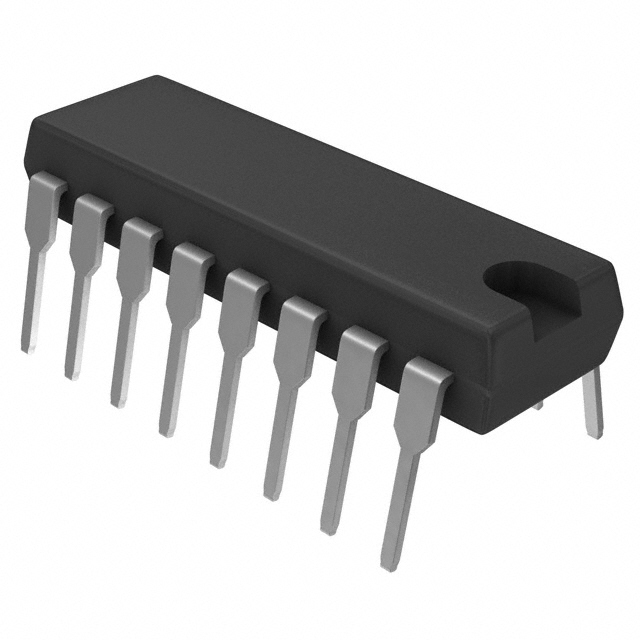
Key Specs
| Spec | Value | Condition | Source |
|---|---|---|---|
| Current Startup | 1.5 mA | Digi-Key | |
| Mode | Average Current | Digi-Key | |
| Mounting Type | Through Hole | Digi-Key | |
| Operating Temperature Range | 0°C ~ 70°C | Digi-Key | |
| Package Case | 16-DIP (0.300”, 7.62mm) | Digi-Key | |
| Supplier Device Package | 16-PDIP | Digi-Key | |
| Switching Frequency (Typ) | 200kHz | Digi-Key | |
| Voltage Supply | 14.5V ~ 30V | Digi-Key |
When To Use
-
24V industrial bus → 5V @ 1A: The 14.5V to 30V supply range covers the 24V bus with margin for transient spikes common in industrial environments. A synchronous buck controller would improve efficiency but the UC3854N’s robust 16-DIP package and 1.5mA startup current simplify prototyping and debugging with through-hole parts.
-
Battery charger controller @ 200kHz switching: The typical 200kHz switching frequency matches well with small magnetics for compact charger designs. Using a high-frequency buck controller (>500kHz) here risks increased switching losses and complexity without significant size gains at this frequency.
-
Low-to-mid power motor drive with 70°C max ambient: The 0°C to 70°C operating range fits controlled ambient environments such as indoor motor drives. An isolated flyback controller would be needed if galvanic isolation was required, which this part cannot provide.
When Not To Use
-
Low-voltage point-of-load regulation with <1V dropout: The minimum supply voltage of 14.5V disqualifies this part for low differential voltage scenarios. Use an LDO regulator instead to maintain low noise and minimal dropout.
-
High current (>5A) synchronous buck: The UC3854N’s design targets low-to-mid current levels with no explicit high current rating and limited thermal dissipation. For currents exceeding this, a high-current synchronous buck with external FETs is required to prevent thermal runaway and ensure stable operation.
-
Portable device powered from coin cells: The 1.5mA startup current is too high for battery-powered portable systems where quiescent current dominates. Use a low-IQ PFM buck for minimal battery drain in standby.
Application Notes
-
The switching node (SW) pin requires careful layout with a low-inductance ground return to minimize voltage spikes and EMI; avoid routing sensitive analog grounds beneath this node.
-
Pins 5 and the error amplifier inputs pin are noise-sensitive; keep these traces short and shielded from switching nodes and high di/dt loops to prevent instability and offset errors.
-
The external compensation network must be placed close to the device pins to minimize parasitic capacitance and inductance, which can cause loop instability or oscillation.
-
Guard routing around the reference and feedback pins is recommended to prevent coupling from the switching node or high-current traces, which can cause erratic output regulation.
-
The UC3854N’s 16-DIP package requires through-hole mounting; ensure adequate clearance and thermal vias under the PCB area to improve heat dissipation, especially near switching components.
Gotchas
-
Startup failure due to insufficient input voltage ramp speed: Designers sometimes assume the part will start reliably at any ramp profile within the 14.5V minimum supply voltage. If the input voltage ramps too slowly or with significant ripple, the internal startup current of 1.5mA can cause the device to oscillate near threshold, resulting in intermittent output or failure to latch. Fix by verifying the input voltage ramp time with an oscilloscope and adding a soft-start or supply sequencing circuit.
-
Loop instability from high ESR output capacitors: The datasheet’s typical application assumes low to moderate ESR in output capacitors. Using excessively high ESR electrolytics can introduce a right-half-plane zero, causing oscillations that appear as output ripple or jitter on the feedback node. Fix by selecting low-ESR capacitors or adding a small ceramic capacitor in parallel for stability.
-
Erratic operation due to layout-induced ground bounce: Ground returns shared between the switching node and sensitive feedback grounds can cause transient voltage spikes on the feedback reference, resulting in erratic output voltage or sporadic switching. Fix by implementing a star ground topology and separating power and analog ground planes.
-
Misinterpretation of maximum ambient temperature limits: The 0°C to 70°C operating temperature range is for the device junction and ambient under specified cooling conditions. Designers sometimes assume this covers all application environments. In reality, poor PCB thermal design or enclosure conditions can cause junction temperature to exceed limits without obvious external signs. Fix by measuring junction temperature with a thermocouple during worst-case loading and improving thermal management if needed.