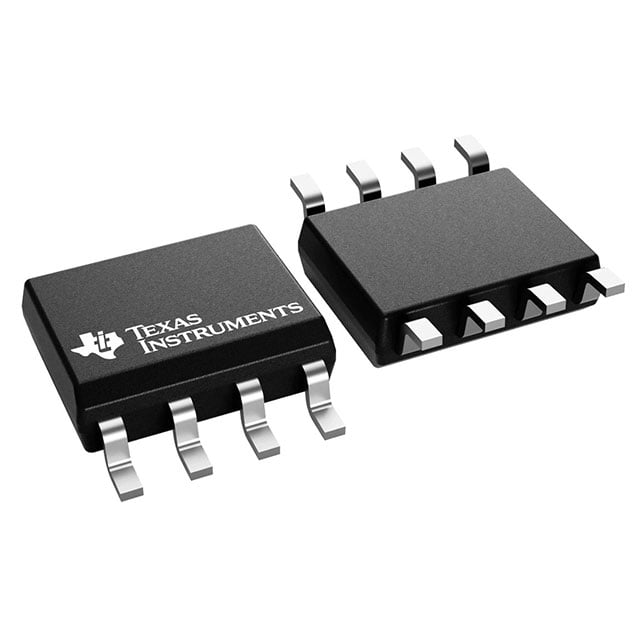
UA78L05ACDR vs MCP1700T-3302E/MAY: Linear Regulator Component Comparison
Quick verdict
For low-current 5 V regulation from higher-voltage rails (up to 20 V), the UA78L05ACDR is the more straightforward choice due to its wider input voltage range and standard 5 V output. For battery-powered or low-dropout 3.3 V applications requiring higher current (up to 250 mA) and very low quiescent current, the MCP1700T-3302E/MAY is the better fit, thanks to its low dropout voltage and ultra-low IQ.
Spec comparison table
| Spec | UA78L05ACDR | MCP1700T-3302E/MAY | Notes |
|---|---|---|---|
| Input Voltage Max | 20 V | 6 V | UA78L05ACDR supports much higher input voltage, enabling use with 12 V or 15 V rails. |
| Output Voltage Min | 5 V | 3.3 V | Fixed output voltages differ; MCP1700T is 3.3 V only, UA78L05ACDR is 5 V only. |
| Output Current Max | 100 mA | 250 mA | MCP1700T supports 2.5x higher load current. |
| Voltage Dropout Max | 1.7 V @ 40 mA | 0.35 V @ 250 mA | MCP1700T has significantly lower dropout voltage, improving efficiency and headroom. |
| Operating Temperature Range | 0°C to 125°C | -40°C to 125°C | MCP1700T supports wider temperature range, including cold environments. |
| Quiescent Current (IQ) | Not specified (~mA typical) | 4 µA | MCP1700T has ultra-low IQ, critical for battery-powered or always-on applications. |
| PSRR | 49 dB @ 120 Hz | 44 dB @ 100 Hz | UA78L05ACDR offers slightly better PSRR at line frequency, beneficial for noise-sensitive designs. |
| Protection Features | Over Current, Over Temp, Reverse Polarity, Short Circuit | Over Current, Over Temp, Short Circuit | UA78L05ACDR adds reverse polarity protection, valuable for harsh environments. |
| Package | 8-SOIC (3.9 mm width) | 6-DFN (2x2 mm exposed pad) | MCP1700T’s smaller DFN saves PCB space and improves thermal conduction via exposed pad. |
| Mounting Type | Surface Mount | Surface Mount | Both are SMT packages, suitable for automated assembly. |
| Number of Regulators | 1 | 1 | Single-output devices. |
Design trade-offs
The UA78L05ACDR and MCP1700T-3302E/MAY serve overlapping but distinct niches in linear regulation. The UA78L05ACDR’s ability to handle input voltages up to 20 V makes it more suitable for traditional 5 V rails derived from 12 V or 15 V supplies. However, its dropout voltage of 1.7 V at 40 mA limits efficiency, especially at higher loads or when input voltage is close to output voltage. This regulator’s quiescent current is unspecified but typically in the mA range for classic 78xx devices, which can be a drawback in battery-powered designs.
Conversely, the MCP1700T-3302E/MAY is optimized for low voltage, low dropout, and low quiescent current operation, with a dropout voltage of only 0.35 V at 250 mA load and IQ of 4 µA. This means it dissipates less power in typical use, especially when the input voltage is just above the output. The low IQ also reduces battery drain significantly in standby modes. The downside is the input voltage maximum of 6 V, restricting its use to low-voltage rails only, and the fixed 3.3 V output limits its applicability in 5 V systems.
Thermal considerations favor the MCP1700T due to its smaller package with an exposed pad, which aids heat dissipation despite its higher current rating. The UA78L05ACDR’s larger SOIC package offers moderate thermal performance but may require additional PCB copper area or heatsinking for continuous operation near its 100 mA max current. The UA78L05ACDR’s broader temperature range (0°C minimum) versus MCP1700T’s -40°C makes the latter preferable for cold environments.
From a PCB layout perspective, the MCP1700T’s exposed pad DFN footprint requires careful thermal pad design and soldering process control, but offers better thermal transfer and smaller board area. The UA78L05ACDR’s SOIC footprint is more straightforward but larger.
In terms of system noise, the UA78L05ACDR provides slightly better PSRR at line frequency, which may be advantageous in noise-sensitive analog or RF front-end circuits. Finally, the UA78L05ACDR includes reverse polarity protection, which can prevent damage in field applications where polarity mistakes happen, an important consideration in automotive or industrial designs.
Use-case fit
Choose UA78L05ACDR when…
- Your input supply voltage ranges from 7 V up to 20 V (e.g., 12 V automotive or industrial rails).
- You need a stable 5 V fixed output with moderate load currents up to 100 mA.
- Reverse polarity protection is a requirement to safeguard against incorrect supply connections.
- Your design operates in mild to warm environments (0°C minimum ambient).
- You prioritize slightly better PSRR around 120 Hz for sensitive analog/RF sections.
Choose MCP1700T-3302E/MAY when…
- Your input voltage is limited to 6 V or below, such as battery packs or USB power.
- You require a 3.3 V fixed output with load currents up to 250 mA.
- Low dropout voltage is critical to maximize efficiency and battery life.
- Ultra-low quiescent current (4 µA) is needed for long battery standby times.
- The operating environment includes cold temperatures down to -40°C.
- Minimizing PCB footprint and improving thermal conduction via an exposed pad package is important.
Drop-in compatibility
These two parts are not pin- or footprint-compatible. The UA78L05ACDR comes in an 8-pin SOIC package, while the MCP1700T-3302E/MAY is in a 6-pin DFN (2x2 mm) with an exposed pad. Their pinouts differ, and the output voltages and dropout characteristics are also distinct. Substituting one for the other requires PCB redesign and verification of electrical parameters, including input voltage limits, dropout voltage, and load current capacity.
Alternatives to consider
- LM1117-5.0 (Texas Instruments): A popular 800 mA linear regulator with 1.2 V dropout, good for 5 V applications with higher current needs.
- TPS7A02 (Texas Instruments): Ultra-low IQ adjustable LDO with low dropout, suitable for battery-powered applications requiring flexible output voltages.
- NCP1117 (ON Semiconductor): 1 A low dropout regulator with a similar footprint to LM1117, offering higher current capability for 5 V outputs.