TAR5SB33(TE85L,F) vs UA78L05ACDR Linear Regulators: A Component Comparison
Quick verdict
For designs requiring a 3.3V fixed linear regulator with modest load currents up to 200mA, the TAR5SB33(TE85L,F) offers lower dropout voltage and an enable pin, making it better suited for low-voltage, power-sensitive applications with power sequencing needs. Conversely, for 5V regulation at currents up to 100mA in environments with wider operating temperatures and more rugged protection demands, the UA78L05ACDR is the preferred choice due to its higher input voltage limit, extended temperature range, and comprehensive fault protections.
Spec comparison table
| Spec | TAR5SB33(TE85L,F) | UA78L05ACDR | Notes |
|---|---|---|---|
| Control features | Enable | None | Enable pin on TAR5SB33 allows power sequencing; UA78L05ACDR offers no control input. |
| Quiescent current (Iq) | 850 µA | Not specified | TAR5SB33’s 850µA is moderate; UA78L05ACDR Iq not listed, check datasheet for details. |
| Max input voltage | 15 V | 20 V | UA78L05ACDR supports higher input voltage, offering more headroom in noisy or boosted rails. |
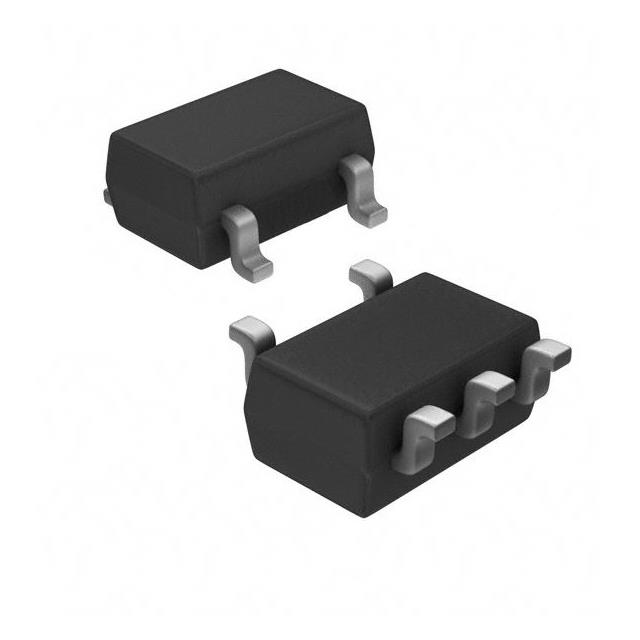
| Mounting type | Surface Mount (SC-74A, SOT-753) | Surface Mount (8-SOIC) | Different packages; SOIC larger and easier to hand-solder; SC-74A smaller footprint. |
| Number of regulators | 1 | 1 | Both single-output. |
| Operating temp. range | -40°C to 85°C | 0°C to 125°C | UA78L05ACDR supports wider temp range, suitable for industrial or automotive-grade designs. |
| Output configuration | Positive | Positive | Both positive linear regulators. |
| Max output current | 200mA | 100mA | TAR5SB33 supports twice the max load current, beneficial for higher current applications. |
| Output type | Fixed (3.3V) | Fixed (5V) | Different fixed voltages; choice depends on system voltage rail requirements. |
| Output voltage (min) | 3.3 V | 5 V | Fixed output voltages; no adjustability. |
| Package | SC-74A, SOT-753 | 8-SOIC (3.90mm width) | SOIC package is larger but easier to handle in assembly. |
| Protection features | Over Current, Over Temperature | Over Current, Over Temperature, Reverse Polarity, Short Circuit | UA78L05ACDR offers more robust protection features, reducing risk in harsh environments. |
| PSRR | 70dB @ 1kHz | 49dB @ 120Hz | TAR5SB33 provides better PSRR at 1kHz, beneficial for noise-sensitive analog supplies. |
| Supplier device package | SMV | 8-SOIC | SMV is a smaller package; 8-SOIC is larger but more common in power ICs. |
| Dropout voltage max | 0.2V @ 50mA | 1.7V @ 40mA | TAR5SB33 dropout voltage is significantly lower, improving efficiency and headroom at low voltage differentials. |
Design trade-offs
The most striking difference between the TAR5SB33(TE85L,F) and the UA78L05ACDR lies in the dropout voltage and output voltage selection. The TAR5SB33’s 3.3V fixed output and low dropout voltage (0.2V at 50mA) enable operation with input voltages barely above 3.5V, which is critical in battery-powered or low-voltage digital systems. The UA78L05ACDR, fixed at 5V output with a much higher dropout voltage (1.7V at 40mA), requires at least ~6.7V input to maintain regulation, increasing power dissipation and thermal stress in low-voltage or low-voltage-differential scenarios.
The difference in maximum output current—200mA for the TAR5SB33 versus 100mA for the UA78L05ACDR—also affects thermal design. Doubling the current capability means the TAR5SB33 can handle heavier loads but will demand more robust thermal management. However, the lower dropout voltage of the TAR5SB33 reduces power dissipation (P = (Vin - Vout) × Iout), somewhat mitigating thermal challenges at higher currents.
Operating temperature ranges are non-overlapping: the TAR5SB33 is rated for -40°C to 85°C, suitable for general-purpose commercial and some industrial applications, while the UA78L05ACDR’s 0°C to 125°C range suits more demanding industrial or automotive environments. Design teams must consider ambient and junction temperatures carefully—if your product operates in harsh thermal conditions, the UA78L05ACDR’s wider range and enhanced protection features (including reverse polarity and short circuit) provide a safety margin that reduces failure risk.
The presence of an enable pin on the TAR5SB33 offers system-level power sequencing and standby capabilities, which the UA78L05ACDR lacks. This can simplify firmware and hardware control in multi-rail systems, reducing quiescent power consumption when disabled. However, the TAR5SB33’s quiescent current of 850µA is relatively high for modern low-power designs, so if ultra-low quiescent current is required, neither may be ideal.
Package and mounting differences also matter. The smaller SC-74A (SOT-753) package of the TAR5SB33 saves PCB real estate but may complicate hand assembly and thermal dissipation due to reduced surface area. The UA78L05ACDR’s 8-SOIC package, while larger, is easier to solder and dissipates heat better, which can simplify thermal design and manufacturing.
Finally, PSRR differences indicate that the TAR5SB33 offers superior noise rejection at 1kHz (70dB vs. 49dB at 120Hz), which can be critical in sensitive analog or RF front-ends. The frequency differences in PSRR measurement mean that the UA78L05ACDR’s rejection at 1kHz may be worse than its 49dB at 120Hz, making the TAR5SB33 preferable for cleaner supply rails in noise-sensitive circuits.
Use-case fit
Choose TAR5SB33(TE85L,F) when…
- Your system requires a 3.3V linear regulator with up to 200mA load current, e.g., powering low-voltage digital ICs or sensors.
- You have a low input voltage rail (e.g., 3.7V Li-ion battery) and need a regulator with minimal dropout voltage to maximize battery life.
- Your design benefits from an enable pin for power sequencing or controlled shutdown to reduce standby power.
- Noise rejection at audio or mid-frequency bands (~1kHz) is critical, such as in analog front-end or RF circuits.
- PCB space is constrained, and a smaller SC-74A package is preferred despite more challenging assembly.
Choose UA78L05ACDR when…
- Your design requires a fixed 5V output up to 100mA, common for legacy 5V logic or peripherals.
- Operating temperature ranges exceed commercial limits, up to 125°C, such as industrial controls or automotive electronics.
- The input voltage can be as high as 20V, allowing for more input margin or use with noisy or unregulated supplies.
- Enhanced protection features like reverse polarity and short circuit protection are necessary to increase system robustness.
- You prefer easier hand assembly and better thermal dissipation offered by the 8-SOIC package.
Drop-in compatibility
Based on the provided data, the TAR5SB33(TE85L,F) and UA78L05ACDR are not pin-compatible or footprint-compatible. The TAR5SB33 is in a SC-74A (SOT-753) package, a small, 3-pin outline, while the UA78L05ACDR uses an 8-SOIC package with a different pin count and likely different pin assignments. Substituting one for the other would require PCB redesign and potentially circuit rework. Additionally, their fixed output voltages differ (3.3V vs. 5V), so functional substitution without circuit modification is not feasible.
Alternatives to consider
- LM1117-3.3: A popular 3.3V linear regulator with 800mA output current and low dropout voltage (~1.2V at 800mA), suitable for higher current loads with moderate dropout.
- MIC5205-3.3: Low dropout regulator with 150mA max current and very low quiescent current (~90µA), good for battery-powered systems needing low power consumption.
- LT1763-5: Low noise, low dropout 5V linear regulator capable of 500mA output, with excellent PSRR and thermal performance for noise-sensitive applications.