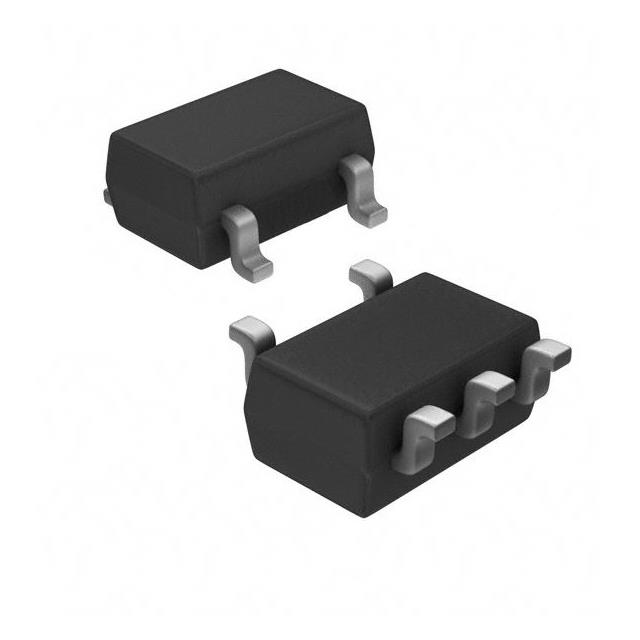
TAR5SB33(TE85L,F) vs MCP1700T-3302E/MAY: Linear Regulator Comparison
Quick verdict
For designs where ultra-low quiescent current and extended temperature range are priorities—such as battery-powered or always-on systems—the MCP1700T-3302E/MAY is the clear winner due to its 4 µA IQ and -40°C to 125°C rating. Conversely, if your design requires a higher maximum input voltage (up to 15 V) or an enable pin for power gating, the TAR5SB33(TE85L,F) is the better choice despite its higher quiescent current and lower maximum output current.
Spec comparison table
| Spec | TAR5SB33(TE85L,F) | MCP1700T-3302E/MAY | Notes |
|---|---|---|---|
| Control features | Enable pin | None | Enable pin on TAR5SB33 allows software/hardware power gating; MCP1700 has no enable. |
| Quiescent current (Iq) | 850 µA | 4 µA | MCP1700 IQ is 200× lower, critical for battery-powered or low-power systems. |
| Max input voltage | 15 V | 6 V | TAR5SB33 supports higher input voltage, important for 12 V or higher rails. |
| Mounting type | Surface Mount | Surface Mount | Both are SMT; no difference. |
| Number of regulators | 1 | 1 | Both single-output devices. |
| Operating temperature | -40°C to 85°C | -40°C to 125°C | MCP1700 supports wider temp range, suitable for industrial or harsh environments. |
| Output configuration | Positive | Positive | Both positive regulators. |
| Max output current | 200 mA | 250 mA | MCP1700 provides 25% higher max output current capacity. |
| Output type | Fixed 3.3 V | Fixed 3.3 V | Both fixed voltage; no difference. |
| Package case | SC-74A (SOT-753) | 6-DFN (2x2 mm) | MCP1700’s smaller DFN package reduces PCB area and improves thermal path via exposed pad. |
| Protection features | Overcurrent, Overtemperature | Overcurrent, Overtemperature, Short circuit | MCP1700 adds short-circuit protection, improving fault tolerance. |
| PSRR | 70 dB @ 1 kHz | 44 dB @ 100 Hz | TAR5SB33 has better PSRR at 1 kHz (important for noise-sensitive analog circuits). |
| Dropout voltage | 0.2 V @ 50 mA | 0.35 V @ 250 mA | TAR5SB33 has lower dropout at moderate current but MCP1700 specs at max current; depends on load. |
| Supplier device package | SMV | 6-DFN (2x2) | MCP1700’s exposed pad DFN improves heat dissipation and PCB layout flexibility. |
Design trade-offs
The most striking difference between these devices is the quiescent current (Iq). The MCP1700’s 4 µA quiescent current is orders of magnitude lower than the TAR5SB33’s 850 µA. This makes the MCP1700 far more suitable for battery-powered applications or systems requiring long standby times. The trade-off is that the MCP1700’s maximum input voltage is limited to 6 V, which constrains its use in 12 V or higher input rails without additional pre-regulation.
Thermally, the MCP1700 benefits from its exposed pad 6-DFN package, which provides better PCB heat sinking capability despite its smaller size. The TAR5SB33’s SC-74A package is physically larger and less thermally efficient but can handle slightly higher input voltages. The maximum output current rating also differs: 200 mA for the TAR5SB33 versus 250 mA for the MCP1700. While the MCP1700 supports higher current, its dropout voltage at 250 mA is higher (0.35 V) compared to the TAR5SB33’s 0.2 V at 50 mA, so the dropout advantage depends heavily on load conditions.
The presence of an enable pin on the TAR5SB33 adds flexibility for firmware or hardware power management, allowing the regulator to be turned off to save power. The MCP1700 lacks this feature, meaning it is always on when powered.
PSRR is another consideration: the TAR5SB33 offers 70 dB at 1 kHz, which is notably better than the MCP1700’s 44 dB at 100 Hz. This suggests the TAR5SB33 is preferable in noise-sensitive analog front-end circuits or RF applications where power supply ripple rejection is critical.
From a layout perspective, the MCP1700’s small DFN package with an exposed pad requires careful PCB design to maximize thermal dissipation, but enables significant space savings. The TAR5SB33’s larger SOT-753 package is more straightforward to hand solder and may be preferable in less space-constrained designs.
Cost considerations are not available from the data, but typically Microchip’s MCP1700 family is widely used and available at competitive prices. The Toshiba part might have a niche in applications requiring higher input voltage or enable control.
Use-case fit
Choose TAR5SB33(TE85L,F) when…
- Your input voltage rail exceeds 6 V, up to 15 V, e.g., 12 V automotive or industrial inputs.
- You require an enable pin to implement power gating controlled by firmware or hardware signals.
- Your application demands superior PSRR at audio or low-frequency switching noise bands (~1 kHz).
- You operate in environments within -40°C to 85°C and do not require extended temperature capability.
- Your load current is moderate (up to 200 mA) and dropout voltage at low-to-mid load currents is critical.
Choose MCP1700T-3302E/MAY when…
- Minimizing quiescent current is essential, such as battery-powered or energy-harvesting devices.
- Your application requires operation over a wider temperature range (-40°C to 125°C), including industrial environments.
- You need up to 250 mA output current with integrated short-circuit protection.
- PCB space is at a premium and you benefit from a compact 2×2 mm 6-DFN package with exposed pad for thermal management.
- Your input voltage rail is limited to 6 V or less, such as USB power or single Li-ion battery systems.
Drop-in compatibility
These two devices are not pin- or footprint-compatible. The TAR5SB33 uses an SC-74A (SOT-753) package, while the MCP1700 is in a 6-DFN (2×2 mm) with an exposed pad. Pinouts differ, and the MCP1700 lacks an enable pin. Substituting one for the other will require PCB redesign and potentially firmware changes to handle enable signaling (or lack thereof). Input voltage and current handling differences must also be considered before a substitution.
Alternatives to consider
- LP2985-33 (Texas Instruments): Low dropout regulator with low IQ (~30 µA), 3.3 V fixed output, and good PSRR, suitable for medium-power battery applications.
- TLV70233 (Texas Instruments): 300 mA LDO with low dropout and low IQ (~20 µA), in a small SOT-23 package, balancing power efficiency and package size.
- MIC5205-3.3YM5 (Microchip): 150 mA LDO with low IQ (~70 µA), small SOT-23 package, and good transient response for portable devices.