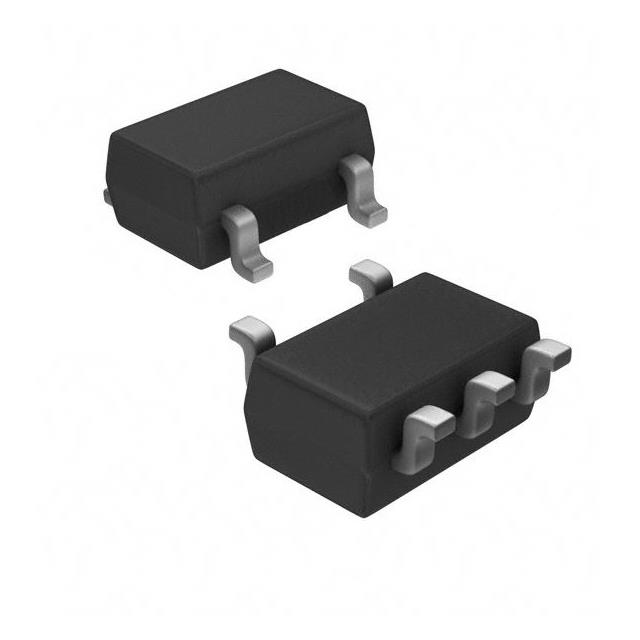
TAR5SB33(TE85L,F) vs L78L33ABUTR: Linear Regulator Component Comparison
Quick verdict
For low-power, space-constrained designs requiring up to 200mA output with an enable pin and better noise rejection, the TAR5SB33(TE85L,F) is the preferable choice. For applications demanding higher maximum input voltage (up to 30V), ruggedness with short-circuit protection, and operation up to 125°C, but limited to 100mA output, the L78L33ABUTR is the better fit.
Spec comparison table
| Spec | TAR5SB33(TE85L,F) | L78L33ABUTR | Notes |
|---|---|---|---|
| Control features | Enable | None | Enable pin on TAR5SB33 allows better power management and firmware control. |
| Quiescent current (Iq) | 850 µA | 5.5 mA | TAR5SB33 draws ~6.5× less quiescent current, reducing standby power consumption. |
| Max input voltage | 15 V | 30 V | L78L33ABUTR supports twice the input voltage, beneficial for higher voltage rails. |
| Mounting type | Surface Mount | Surface Mount | Both are SMT, no difference here. |
| Number of regulators | 1 | 1 | Single output for both. |
| Operating temperature range | -40°C to 85°C | -40°C to 125°C | L78L33ABUTR supports wider temperature range for harsher environments. |
| Output configuration | Positive | Positive | Identical output polarity. |
| Max output current | 200 mA | 100 mA | TAR5SB33 can supply double the current, useful for higher load applications. |
| Output voltage | Fixed 3.3V | Fixed 3.3V | Both provide the same fixed output voltage. |
| Package / Case | SC-74A (SOT-753) | TO-243AA (SOT-89-3) | Different packages; SOT-89-3 is larger, better for thermal dissipation. |
| Protection features | Overcurrent, Overtemperature | Overcurrent, Overtemperature, Short circuit | L78L33ABUTR adds short-circuit protection, critical for fault-tolerant designs. |
| PSRR | 70 dB @ 1 kHz | 49 dB @ 120 Hz | TAR5SB33 has significantly better PSRR at 1kHz, improving noise immunity. |
| Voltage dropout (max) | 0.2 V @ 50mA | Not specified | TAR5SB33 specifies a low dropout voltage, beneficial for low input-output voltage differential. |
| Supplier device package | SMV | SOT-89-3 | Different footprints; affects PCB layout and thermal performance. |
Design trade-offs
The TAR5SB33(TE85L,F) provides a clear advantage in quiescent current, consuming just 850µA versus 5.5mA for the L78L33ABUTR. This order-of-magnitude difference translates into significantly lower power dissipation at no- or light-load conditions, useful in battery-powered or always-on systems. Additionally, the enable pin on the TAR5SB33 offers firmware or hardware control to disable the regulator, further improving system-level power management.
Current capability is another major differentiator: the TAR5SB33 supports up to 200mA output, double that of the L78L33ABUTR. This allows the TAR5SB33 to power more demanding loads or multiple low-current devices from the same regulator. However, the L78L33ABUTR’s maximum input voltage rating of 30V versus 15V on the TAR5SB33 means it can be used in higher-voltage input rails without additional pre-regulation, which may simplify power tree design.
Thermal considerations arise primarily from package and operating temperature range. The L78L33ABUTR’s SOT-89 package is physically larger and offers better heat dissipation than the SC-74A of the TAR5SB33. Combined with its 125°C max operating temperature, this makes the L78L33ABUTR more suitable for environments with elevated ambient temperatures or where thermal margins are tight. The TAR5SB33’s lower dropout voltage (0.2V at 50mA) reduces power dissipation under typical load currents, potentially offsetting some thermal disadvantages, but this benefit diminishes at higher currents.
In terms of noise performance, the TAR5SB33’s 70dB PSRR at 1kHz significantly outperforms the L78L33ABUTR’s 49dB at 120Hz, helping reduce switching noise coupling into sensitive analog or RF circuits. This can be a deciding factor in mixed-signal designs.
Protection features differ subtly but importantly. Both include overcurrent and overtemperature shutoff, but only the L78L33ABUTR explicitly includes short-circuit protection. This enhances robustness in fault conditions, making it more reliable in industrial or automotive applications where load faults are more common.
Finally, the TAR5SB33’s enable pin adds a layer of complexity to layout and firmware: you must route and control this pin properly, but gain flexibility in system power sequencing. The L78L33ABUTR’s simpler pinout reduces firmware overhead and potential failure modes related to enable control.
Use-case fit
Choose TAR5SB33(TE85L,F) when:
- The design requires up to 200mA output current, such as powering multiple low-power sensors or microcontrollers from a 3.3V rail.
- Low quiescent current is critical, e.g., battery-powered or energy-harvesting devices where standby power must be minimized.
- Power sequencing or shutdown control via an enable pin is needed for system power management or fault isolation.
- You need improved noise rejection at audio or RF frequencies to protect sensitive analog circuits.
- Input voltage rails do not exceed 15V, allowing use of the lower-voltage, lower-dropout device.
Choose L78L33ABUTR when:
- The input voltage can reach up to 30V, such as automotive 12V systems with load-dump or industrial 24V rails.
- Operation up to 125°C ambient temperature is required, e.g., automotive under-hood or industrial process control.
- Protection against short circuits is mandatory for robust fault tolerance.
- Output current requirements are modest (≤100mA), and simplicity or proven legacy designs favor the classic L78xx family.
- Thermal dissipation is a concern and the larger SOT-89 package can be leveraged with a sufficiently ventilated PCB area.
Drop-in compatibility
The two parts use different packages and pinouts: the TAR5SB33 comes in an SC-74A (SOT-753) package, while the L78L33ABUTR uses a larger TO-243AA (SOT-89-3) package. There is no indication these parts are pin-compatible or footprint-compatible. The TAR5SB33 includes an enable pin, which the L78L33ABUTR lacks, so substituting one for the other requires schematic and PCB modifications. Thermal pad sizes and heat sinking provisions will also differ. Therefore, these are not drop-in replacements.
Alternatives to consider
- MIC5233-3.3YM5-TR: Low-dropout regulator with enable and 250mA output, similar control features but potentially better dropout voltage performance.
- TLV70433DBVR (Texas Instruments): 3.3V fixed linear regulator with low quiescent current and enable pin, in a small package, suitable for low-power applications.
- LM1117-3.3 (Texas Instruments): Classic 800mA linear regulator with a higher current rating and robust thermal performance, but higher quiescent current and no enable pin.