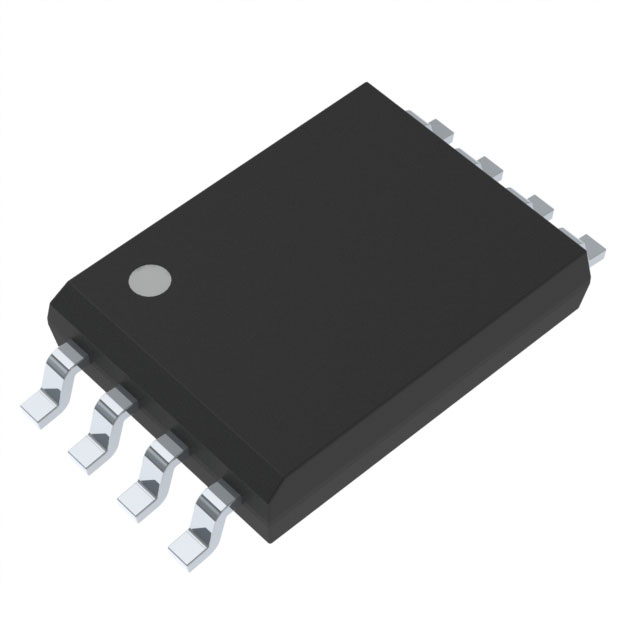
STGAP2SICSTR vs 2ED1321S12MXUMA1 Gate Driver Comparison
Quick verdict
For isolated single-channel gate driving applications requiring very high isolation voltage and fast transient immunity, the STGAP2SICSTR is the better choice due to its 5000 Vrms capacitive isolation and 4 A gate drive capability. For half-bridge configurations driving IGBTs or SiC MOSFETs with moderate isolation and dual independent outputs, the 2ED1321S12MXUMA1 is preferable, offering integrated half-bridge topology and higher peak source current (4.6 A) on the high side.
Spec comparison table
| Spec | STGAP2SICSTR | 2ED1321S12MXUMA1 | Notes |
|---|---|---|---|
| Technology | Capacitive Coupling | Not specified (integrated half-bridge driver) | Capacitive coupling provides high galvanic isolation; half-bridge driver integrates MOSFET drive stage. |
| Number of channels | 1 | 2 (half-bridge independent) | 2ED1321S12MXUMA1 supports half-bridge with complementary outputs; STGAP2SICSTR is single channel. |
| Voltage isolation (Vrms) | 5000 Vrms | Not specified | ST device offers certified 5 kVrms isolation, critical in high-voltage applications. |
| Common mode transient immunity (CMTI) | 100 V/ns (typ) | Not specified | STGAP2SICSTR explicitly rated for 100 V/ns CMTI, beneficial in noisy power stages. |
| Propagation delay (tplh/tphl max) | 90 ns / 90 ns | Not specified | ST device provides detailed delay specs; 2ED1321 datasheet lacks this info. |
| Pulse width distortion (max) | 20 ns | Not specified | ST device specifies 20 ns PWD max, relevant for precise timing in gate drive. |
| Rise/Fall time (typ) | 30 ns / 30 ns | 48 ns / 48 ns | STGAP2SICSTR is faster, which can reduce switching losses and improve timing control. |
| Output current (high/low peak) | 4 A / 4 A | 2.3 A source / 4.6 A sink | 2ED1321S12MXUMA1 sinks higher peak current (useful for fast turn-off), ST has balanced 4 A drive. |
| Voltage output supply | 3 V to 5.5 V | 13 V to 20 V | 2ED1321S12MXUMA1 supports higher supply voltage, matching typical SiC MOSFET/IGBT gate voltages. |
| Operating temperature range | -40°C to 125°C | -40°C to 125°C | Equivalent operating temperature range. |
| Package | 8-SOIC (7.5 mm width) | 16-SOIC (7.5 mm width) | ST device smaller pin count; Infineon’s larger package supports half-bridge topology. |
| Mounting type | Surface mount | Surface mount | Both SMT. |
| Approval agency | UL | Not specified | ST device has UL approval, useful for safety certification. |
| Logic input voltage thresholds | VIL: 0.29·VDD to 0.37·VDD; VIH: 0.62·VDD to 0.70·VDD | VIL: 1.1 V; VIH: 1.7 V | ST device thresholds scale with supply voltage; 2ED1321 fixed thresholds better for 3.3/5 V logic. |
| Input voltage max | 26 V | Not specified | ST device’s logic input voltage rating is robust. |
| Supply current (typ) | IQHU: 1.8 mA; IQHSBY: 550 µA; IQDD: 1.3 mA | Not specified | ST device provides low quiescent and standby currents. |
| Safe clamp voltage | 2.0 V (min) to 2.3 V (max) | Not specified | ST device integrates a safe clamp to protect the gate; important for device longevity. |
| Galvanic isolation voltage | 1200 V repetitive; 5000 V transient (typ 3.5 kV) | Not specified | ST device explicitly rated for isolation voltages; Infineon device does not specify. |
| Maximum switching frequency | 1 MHz | Not specified | ST device explicitly rated for up to 1 MHz switching. |
| Input to output propagation delay (typ) | 75 ns (on/off) | Not specified | ST device offers known propagation delay for timing design. |
| Supply voltage VH (gate driver) | 14.6 V min to 16.4 V max | 13 V to 20 V | Infineon supports wider gate drive voltage range, important for SiC/IGBT gate voltage requirements. |
| Output current max | 150 mA | Not specified | ST device’s max output current rating is 150 mA, which aligns with drive current capabilities. |
| Thermal resistance (junction to ambient) | 120 °C/W (typ) | Not specified | ST device provides thermal resistance data for thermal management. |
| Operating junction temperature | -40°C to 150°C (max); operating max 125°C | -40°C to 125°C | ST device rated for higher max junction temperature. |
Design trade-offs
The STGAP2SICSTR is a single-channel gate driver with integrated capacitive isolation rated at 5000 Vrms, making it well suited for high-voltage isolated gate drive applications. Its 4 A balanced peak current sourcing and sinking capability supports robust gate charging and discharging, which is critical for fast switching transistors like SiC MOSFETs. The detailed timing specs (75 to 90 ns propagation delay, 20 ns pulse width distortion, and 30 ns rise/fall times) allow predictable timing control, which helps in minimizing switching losses and EMI. The capacitive coupling isolation method also provides high common mode transient immunity (100 V/ns), crucial in high dv/dt environments. However, the supply voltage for the gate driver output is limited to about 15 V nominal, which may limit its use with devices requiring higher gate voltages.
In contrast, the 2ED1321S12MXUMA1 targets half-bridge topologies, integrating two independent drivers in a single 16-pin SOIC package. It supports higher supply voltages (13 V to 20 V), which aligns well with modern SiC and IGBT gate voltage requirements (often 15 V or higher). The asymmetric output currents (2.3 A source, 4.6 A sink) reflect common practice where faster turn-off is prioritized for device protection. The rise/fall times are slower (48 ns typical) compared to ST’s device, potentially leading to slightly higher switching losses but still acceptable for most power stages. The lack of explicit galvanic isolation means the device is suited for low-side or floating high-side drive with external isolation or in systems where isolation is not required. The integrated half-bridge function simplifies layout and control logic but reduces flexibility for custom topologies.
Thermally, ST’s device specifies junction-to-ambient thermal resistance, which is useful for precise thermal design and derating. The Infineon part does not provide this data upfront, so thermal design must rely on experimental data or similar devices. The ST device’s UL approval may be important for compliance in medical or industrial applications requiring certified isolation.
From a layout perspective, ST’s device requires careful placement of decoupling capacitors close to both logic and isolated power rails, and multiple vias for ground planes to maintain isolation and reduce noise. The capacitive isolation demands strict creepage and clearance distances on the PCB. The Infineon device, lacking integrated isolation, simplifies PCB isolation requirements but demands proper half-bridge layout considerations (dead time, shoot-through prevention).
Cost-wise, the STGAP2SICSTR is likely more expensive due to integrated isolation and certification. The 2ED1321S12MXUMA1, being a standard half-bridge driver without isolation, is generally more cost-effective and compact for non-isolated or low-isolation systems.
Use-case fit
Choose STGAP2SICSTR when…
- You need a single-channel isolated gate driver with certified 5 kVrms galvanic isolation for safety and regulatory compliance.
- Driving SiC MOSFETs or IGBTs in high-voltage applications where common mode transient immunity of 100 V/ns is critical.
- Your system requires tight timing control with low propagation delay (<90 ns) and low pulse width distortion (<20 ns).
- Operating in environments where thermal derating must be carefully managed and detailed thermal parameters are required.
- You want a device with UL approval for medical, industrial, or transportation safety certifications.
Choose 2ED1321S12MXUMA1 when…
- You need a compact half-bridge gate driver IC with two independent outputs integrated in one package.
- Your application requires higher gate drive voltages (13–20 V) for SiC MOSFET or IGBT driving.
- The system design **does