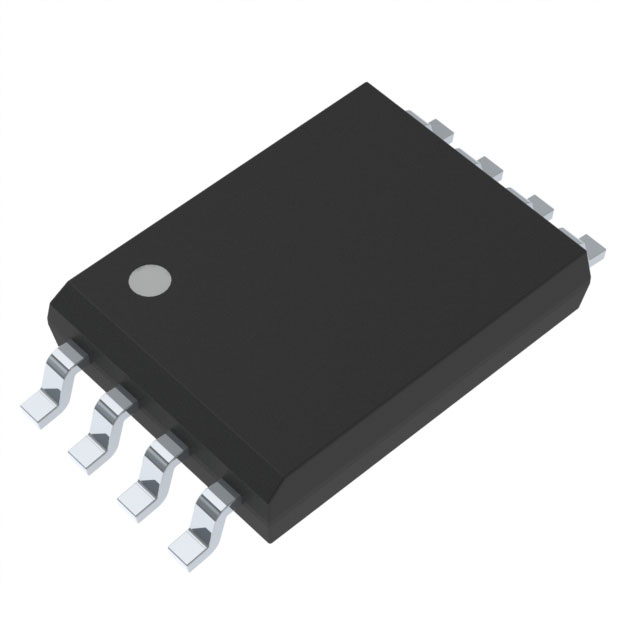
Comparison: STGAP2SICSACTR vs STGAP2SICSNTR Gate Drivers
1. Quick verdict
For applications requiring the highest galvanic isolation and elevated surge voltages, such as industrial motor drives with strict isolation standards, the STGAP2SICSNTR is the better fit due to its 4000Vrms isolation rating and 4800 VPEAK surge capability. Conversely, for automotive-grade designs demanding a wider operating input voltage range and tighter propagation delays, the STGAP2SICSACTR offers advantages including AEC-Q100 qualification and faster typical propagation delay (~60 ns vs. 75 ns).
2. Spec comparison table
| Spec | STGAP2SICSACTR | STGAP2SICSNTR | Notes |
|---|---|---|---|
| Technology | Capacitive Coupling | Capacitive Coupling | Identical isolation tech. |
| Number of channels | 1 | 1 | Equal. |
| Output current (peak) | 4 A | 4 A | Equal driver peak current capability. |
| Maximum switching frequency | 1 MHz | 1 MHz | Equal. |
| Propagation delay (typical) | 60 ns | 75 ns | STGAP2SICSACTR is ~20% faster, better for timing-critical control loops. |
| Pulse width distortion | 20 ns | 20 ns | Equal. |
| Rise/Fall time (typical) | 30 ns | 30 ns | Equal. |
| Operating temperature range | -40°C to +125°C | -40°C to +125°C (TJ) | Equal. |
| Junction temperature max | 150 °C | 150 °C | Equal. |
| Isolation voltage (Vrms) | 3530 Vrms | 4000 Vrms | STGAP2SICSNTR offers ~13% higher isolation voltage rating. |
| Surge test voltage (VPEAK) | 6000 VPEAK | 4800 VPEAK | STGAP2SICSACTR has higher surge capability, important for transient voltage robustness. |
| Operating input voltage range (logic) | 3.1 V to 5.25 V | 3.1 V to 5.5 V | STGAP2SICSNTR supports slightly higher max logic voltage (5.5 V vs 5.25 V). |
| Gate driving voltage range (VH) | Up to 26 V | 16.4 V to 26 V | STGAP2SICSNTR specifies a higher minimum VH voltage (16.4 V vs undefined), better for 15-16 V rails. |
| Clamp voltage (typical) | 2 V | SafeClp (unspecified exact) | STGAP2SICSACTR specifies 1.3-2.6 V clamp; STGAP2SICSNTR references SafeClp but no values given. |
| Output low-level voltage (typ) | 180 mV | -0.3 V (min) | STGAP2SICSACTR provides explicit low output voltage; STGAP2SICSNTR shows output swing to -0.3 V. |
| Output high-level voltage (typ) | VH - 0.21 V | +0.3 V (typ) | Both have similar output high swing close to VH rail. |
| Output Rds-on (typical) | Source: 2.11 Ω, Sink: 1.8 Ω | Not specified | STGAP2SICSACTR provides explicit on-resistance values, useful for conduction loss estimates. |
| Common-mode transient immunity | 100 V/ns (typ/min/max) | ±100 V/ns (typ/min/max) | Equal. |
| Input hysteresis | 3.3 V (typ) TTL/CMOS inputs | 3.3 V (typ) TTL/CMOS inputs | Equal. |
| Input voltage (typical) | 1/3·VDD (typ) | 5 V (typ) | STGAP2SICSACTR input threshold scaled to VDD; STGAP2SICSNTR fixed at 5 V typical. |
| Input-output propagation delay max | < 45 ns | 90 ns | STGAP2SICSACTR faster max delay, critical for timing-sensitive designs. |
| Quiescent current (typical) | 1.3 mA (typ) | 1.8 mA (typ) | STGAP2SICSACTR slightly lower quiescent current, beneficial for low power. |
| Standby quiescent current (typical) | 65 μA | Not specified | STGAP2SICSACTR provides standby current data; STGAP2SICSNTR does not. |
| Package | 8-SOIC Wide Body (7.5 mm width) | 8-SOIC Narrow (3.9 mm width) | STGAP2SICSACTR is physically larger, affecting PCB area and creepage distances. |
| Creepage distance | Not explicitly specified | 4 mm (min) | STGAP2SICSNTR specifies 4 mm creepage, important for isolation and safety standards. |
| Clearance distance | VH (not specified) | 4 mm (min) | STGAP2SICSNTR explicitly specifies clearance, aiding compliance and layout. |
| UL recognition | UL approved | UL 1577 recognized | Both UL certified, but STGAP2SICSNTR references UL 1577 explicitly. |
| Grade | Automotive (AEC-Q100 qualified) | Not automotive; industrial grade | STGAP2SICSACTR suits automotive-grade requirements. |
| Max switching frequency (recommended) | 1 MHz | 200 kHz (max) | STGAP2SICSACTR supports up to 1 MHz switching; STGAP2SICSNTR limited to 200 kHz max. |
| Wake-up time (typical) | 20 μs | 20 μs | Equal. |
| Safe state output | Forced low | GOFF=ON, GON=High-Z, CLAMP=ON (differs) | Different safe state definitions could impact fault handling design. |
| Thermal resistance junction-to-ambient | 130 °C/W | 123 °C/W | STGAP2SICSNTR slightly better thermal dissipation by package. |
| Storage temperature range | -50°C to 150°C | -50°C to 150°C | Equal. |
| Release year | 2023 | Older product (date not specified) | STGAP2SICSACTR is newer, possibly with improved process or support. |
3. Design trade-offs
The STGAP2SICSACTR targets automotive applications with AEC-Q100 qualification, wider operating logic voltage, and faster propagation delays (typical 60 ns vs 75 ns). This translates to tighter timing control in high-speed switching applications, such as automotive inverters or DC-DC converters. Its higher max switching frequency (up to 1 MHz) allows more aggressive PWM schemes and smaller passive components, improving system size and weight. However, the larger SOIC-8W package (7.5 mm wide) increases PCB area and may complicate creepage distances, though it benefits thermal dissipation stability.
In contrast, the STGAP2SICSNTR is optimized for industrial or high-isolation use cases with a higher isolation voltage rating (4000 Vrms vs 3530 Vrms) and a defined minimum creepage of 4 mm. This makes it preferable for designs requiring stringent isolation under harsh environmental standards. The narrower SOIC-8 package (3.9 mm wide) reduces PCB footprint but may limit creepage and thermal dissipation, evidenced by its slightly better thermal resistance (123 °C/W vs 130 °C/W). The trade-off is a lower maximum switching frequency recommendation (200 kHz max), restricting its use in very high-frequency switching topologies.
From a gate drive perspective, both modules deliver 4 A peak source/sink current, adequate for driving modern SiC or Si IGBTs efficiently. The STGAP2SICSACTR provides explicit on-resistance values (Rds_on) for both source and sink paths, useful for conduction loss calculations, while the STGAP2SICSNTR does not specify these, requiring empirical evaluation or conservative design margins. The clamp voltage and safe state definitions differ, with STGAP2SICSACTR clamping between 1.3 V and 2.6 V, while STGAP2SICSNTR references a “SafeClp” voltage without clear numbers, which may affect transient robustness and EMI performance.
Thermal considerations favor the STGAP2SICSNTR slightly due to its lower junction-to-ambient thermal resistance, but the STGAP2SICSACTR’s larger package and automotive-grade robustness