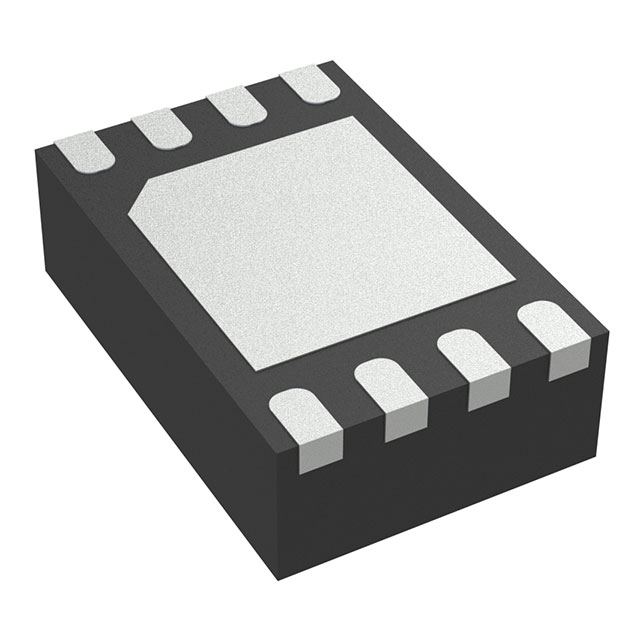
Key Specs
| Spec | Value | Condition | Source |
|---|---|---|---|
| Control Features | Enable | Digi-Key | |
| Current Quiescent IQ | 8 µA | Digi-Key | |
| Current Supply (Max) | 30 mA | Digi-Key | |
| Input Voltage (Max) | 16V | Digi-Key | |
| Mounting Type | Surface Mount | Digi-Key | |
| Number Of Regulators | 1 | Digi-Key | |
| Operating Temperature Range | -40°C ~ 125°C | Digi-Key | |
| Output Configuration | Positive | Digi-Key | |
| Output Current (Max) | 500mA | Digi-Key | |
| Output Type | Adjustable | Digi-Key | |
| Output Voltage (Max) | 15.3V | Digi-Key | |
| Output Voltage (Min) | 1.235V | Digi-Key | |
| Package Case | 8-VFDFN Exposed Pad | Digi-Key | |
| Protection Features | Over Current, Over Temperature, Reverse Polarity | Digi-Key | |
| Psrr | - | Digi-Key | |
| Supplier Device Package | 8-DFN (2x3) | Digi-Key | |
| Voltage Dropout (Max) | 0.7V @ 500mA | Digi-Key |
When To Use
Use the SPX3819R2-L/TR in applications requiring a low quiescent current (8 µA) and moderate output current (up to 500 mA) with an adjustable output voltage up to 15.3 V, such as battery-powered portable devices or sensor modules operating from input voltages up to 16 V. Its surface mount 8-VFDFN package with exposed pad supports compact designs and effective thermal dissipation.
Do not use this device in high current applications exceeding 500 mA, such as power-hungry motors or high-power LED drivers, where a higher current regulator is required. Instead, consider a regulator with a higher maximum output current rating. Also, avoid using it in applications requiring negative output voltages or dual regulators, as this device supports only a single positive adjustable output.
When Not To Use
-
High-current motor driver supply > 0.5A: Output current max of 500mA is insufficient for motor stall or surge currents. Use a multi-phase buck controller to handle higher current with thermal headroom.
-
Battery-powered sensor with sleep current < 1µA: Quiescent current of 8 µA is too high for ultra-low power sleep modes. Use a low-IQ PFM buck to minimize battery drain in standby.
-
Input-to-output voltage differential < 0.7V at full load: Maximum dropout voltage of 0.7V at 500mA makes this part unsuitable for low-dropout applications with tight headroom. Use an LDO regulator optimized for low input-output differential and low noise.
Application Notes
The SPX3819R2-L/TR’s input node (VIN) is the switching node that requires the smallest loop area to minimize EMI and voltage spikes; place the input capacitor as close as possible to the VIN and GND pins. The enable pin is noise-sensitive; avoid routing noisy signals near it to prevent unintended toggling.
Thermal dissipation through the exposed pad on the 8-VFDFN package is critical at maximum load (500 mA output current) and elevated ambient temperatures (up to 125°C). A proper PCB thermal design with adequate copper area connected to the exposed pad is necessary to avoid thermal shutdown due to over-temperature protection activation. Under typical operating conditions, an external heatsink is generally not required if proper PCB layout is followed.
Design Equations
Output voltage: Vout = 1.24V × (1 + R2/R1)
R1 is typically 1.21kΩ–10kΩ (1% tolerance). Solve for R2: R2 = R1 × (Vout/1.24 - 1). Example: for 5V with R1=1.21kΩ → R2 ≈ 3.74kΩ (use 3.74kΩ 1%).
Gotchas
-
Incorrect Output Capacitor Selection:
- Mistake: Using a high-ESR or insufficient capacitance output capacitor.
- Failure mode: The regulator may oscillate or exhibit poor transient response, causing unstable output voltage.
- Fix: Use a low-ESR ceramic capacitor with capacitance at least 4.7 µF rated above 15.3 V, placed close to the output pin.
-
Floating Enable Pin:
- Mistake: Leaving the enable pin unconnected or floating.
- Failure mode: The regulator output may turn on and off unpredictably, leading to erratic system behavior.
- Fix: Tie the enable pin to a defined logic level using a pull-up or pull-down resistor as required by the application.
-
Exceeding Maximum Input Voltage:
- Mistake: Applying input voltage above 16 V.
- Failure mode: Device damage or permanent failure due to overvoltage stress.
- Fix: Ensure input voltage never exceeds 16 V; use voltage clamps or protection circuits if necessary.