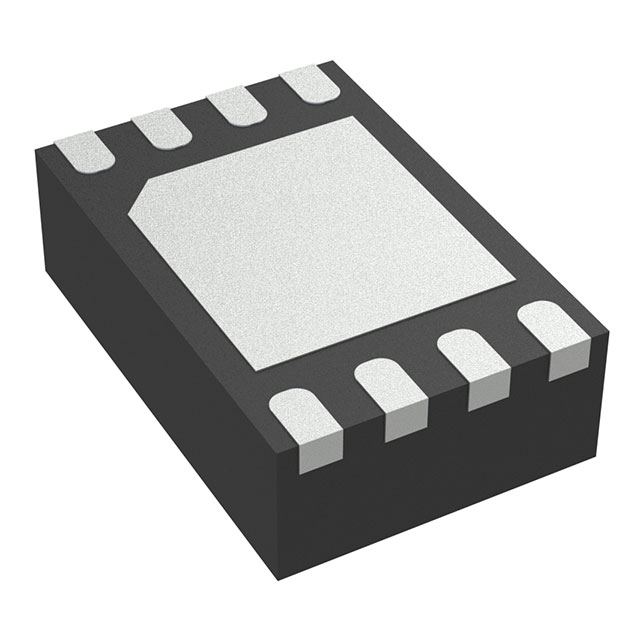
Key Specs
| Spec | Value | Condition | Source |
|---|---|---|---|
| Control Features | Enable | Digi-Key | |
| Current Quiescent IQ | 190 µA | Digi-Key | |
| Current Supply (Max) | 30 mA | Digi-Key | |
| Input Voltage (Max) | 16V | Digi-Key | |
| Mounting Type | Surface Mount | Digi-Key | |
| Number Of Regulators | 1 | Digi-Key | |
| Operating Temperature Range | -40°C ~ 125°C (TJ) | Digi-Key | |
| Output Configuration | Positive | Digi-Key | |
| Output Current (Max) | 500mA | Digi-Key | |
| Output Type | Adjustable | Digi-Key | |
| Output Voltage (Max) | 15.3V | Digi-Key | |
| Output Voltage (Min) | 1.235V | Digi-Key | |
| Package Case | 8-VFDFN Exposed Pad | Digi-Key | |
| Protection Features | Over Current, Over Temperature, Reverse Polarity | Digi-Key | |
| Psrr | - | Digi-Key | |
| Supplier Device Package | 8-DFN (2x3) | Digi-Key | |
| Voltage Dropout (Max) | 0.7V @ 500mA | Digi-Key |
When To Use
-
12V automotive rail → 5V @ 0.3A: The 16V max input rating accommodates common 12V battery transients with margin, while the integrated reverse polarity protection prevents damage from accidental battery reversal. Using a generic LDO without reverse polarity protection risks permanent latch-up or catastrophic failure under reversed input conditions.
-
Battery-powered industrial sensor → 3.3V @ 0.1A: The low quiescent current of 190 µA reduces battery drain during standby compared to linear regulators with higher IQ. Switching regulators may save more energy but introduce noise that disrupts sensitive analog front-ends, making this part a good middle ground, as synchronous buck controllers risk injecting switching noise into the sensor signal.
-
Adjustable voltage rail → 1.235V to 15.3V @ 0.5A: The adjustable output and 500mA max current enable flexible supply rails for mixed-signal systems. A fixed-voltage LDO or regulator with lower max current would either require multiple parts or enter thermal shutdown, while a switching controller might cause EMI issues in noise-sensitive environments.
When Not To Use
-
1.8V @ 2A power rail: Output current max of 500mA is insufficient for this load; use a multi-phase buck controller to handle the higher current with proper thermal and current sharing design.
-
Battery-powered wearable with μA sleep current: Quiescent current of 190 µA is too high to meet ultra-low power goals; choose a low-IQ PFM buck to minimize battery drain during standby modes.
-
Input-output voltage differential < 0.7V: The dropout voltage at full load can reach 0.7V, making regulation unstable or impossible at lower differentials; use an LDO regulator optimized for low dropout and noise-sensitive applications instead.
Application Notes
The SPX3819R2-L/MTR’s output pass element switches at the output node; thus, the output capacitor and associated traces form the critical switching node. To minimize noise and improve transient response, keep the loop area formed by the input capacitor, device input pin, output capacitor, and ground as small as possible.
The Enable pin is noise-sensitive and should be routed away from high-frequency switching nodes to prevent unintended toggling. A clean, stable logic signal is recommended to ensure reliable device enable/disable operation.
At a representative operating point of 500 mA output current and maximum dropout voltage of 0.7 V, the device dissipates approximately 0.35 W. Adequate PCB thermal design including the use of the exposed pad soldered to a large copper area with thermal vias is necessary to maintain junction temperature below 125°C. Inadequate thermal management may trigger over-temperature protection or reduce device reliability.
Design Equations
Output voltage: Vout = 1.24V × (1 + R2/R1)
R1 is typically 1.21kΩ–10kΩ (1% tolerance). Solve for R2: R2 = R1 × (Vout/1.24 - 1). Example: for 5V with R1=1.21kΩ → R2 ≈ 3.74kΩ (use 3.74kΩ 1%).
Gotchas
-
[Ignoring dropout voltage at max load]: Designers often assume the regulator can provide output voltage down to near input voltage. At 500mA load, dropout can reach 0.7V causing output voltage to sag unexpectedly under heavy load. This appears as a slow voltage drop on scope during load step increase. Fix by verifying input voltage margin ≥ 0.7V at max load in system conditions.
-
[Floating enable pin during start-up]: Leaving the enable pin floating can cause erratic on/off switching or partial conduction, showing as output voltage ripple or intermittent startup failures. Fix by tying enable pin explicitly to a logic signal or to VIN via resistor to ensure defined startup state.
-
[Output capacitor ESR mismatch]: Using electrolytic capacitors with high ESR leads to output voltage instability and oscillations that don’t appear in basic load-step simulations. Symptoms include ringing on output voltage and audible coil whine. Fix by selecting low-ESR ceramic capacitors per datasheet recommendations and verifying with transient load tests.
-
[Thermal derating ignored at high ambient]: The device is rated up to 125°C junction but real-world PCB thermal resistance can cause TJ to exceed limits under continuous 500mA load, leading to thermal shutdown cycles or accelerated aging. This appears as periodic output dropout in hot environments. Fix by thermal simulation and ensuring PCB layout with adequate copper area and airflow.