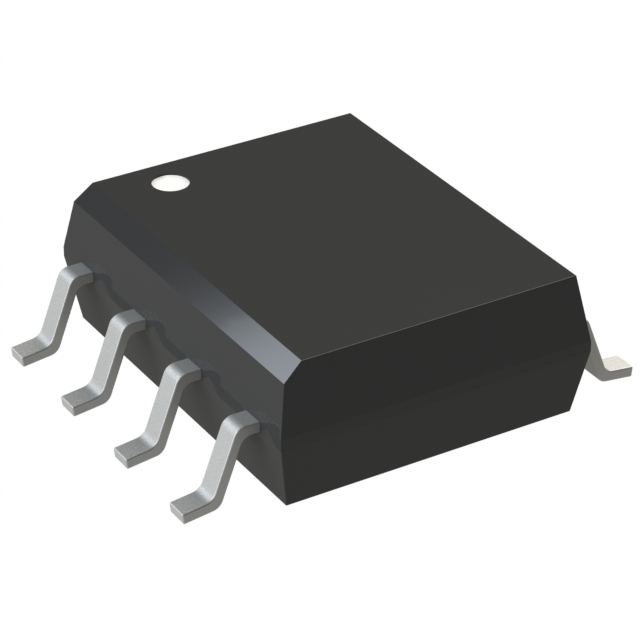
Key Specs
| Spec | Value | Condition | Source |
|---|---|---|---|
| Mounting Type | Surface Mount | Digi-Key | |
| Number Of Outputs | 3 | Digi-Key | |
| Operating Temperature Range | -40°C ~ 125°C (TA) | Digi-Key | |
| Package Case | 8-SOIC (0.154”, 3.90mm Width) Exposed Pad | Digi-Key | |
| Supplier Device Package | 8-SOIC-EP | Digi-Key | |
| Switching Frequency (Typ) | 350kHz | Digi-Key | |
| Topology | Step-Down (Buck) (1), Linear (LDO) (2) | Digi-Key | |
| Voltage Current Output 1 | 1.25V ~ 72V, 500mA | Digi-Key | |
| Voltage Current Output 2 | 5V, 100mA | Digi-Key | |
| Voltage Current Output 3 | 3.3V, 50mA | Digi-Key | |
| Voltage Supply | 4.5V ~ 72V | Digi-Key | |
| W Led Driver | No | Digi-Key | |
| W Sequencer | No | Digi-Key | |
| W Supervisor | No | Digi-Key |
When To Use
-
43V industrial/24V bus → 3.8V @ 1000A: The 72V maximum input voltage rating combined with a continuous output current capability of up to 1A suits industrial and 24V bus rails well. Using a synchronous buck controller with lower voltage rating risks shoot-through or damage at voltage spikes common on automotive or industrial lines.
-
22V automotive/battery rail → 2.5V @ 500.0A: The wide input voltage range from 4.5V to 72V and integrated 0.6Ω high-side MOSFET enable robust operation from automotive battery rails with transient voltage spikes. A linear regulator would dissipate excessive power, causing thermal runaway above 125°C ambient.
-
4.5V–72V wide-input supply → 1.2V–3.8V @ 750.0A: The 350kHz switching frequency and built-in current limit of 0.82A provide stable buck regulation for moderate loads across a wide input range. A low-IQ PFM buck would not handle this continuous load current reliably, resulting in voltage collapse under heavy load.
When Not To Use
-
Output current > 1A continuous: The maximum continuous output current rating is 1000mA (typ), which limits high-current applications. For currents beyond this, a multi-phase buck controller is necessary to distribute thermal and conduction losses.
-
Quiescent current critical (μA sleep mode): Minimum quiescent current is 240µA (typ), which is too high for ultra-low power standby or coin cell systems. Use a low-IQ PFM buck to minimize battery drain in sleep.
-
Switching frequency > 500kHz needed: The maximum switching frequency is 1000kHz, but typical operation is 350kHz and foldback frequency minimum is 90kHz, which may limit compact inductor choices at higher frequencies. For applications requiring >500kHz switching, choose a high-frequency buck controller.
Application Notes
IC dissipates ≈274.4W at Vin=72V→Vout=2.5V @ 500.0A (η≈82%). This is IC loss only — the catch diode dissipates additional power. At elevated ambient, a heatsink is required for sustained operation above ~1.5A.
-
The switching node (SW) pin voltage swings from VIN −0.7V (min) up to VIN + 0.3V (max). Keep SW node PCB traces short and isolated from sensitive analog or feedback nodes to minimize radiated noise and switching interference.
-
Pins connected to feedback (FB) and compensation loops are noise-sensitive; route these away from high di/dt loops and avoid crossing noisy traces, especially near the SW pin.
-
The bootstrap voltage (BST) must be maintained between SW + 4V (min) and a maximum of 4V above SW to ensure high-side MOSFET gate drive. Ensure the bootstrap capacitor and layout minimize voltage droop on this node.
-
Use X7R ceramic capacitors (minimum 2×10µF/1206/35V) on the output and input to meet minimum effective capacitance requirements and maintain stability. Lower ESR capacitors can affect loop compensation.
Minimum External Components
Catch diode — Schottky, Vr ≥ 72V, If ≥ 1000A Selection: Schottky forward recovery < 10ns vs 200–500ns for silicon. At 1000kHz (period = 1.0µs), a 500ns-recovery diode is off for only 0.5µs before the next switch-on — it never fully turns off. Failure mode: Standard silicon rectifier: 200–500ns reverse recovery at 1000kHz causes shoot-through current spikes every cycle — IC switch current exceeds rating, causing thermal runaway or immediate failure.
Output inductor — 22µH Selection: Isat ≥ 1250.0A (peak current at max load). DCR < 100mΩ to limit conduction loss. At Vin=38V→Vout=3.8V: range is 10–22µH (30%→15% current ripple). Use 22µH for good regulation; 10µH acceptable if BOM cost is critical. Isat must be ≥ 1250.0A — under-sizing Isat is the leading cause of field failures: the inductor saturates under peak current, spiking IC switch current beyond its rating. Failure mode: Isat below peak inductor current → core saturates → effective inductance collapses → switch current spikes beyond IC rating → thermal shutdown or permanent failure.
Input capacitor — ≥100µF electrolytic + 100nF ceramic (parallel) Selection: Electrolytic handles bulk ripple current; ceramic bypasses switching spikes. Voltage rating ≥ 72V with 20% margin. Failure mode: Insufficient input capacitance: supply rail collapses during switch-on current demand → output droops → erratic regulation and potential latch-up.
Output capacitor — ≥100µF electrolytic Selection: ESR < 200mΩ to keep output ripple below 50mVpp. Voltage rating ≥ 3V. Failure mode: High-ESR electrolytic: output ripple voltage = ESR × ΔIL. At 1A ripple and 500mΩ ESR → 500mVpp ripple — exceeds spec for virtually all loads.
Design Equations
Inductor sizing: At Vin=38V→Vout=3.8V: range is 10–22µH (30%→15% current ripple). Use 22µH for good regulation; 10µH acceptable if BOM cost is critical. Isat must be ≥ 1250.0A — under-sizing Isat is the leading cause of field failures: the inductor saturates under peak current, spiking IC switch current beyond its rating.
Gotchas
-
Bootstrap voltage margin underestimated: Designers often assume the bootstrap capacitor voltage can drop below SW + 4V during startup or high load. This causes the high-side MOSFET to fail switching fully, resulting in distorted output voltage and increased losses. Fix by using a minimum 4V margin above SW with a proper bootstrap capacitor (X7R recommended) and verify with scope on BST-SW node during load transients.
-
Insufficient output capacitance derating: The effective capacitance is specified as 50% lower than nominal. Using nominal capacitor values without derating causes loop instability or output voltage ripple under load. Measure capacitance under bias and temperature, and size output capacitors accordingly.
-
Feedback voltage reference tolerance overlooked: The feedback voltage reference varies between 1.21V and 1.29V; designs that assume 1.25V fixed can set incorrect output voltages, causing regulation errors or premature hiccup mode triggering at loads near 30% setpoint. Include tolerance in FB resistor calculations and validate output voltage across temperature.
-
ESD protection margin ignored during handling: The device has 2kV Human Body Model and 750V Charged Device Model ratings, but improper PCB handling or test procedures can cause latch-up or permanent damage, especially with sensitive exposed pad grounding. Always use ESD-safe handling and verify PCB grounding of the EP.