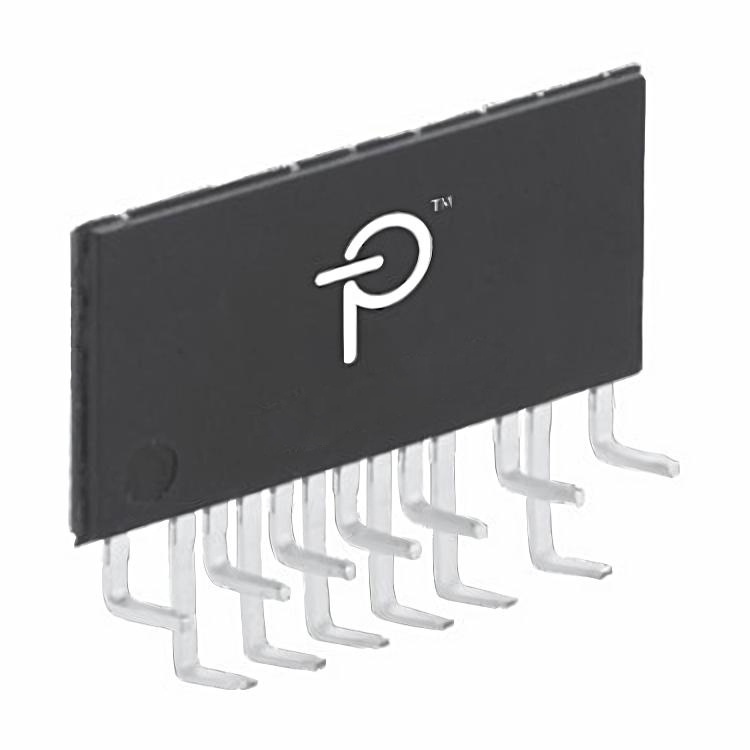
Key Specs
| Spec | Value | Condition | Source |
|---|---|---|---|
| Mode | Continuous Conduction (CCM) | Digi-Key | |
| Switching Frequency (Typ) | 22kHz ~ 123kHz | Digi-Key | |
| Voltage Supply | 10.2V ~ 15V | Digi-Key | |
| Operating Temperature Range | -40°C ~ 150°C (TJ) | Digi-Key | |
| Mounting Type | Through Hole | Digi-Key | |
| Package Case | 16-SSIP, 13 Leads, Exposed Pad, Formed Leads | Digi-Key | |
| Supplier Device Package | eSIP-16G | Digi-Key |
When To Use
Use the PFS7723L in applications requiring high-efficiency power factor correction with continuous conduction mode operation, such as:
- Industrial power supplies where high power factor (>0.95) and efficiency (>95%) are critical, supporting output power up to 385 W in high-line packages or 110 W in C packages
- LED lighting drivers requiring stable output voltage regulation between 3.3 V and 12 V with low harmonic distortion (typical THD ~3%)
- Universal input AC-DC adapters operating from 90 VAC to 305 VAC steady-state input voltage with switching frequencies from 22 kHz to 123 kHz, simplifying EMI filter design
Do not use the PFS7723L when:
- Low power or battery-powered applications demand ultra-low quiescent current, as no-load consumption is typically under 60 mW but standby currents can reach 320 mA
- Applications requiring switching frequencies above 1 MHz, since the maximum switching frequency is limited to 1 MHz
- Environments exceeding the maximum operating junction temperature of 150 °C, where alternative devices with higher thermal ratings should be selected
When Not To Use
-
> 450 W peak output power requirement: The peak output power max for this part tops at 450 W (H/L packages). For higher output currents or power, the drain current and thermal limits are exceeded. Use a high-current synchronous buck with external FETs controller instead, which supports higher currents and helps avoid thermal runaway and device destruction.
-
Battery-powered, low standby current sensor node: The typical no-load consumption is <60 mW, and standby current is around 320 mA, which is too high for ultra-low-power applications. Use a low-IQ PFM buck instead, as it can achieve μA-level quiescent currents and avoid premature battery drain.
-
High-frequency switching above 500 kHz for compact EMI filtering: The maximum switching frequency is 123 kHz (typ), limiting EMI filter design flexibility and inductor size reduction. Use a high-frequency buck controller to enable switching frequencies above 500 kHz, which reduces filter size and improves transient response.
Application Notes
- The drain pin is the primary switching node and
Gotchas
-
Incorrect Reference Pin Capacitor Value
- Mistake: Using a capacitor significantly larger than 0.1 µF ±20% on the REF pin
- Failure Mode: Causes instability in the internal reference voltage leading to erratic switching behavior and output voltage regulation errors
- Fix: Use the specified 0.1 µF ±20% ceramic capacitor to ensure stable operation
-
Undersized Boost Inductor
- Mistake: Selecting an inductor with inductance below 400 µH or with a K-factor outside the recommended 0.3 to 0.45 range
- Failure Mode: Results in excessive core saturation or increased AC copper losses, causing overheating, reduced efficiency, and potential device failure
- Fix: Choose an inductor matching the 400 µH value and design K-factor guidelines to balance core and copper losses
-
Inadequate Thermal Management
- Mistake: Operating the device at or above maximum power ratings without proper heat sinking or PCB thermal design
- Failure Mode: Junction temperature exceeds 150 °C, triggering thermal shutdown or permanent damage
- Fix: Implement appropriate thermal dissipation measures and verify junction temperature remains within limits under worst-case conditions