NX3008NBKS,115 vs TB6612FNG,C,8,EL: Component Comparison for Power Electronics Engineers
Quick verdict
For discrete low-current switching with tight space and high-temperature tolerance, the NX3008NBKS,115 is preferable due to its automotive-grade robustness, low gate charge, and compact 6-TSSOP package. For integrated motor driver applications requiring up to 1A output current and straightforward parallel interface control, the TB6612FNG,C,8,EL offers a more complete solution with built-in half-bridge driver circuitry, simplifying system design at the cost of lower max voltage and temperature range.
Spec comparison table
| Spec | NX3008NBKS,115 | TB6612FNG,C,8,EL | Notes |
|---|---|---|---|
| Product type | Mosfet Array 2x N-Channel MOSFET | Integrated Motor Driver with MOSFETs | Discrete MOSFET array vs fully integrated driver; impacts system integration and control. |
| Voltage rating (VDSS max) | 30 V | 13.5 V (max load voltage) | NX3008NBKS supports significantly higher voltage, making it more versatile for 24V systems. |
| Continuous drain current | 350 mA | 1 A | TB6612FNG supports nearly 3x current, suited for higher load motors. |
| Drain current spiking max | 1.4 A | Not specified | NX3008NBKS can handle short spikes; TB6612FNG datasheet does not specify spike current. |
| Power dissipation max | 990 mW | Not specified | NX3008NBKS provides clear power dissipation limits; TB6612FNG datasheet lacks this detail. |
| Operating temperature range | -55°C to +150°C | -20°C to +85°C | NX3008NBKS supports automotive-grade temps; TB6612FNG limited to commercial range. |
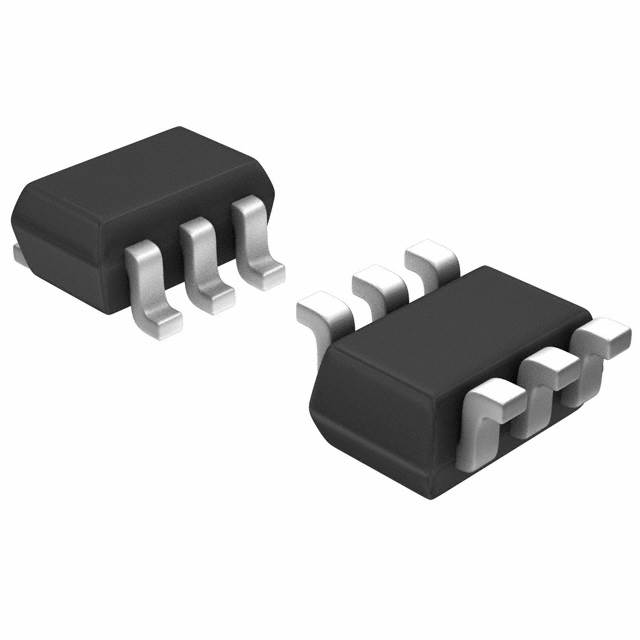
| Package type | 6-TSSOP (2.2 mm × 1.35 mm) | 24-SSOP (5.6 mm width) | NX3008NBKS is much smaller, better for tight layouts. |
| Gate charge (Qg typical @ 4.5V) | 0.68 nC | Not specified | NX3008NBKS has low gate charge, reducing gate drive losses and switching time. |
| RDS(on) typical @ 350mA, 4.5V | 1.4 Ω | Not specified | NX3008NBKS specifies on-resistance; TB6612FNG datasheet does not specify RDS(on). |
| ESD rating | 2000 V | Not specified | NX3008NBKS rated for ESD robustness; TB6612FNG datasheet does not state ESD rating. |
| Gate threshold voltage (typical) | 0.6 - 1.1 V | Not specified | NX3008NBKS provides logic-level thresholds; TB6612FNG does not specify. |
| Input capacitance (typ @ 25°C) | 34 - 50 pF | Not specified | NX3008NBKS input capacitance known; relevant for gate drive design. |
| Thermal resistance junction-to-ambient (typ) | 300 K/W (device) | Not specified | NX3008NBKS thermal characteristics clear; TB6612FNG datasheet lacks this. |
| Function | Discrete MOSFET array | Fully integrated motor driver | NX3008NBKS requires external control; TB6612FNG simplifies control with integrated logic. |
| Interface | N/A | Parallel | Only TB6612FNG has a defined control interface. |
| Applications | General purpose, automotive-grade | Brushed DC motor driver | NX3008NBKS suits discrete switching; TB6612FNG targets motor drive. |
| Supply voltage range | N/A | 2.7V to 5.5V (logic), 2.5V to 13.5V (load) | TB6612FNG limited supply voltage range; NX3008NBKS no explicit supply voltage (MOSFET). |
Design trade-offs
The NX3008NBKS,115 is essentially a dual discrete N-channel MOSFET array optimized for low-voltage (30V max) switching in a very small 6-TSSOP package. Its main strengths are the automotive-grade temperature range (-55°C to +150°C), solid ESD protection (2kV), and low gate charge (0.68 nC typical at 4.5V), which together make it suitable for precision, low-current switching applications in harsh environments. The relatively high RDS(on) of about 1.4Ω at 350mA means conduction losses are moderate but acceptable for low current loads. The discrete MOSFET array requires external gate drive signals and control logic, which allows maximum design flexibility but increases BOM and PCB complexity.
In contrast, the TB6612FNG,C,8,EL is a fully integrated brushed DC motor driver incorporating power MOSFET half-bridges with maximum continuous output current up to 1A. Its integrated driver and logic interface simplify firmware and hardware design for motor control, reducing development time and component count. However, it is limited to a maximum load voltage of 13.5V and an operating temperature range of -20°C to +85°C, which restricts its use to less demanding environments. The larger 24-SSOP package (5.6mm wide) reflects the integrated circuitry and higher current capability but consumes more PCB area. Unfortunately, the datasheet does not specify critical MOSFET parameters such as RDS(on), gate charge, or power dissipation, which makes detailed efficiency and thermal analysis more difficult.
From a thermal standpoint, the NX3008NBKS’s high thermal resistance (~300 K/W junction-to-ambient) means it is best used at low currents or with good thermal management, while the TB6612FNG, despite lack of explicit thermal data, can dissipate more power due to integrated design and higher current rating but requires careful layout to handle motor driver switching and heat. The NX3008NBKS’s low gate charge translates to lower switching losses and simpler gate driver requirements, while the TB6612FNG offloads gate drive complexity internally but at the cost of higher quiescent current and less control over switching characteristics.
Cost-wise, the NX3008NBKS is likely less expensive per unit due to its simpler die and smaller package but demands more external components, increasing system cost. The TB6612FNG integrates control and power stages, so the higher unit cost may be offset by reduced overall BOM and assembly complexity. The choice between these parts often comes down to whether the design prioritizes minimal size and high-temperature capability or integrated motor driver convenience.
Use-case fit
Choose NX3008NBKS,115 when…
- Designing low-current (≤350mA) load switches or level shifters in automotive or industrial environments requiring wide temperature range (-55°C to +150°C).
- Space-constrained applications needing a small 6-TSSOP package with low parasitic capacitances and logic-level gate drive.
- Systems where the designer wants full control over MOSFET switching behavior and external gate drive timing for efficiency optimization.
- Applications requiring higher voltage tolerance up to 30V, such as 24V automotive or industrial control circuits.
- Circuits requiring dual discrete MOSFETs with matched characteristics and proven AEC-Q101 qualification.
Choose TB6612FNG,C,8,EL when…
- Implementing brushed DC motor control up to 1A load current in consumer or general-purpose applications.
- Simplifying firmware and hardware by using an integrated driver with parallel control interface.
- Operating within 2.5V to 13.5V load voltage and 2.7V to 5.5V logic supply ranges, typical of battery-powered or low-voltage embedded systems.
- Reducing PCB area and component count at the system level, accepting a larger single IC but no external MOSFETs.
- Designing for environments where operating temperature range (-20°C to +85°C) and voltage limits are acceptable.
Drop-in compatibility
These two parts are not pin-compatible nor footprint-compatible. The NX3008NBKS is a 6-TSSOP discrete MOSFET array in a very small package, while the TB6612FNG,C,8,EL is a much larger 24-SSOP integrated motor driver IC. The NX3008NBKS provides only MOSFET switches with no integrated logic or driver, whereas the TB6612FNG includes control logic and power MOSFETs in one package. Substituting one for the other would require a complete redesign of the PCB layout, power supply, and firmware control scheme. No drop-in substitution is possible.
Alternatives to consider
- NXP BSS138: A small-signal logic-level N-channel MOSFET with low gate charge, suitable for low-current level shifting and switching.
- Infineon BTS7960: A high-current integrated half-bridge motor driver offering up to 43A, for applications needing greater power than TB6612FNG.
- Texas Instruments DRV8833: Dual H-bridge motor driver IC with integrated MOSFETs,