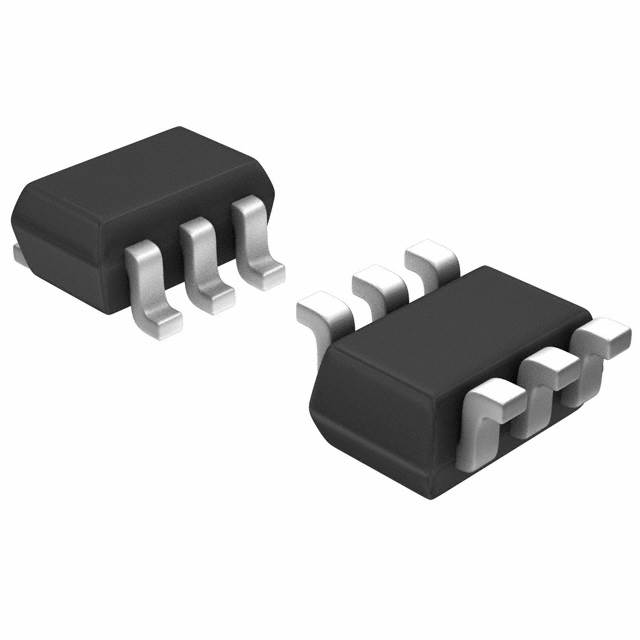
NX3008NBKS,115 vs NTHL040N120M3S: Component Comparison for Power Electronics Engineers
Quick verdict
For low-voltage, low-current applications such as signal switching or level shifting in automotive or industrial contexts, the NX3008NBKS,115 dual MOSFET array offers a compact, logic-level solution with an automotive-grade qualification. Conversely, for high-voltage, high-current power conversion or motor drives requiring 1200 V blocking and tens of amps continuous current, the NTHL040N120M3S SiC MOSFET provides a robust, high-power discrete transistor with lower conduction losses at high current and superior thermal handling.
Spec comparison table
| Spec | NX3008NBKS,115 | NTHL040N120M3S | Notes |
|---|---|---|---|
| Product type | Mosfet Array (2 N-Channel) | N-Channel discrete MOSFET | Array vs discrete transistor affects integration and layout flexibility |
| Drain-Source Voltage (Vds max) | 30 V | 1200 V | NTHL040N120M3S supports much higher voltages, suitable for mains or HV applications |
| Continuous Drain Current (Id @ 25°C) | 350 mA | 54 A (Tc) | NTHL040N120M3S supports 150× higher current, for power stage use |
| Drain Current Spiking Max | 1.4 A | Not specified | NX3008NBKS,115 can handle brief surges up to 1.4 A |
| Rds(on) Typ @ Tj=25°C | 1.0–1.4 Ω @ 350 mA, 4.5 V | 54 mΩ @ 20 A, 18 V | NTHL040N120M3S has orders of magnitude lower Rds(on) at high current, critical for efficiency |
| Gate Threshold Voltage (Vgs_th typ) | 0.6–1.1 V @ 250 µA | 4.4 V @ 10 mA | NX3008NBKS,115 is logic-level, switching fully on below 2 V; NTHL040N120M3S requires higher drive voltage |
| Gate Charge (Qg typ / max) | 0.52–0.68 nC @ 4.5 V | 75 nC @ 18 V | NX3008NBKS,115 gate charge is ~100× lower, easing gate drive power and switching losses |
| Input Capacitance (Ciss max) | 50 pF @ 15 V | 1700 pF @ 800 V | NX3008NBKS,115 has much lower input capacitance, beneficial for high-speed switching at low voltage |
| Output Capacitance (Coss typ) | 6.5 pF | Not specified | Lower output capacitance reduces switching losses in NX3008NBKS,115 |
| Reverse Transfer Capacitance (Crss typ) | 2.2 pF | Not specified | Lower Crss reduces Miller effect, improving switching performance in NX3008NBKS,115 |
| Power Dissipation (Pd max) | 445 mW (surface mount) | 231 W (at Tc, through hole) | NTHL040N120M3S handles ~500× higher power, suitable for high-power applications |
| Package | 6-TSSOP (surface mount) | TO-247-3 (through hole) | Different mounting and thermal handling methods, affects PCB design and cooling |
| Operating Temperature Range (TJ) | -55°C to +150°C | -55°C to +175°C | NTHL040N120M3S supports higher TJ max, better for harsh thermal environments |
| ESD Rating | 2000 V | Not specified | NX3008NBKS,115 has defined ESD rating, useful for automotive-grade applications |
| Transient Thermal Impedance (typ) | 0.01–1 K/W (various time scales) | Not specified | NX3008NBKS,115 datasheet gives detailed transient thermal impedance |
| Gate Voltage Max/Min | ±8 V | +22 V / -10 V | NTHL040N120M3S supports higher gate drive voltages but requires more robust drive circuitry |
| Technology | MOSFET (Silicon) | SiC FET (Silicon Carbide) | SiC offers faster switching, higher voltage, and better thermal performance |
| Qualification | AEC-Q101 (Automotive Grade) | None specified | NX3008NBKS,115 is automotive qualified, important for reliability in automotive designs |
Design trade-offs
The NX3008NBKS,115 is a dual N-channel MOSFET array optimized for low-voltage, low-current switching with logic-level gate drive. Its 30 V rating and 350 mA continuous current limit make it suitable for signal-level applications such as load switches, level translators, or small relay replacements. The low gate charge (~0.6 nC) and low input/output capacitances minimize switching losses and EMI at modest switching speeds. The 6-TSSOP package allows high-density PCB layouts in compact assemblies, and the AEC-Q101 qualification ensures automotive-grade reliability under harsh conditions.
In contrast, the NTHL040N120M3S is a high-voltage (1200 V), high-current (54 A) discrete SiC MOSFET designed for demanding power electronics like motor drives, power supplies, and inverters. The significantly lower Rds(on) of 54 mΩ at 20 A reduces conduction losses substantially compared to the NX3008NBKS,115, but only when driven at the specified 18 V gate voltage. The large gate charge (75 nC) and input capacitance (1700 pF) mean higher gate drive power and slower switching transitions unless carefully managed with robust gate drivers and layout.
Thermally, the TO-247-3 package and 231 W power dissipation rating of the NTHL040N120M3S allow it to handle heavy power loads with appropriate heat sinking, whereas the NX3008NBKS,115’s 445 mW dissipation and small surface-mount package necessitate careful power budgeting and thermal management, limiting it to low-power use. The SiC technology in the NTHL040N120M3S enables faster switching and higher temperature operation (up to 175°C junction), but the higher gate voltage and drive requirements complicate gate driver selection and PCB layout.
From a firmware and system design perspective, the NX3008NBKS,115’s logic-level drive simplifies control and reduces the need for gate driver ICs or level shifting. The NTHL040N120M3S demands dedicated gate drivers capable of supplying higher voltages and currents to switch efficiently and avoid device stress. The larger physical size of the NTHL040N120M3S also impacts PCB area and thermal design, contrasting with the compact footprint of the NX3008NBKS,115.
Cost-wise, the NX3008NBKS,115 is likely less expensive at volume due to silicon CMOS process and small package size, but limited in power handling. The NTHL040N120M3S, as a SiC discrete device, carries a premium but enables designs that cannot be realized with silicon MOSFET arrays at similar voltage and current levels.
Use-case fit
Choose NX3008NBKS,115 when…
- Designing automotive or industrial control boards requiring AEC-Q101-qualified low-voltage MOSFET arrays for signal switching or load switching up to 350 mA continuous.
- Implementing compact, surface-mount driver stages where board space is limited and low gate charge reduces EMI and switching losses.
- Controlling low-voltage logic-level loads directly from microcontrollers or FPGAs without dedicated gate drivers.
- Applications requiring dual MOSFETs in a single small package for cost and layout optimization.
- Operating in environments with ambient temperatures up to 150°C but with limited power dissipation needs (~445 mW).
Choose NTHL040N120M3S when…
- Designing high-voltage power supplies, motor controllers, or inverters requiring blocking voltages up to 1200 V.
- Handling continuous currents up to 54 A with low conduction losses, enabled by 54 mΩ Rds(on) at 20 A.
- Operating in harsh thermal environments with junction temperatures up to 175°C and requiring robust thermal management via heat sinks.
- Implementing fast-switching power stages where SiC technology’s switching speed and efficiency benefit overall system performance.
- You have gate drivers capable of supplying 18 V drive voltage and managing the 75 nC gate charge efficiently.
Drop-in compatibility
These parts are neither pin-compatible nor footprint-compatible. The NX3008NBKS,115 is a dual MOSFET array in a 6-TSSOP surface-mount package with a small outline (2.2 mm x 1.35 mm), while the NTHL040N120M3S is a high-power discrete transistor in a through-hole TO-247-3 package. Substituting one for the other would require complete redesign of the PCB footprint, gate drive circuitry, and thermal management approach. There is no direct drop-in substitution possible.
Alternatives to consider
- **B