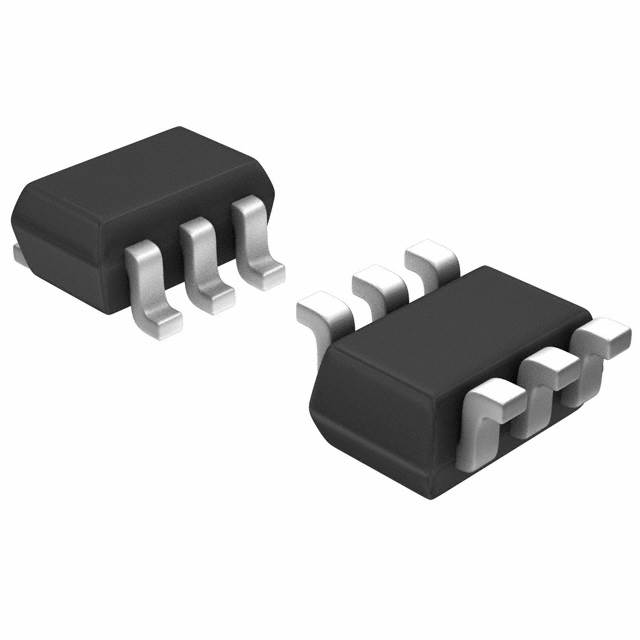
NX3008NBKS,115 vs NTH4L040N120M3S: Component Comparison for Power Electronics Engineers
Quick verdict
For low-voltage, low-current switching or load switching in compact, automotive-grade applications, the NX3008NBKS,115 is the clear choice due to its logic-level gate drive, dual MOSFET array format, and automotive qualification. Conversely, for high-voltage, high-current applications such as industrial motor drives or power conversion at 1200 V and tens of amps, the NTH4L040N120M3S dominates with its SiC technology, high voltage rating, and robust thermal capabilities.
Spec comparison table
| Spec | NX3008NBKS,115 | NTH4L040N120M3S | Notes |
|---|---|---|---|
| Absolute Max Voltage | 30 V | 1200 V | NTH4L040N120M3S supports 40x higher voltage, enabling high-voltage applications. |
| Continuous Drain Current @ 25°C | 350 mA | 54 A (Tc) | NTH4L040N120M3S handles orders of magnitude higher current, suitable for power stages. |
| Pulsed Drain Current Max | 1.4 A | 134 A | NTH4L040N120M3S supports pulsed currents 100x higher, critical for switching power. |
| Rds(on) Typ @ Vgs/Id | 1.5 Ω @ 4.5 V, 350 mA | 40 mΩ @ 18 V, 20 A | NTH4L040N120M3S has dramatically lower conduction losses at high current; NX3008NBKS is high-resistance. |
| Gate Threshold Voltage (typ) | 1.75 V | 2.9 V | NX3008NBKS is logic-level compatible; NTH4L040N120M3S requires higher gate drive voltage. |
| Gate Charge (Qg) Typ | 0.52–0.68 nC @ 4.5 V | 75 nC @ 18 V | NX3008NBKS has extremely low gate charge, enabling fast switching with minimal gate drive power. |
| Input Capacitance (Ciss) | 34–50 pF @ 15 V | 1700 pF @ 800 V | NX3008NBKS has much lower input capacitance, reducing gate drive losses and EMI risk. |
| Output Capacitance (Coss) | 6.5 pF | 80 pF | NX3008NBKS lower output capacitance favors high-frequency switching and lower switching losses. |
| Reverse Transfer Capacitance (Crss) | 2.2 pF | 7 pF | Lower Crss in NX3008NBKS reduces Miller effect, easing gate drive complexity. |
| Power Dissipation Max | 445 mW | 231 W (Tc) | NTH4L040N120M3S can dissipate ~500x more power, critical for high-power applications. |
| Package | 6-TSSOP (Surface Mount) | TO-247-4L (Through Hole) | NX3008NBKS is SMT for compact PCB; NTH4L040N120M3S is bulky but better for heat sinking. |
| Operating Temperature Range | -55°C to +150°C | -55°C to +175°C | NTH4L040N120M3S supports higher TJ max by 25°C, helpful for harsher environments. |
| Gate Voltage Max | ±8 V | +22 V / -10 V | NTH4L040N120M3S supports higher gate voltages but requires a stronger driver. |
| ESD Rating | 2000 V | Not specified | NX3008NBKS has documented ESD robustness, relevant for automotive use. |
| Forward Transconductance (gm) Typ | 310 mS | 16 S | NTH4L040N120M3S shows higher gm, consistent with higher current rating. |
| Fall Time (typ) | 19 ns | 10 ns | Faster switching in NTH4L040N120M3S reduces switching losses but requires careful gate drive. |
| Turn-on Delay (typ) | 15–30 ns | 12 ns | Comparable switching delays; NTH4L040N120M3S slightly faster. |
| Thermal Resistance (junction-to-case) Max | Not provided | 0.65 °C/W | NTH4L040N120M3S designed for efficient heat sinking; NX3008NBKS less so due to package. |
| Technology | MOSFET (Si) | SiC MOSFET | SiC device in NTH4L040N120M3S offers higher voltage, efficiency at high power, but higher gate drive. |
| Configuration | Dual N-Channel | Single N-Channel | NX3008NBKS includes two MOSFETs in one package; NTH4L040N120M3S is a single transistor. |
| Qualification | AEC-Q101 (Automotive) | None specified | NX3008NBKS suitable for automotive; NTH4L040N120M3S lacks automotive qualification. |
| Mounting Type | Surface Mount | Through Hole | NX3008NBKS supports compact SMT; NTH4L040N120M3S requires hole mounting, larger PCB footprint. |
Design trade-offs
The NX3008NBKS,115 targets low-voltage, low-current applications, particularly in automotive or space-constrained environments. Its dual MOSFET array in a compact 6-TSSOP package minimizes PCB area and supports logic-level gate drive, simplifying gate driver circuitry to standard 3.3–5 V logic without additional level shifting or high-voltage drivers. The extremely low gate charge (<1 nC) and low input/output capacitances translate to minimal switching losses and EMI generation at low switching frequencies or signal-level switching.
Thermally, the NX3008NBKS’s dissipation capacity (~445 mW max) and high junction-to-ambient thermal resistance (~300 K/W per device) restrict it to low-power loads or switching. Its high Rds(on) (typical ~1.5 Ω at 350 mA) means conduction losses dominate beyond small signal currents, making it unsuitable for power regulation or motor drive. However, its automotive qualification (AEC-Q101) and wide operating temperature range (-55°C to +150°C) make it reliable for harsh environments.
On the other hand, the NTH4L040N120M3S leverages Silicon Carbide (SiC) MOSFET technology to achieve 1200 V blocking voltage and 54 A continuous current rating in a TO-247-4L through-hole package, designed for high-power industrial or automotive inverter stages. Its Rds(on) is extremely low (~40 mΩ @ 20 A), enabling efficient conduction at high currents, while its total gate charge (~75 nC) demands a robust, high-voltage gate driver capable of delivering high peak currents to switch efficiently and avoid excessive switching losses.
Thermal management is critical with this device—its maximum power dissipation of 231 W (Tc) and low junction-to-case thermal resistance (0.65 °C/W) require a substantial heat sink or active cooling in typical applications. The larger TO-247 package facilitates this but increases PCB footprint and mounting complexity compared to SMT devices.
Switching speed favors the SiC device with faster switching times (fall time ~10 ns vs. 19 ns), which reduces switching losses and electromagnetic interference but increases layout sensitivity. Gate drive voltage requirements are higher (18 V typical vs. 4.5 V for NX3008NBKS), demanding dedicated gate drivers and careful design to prevent gate over-voltage or ringing.
Cost-wise, the NX3008NBKS is likely significantly cheaper at volume, given its silicon planar MOSFET technology, smaller package, and lower current ratings. The SiC device is specialized, more expensive, and benefits applications where efficiency and power density justify the premium.
Use-case fit
Choose NX3008NBKS,115 when…
- You need a dual MOSFET array for low-voltage load switching (e.g., battery management, signal-level load control) within automotive-grade environments.
- Your design requires logic-level gate drive compatibility at 3.3–5 V with minimal external driver complexity.
- PCB space is limited, and a compact 6-TSSOP package is necessary.
- The maximum continuous current requirement is under 350 mA, such as sensor biasing or signal switching.
- Operating temperature must cover -55°C to +150°C with AEC-Q101 qualification for automotive compliance.
Choose NTH4L040N120M3S when…
- Your application demands blocking voltages up to 1200 V, such as industrial motor drives, solar inverters, or EV onboard chargers.
- Continuous current requirements exceed 20 A with low conduction losses essential for efficiency and thermal management.
- You have robust gate driver circuitry capable of delivering 75 nC gate charge at ~18 V drive voltage.
- Thermal design includes adequate heat sinking or active cooling to handle up to 231 W dissipation.
- High switching speed (10 ns fall time