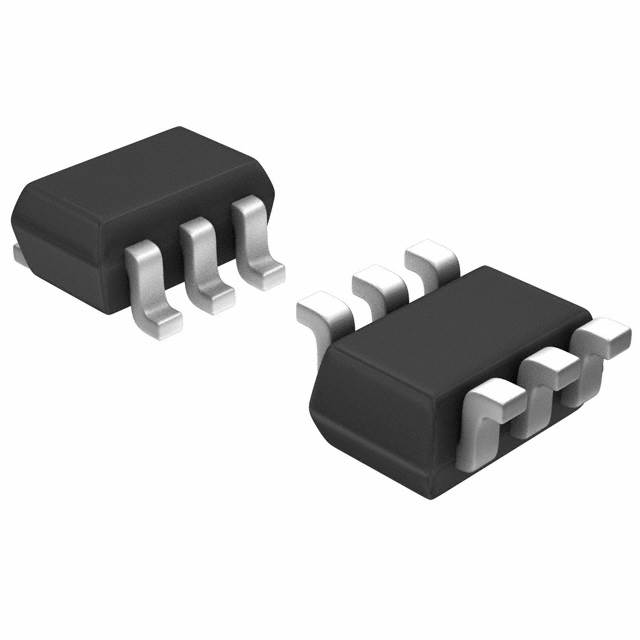
NX3008NBKS,115 vs FDS9435A MOSFET Comparison
Quick verdict
For low-current, low-voltage logic-level switching in compact, thermally constrained applications, the NX3008NBKS,115 is the better choice due to its integrated dual N-channel devices, low gate charge (~0.68 nC @ 4.5 V), and automotive-grade qualification. Conversely, for higher-current P-channel switching at up to 5.3 A with a robust 2.5 W power dissipation rating and simpler high-side switching topology, the FDS9435A outperforms despite its larger gate charge (14 nC @ 10 V) and larger package.
Spec comparison table
| Spec | NX3008NBKS,115 | FDS9435A | Notes |
|---|---|---|---|
| Device type | 2x N-Channel MOSFET (dual) | P-Channel MOSFET | N- vs P-channel affects topology and drive complexity; dual in one package vs single. |
| Drain-Source Voltage (Vds max) | 30 V | 30 V | Equal maximum voltage rating. |
| Continuous Drain Current (Id @ 25°C) | 350 mA | 5.3 A | FDS9435A supports >15x higher continuous current, critical for power handling. |
| Pulsed Drain Current (Id max spike) | 1.4 A | Not specified | NX3008NBKS,115 supports short spikes up to 1.4 A; no data for FDS9435A. |
| On-Resistance (Rds(on)) | 1.4 Ω @ 350 mA, 4.5 V | 50 mΩ @ 5.3 A, 10 V | FDS9435A has significantly lower Rds(on) at rated current, reducing conduction losses. |
| Gate Threshold Voltage (Vgs_th max) | 1.1 V @ 250 µA | 3 V @ 250 µA | NX3008NBKS,115 is logic-level compatible; FDS9435A requires higher gate drive voltage. |
| Gate Charge (Qg max) | 0.68 nC @ 4.5 V | 14 nC @ 10 V | NX3008NBKS,115 has much lower gate charge, easing gate drive and switching losses. |
| Input Capacitance (Ciss max) | 50 pF @ 15 V | 528 pF @ 15 V | NX3008NBKS,115 has much lower input capacitance, beneficial for fast switching. |
| Output Capacitance (Coss typ) | 6.5 pF | Not specified | Lower output capacitance reduces switching losses; data only for NX3008NBKS,115. |
| Reverse Transfer Capacitance (Crss typ) | 2.2 pF | Not specified | Lower Crss reduces Miller effect; data only for NX3008NBKS,115. |
| Power Dissipation Max (Pd) | 445 mW | 2.5 W | FDS9435A can dissipate >5x more power, better for higher loads or less cooling. |
| Thermal Resistance Junction-to-Ambient (RθJA) | 300 K/W per device | Not specified | NX3008NBKS,115 thermal data available; FDS9435A data not provided, but lower Rds(on) implies better thermal performance at higher currents. |
| Operating Temperature Range (TJ) | -55 °C to +150 °C | -55 °C to +155 °C | Comparable temperature ranges; FDS9435A slightly higher max TJ. |
| Package | 6-TSSOP (2.2 mm x 1.35 mm footprint) | 8-SOIC (3.9 mm width) | NX3008NBKS,115 is smaller and thinner; FDS9435A larger but supports higher power. |
| Gate-Source Voltage Max | ±8 V | ±25 V | FDS9435A tolerance to higher gate voltage allows more robust gate drive margin. |
| ESD Rating | 2000 V | Not specified | NX3008NBKS,115 provides a known ESD rating, useful for automotive applications. |
| Grade/Qualification | Automotive AEC-Q101 | No stated qualification | NX3008NBKS,115 is AEC-Q101 qualified, desirable for automotive/industrial use. |
| Current Leakage (Idss typ @ 25°C) | 1 µA | Not specified | Low leakage for NX3008NBKS,115 beneficial in low power standby modes. |
| Gate Leakage Current (typ @ 25°C) | 0.2 - 1 µA | Not specified | NX3008NBKS,115 gate leakage is low, important for low gate drive current applications. |
| Rise/Fall Time (typ @ 25°C) | Rise: 11 ns, Fall: 19 ns | Not specified | NX3008NBKS,115 switching speed data available; FDS9435A data not provided. |
| Transient Thermal Impedance | 0.01 to 1 K/W (varied by pulse) | Not specified | NX3008NBKS,115 provides detailed transient thermal impedance data for design. |
Design trade-offs
The NX3008NBKS,115 is a dual N-channel MOSFET array optimized for low current (<350 mA) switching with logic-level gate drive (threshold ~0.6–1.1 V). Its small 6-TSSOP package (2.2 mm x 1.35 mm) makes it suitable for dense PCB layouts where space is critical. The extremely low gate charge (~0.68 nC) and input capacitance (50 pF) minimize switching losses and reduce the burden on gate drivers, which is advantageous in low-power or battery-operated systems. However, its high on-resistance (~1.4 Ω at 350 mA) and low current rating limit its use to signal-level switching or small loads.
In contrast, the FDS9435A is a single P-channel MOSFET designed for higher current loads up to 5.3 A with a maximum power dissipation of 2.5 W (Ta). Its on-resistance of 50 mΩ at full rated current drastically reduces conduction losses, improving efficiency in power switching applications. The trade-off is a significantly higher gate charge (14 nC at 10 V) and input capacitance (528 pF), which require stronger gate drivers and can increase switching losses and EMI concerns at high frequencies. The larger 8-SOIC package (3.9 mm wide) accommodates the higher power dissipation but consumes more PCB area.
Thermal management is a key consideration: the NX3008NBKS,115’s maximum power dissipation is limited to 445 mW, and its thermal resistance is relatively high (300 K/W per device), necessitating careful PCB thermal design and potentially limiting continuous operation at high ambient temperatures. The FDS9435A, with a 2.5 W rating, is better suited for applications with higher load currents and less stringent thermal constraints.
Gate drive requirements differ significantly. The NX3008NBKS,115’s logic-level threshold (~0.6–1.1 V) and low gate charge enable direct drive from low-voltage logic, simplifying driver design. The FDS9435A requires up to 10 V drive for optimal Rds(on) and has a higher threshold (~3 V), which can complicate gate drive circuits, especially in low-voltage systems.
Cost considerations at volume depend on application: the NX3008NBKS,115’s smaller package and integrated dual MOSFETs may reduce BOM count and cost for low-current switching, while the FDS9435A’s higher current rating and single transistor format might justify its price in power switching roles. The NX3008NBKS,115’s automotive AEC-Q101 qualification adds value for automotive and industrial designs.
Use-case fit
Choose NX3008NBKS,115 when…
- Switching low-current signals or loads under 350 mA at up to 30 V, such as level shifting, signal routing, or small relay driving.
- Space-constrained designs requiring a dual MOSFET array in a compact 6-TSSOP package.
- Systems needing logic-level gate drive compatibility directly from 3.3 V or 5 V logic without additional driver stages.
- Automotive or industrial environments where AEC-Q101 qualification and extended temperature range (-55°C to +150°C) are necessary.
- Applications where minimal gate charge and input capacitance reduce switching losses and EMI, such as battery-powered or low-power embedded devices.
Choose FDS9435A when…
- Handling continuous load currents up to 5.3 A at 30 V, such as high-side power switching or load switching in power rails.
- Designs requiring low conduction losses with an on-resistance of 50 mΩ, improving efficiency at higher currents.
- Systems where the larger SOIC package and higher power dissipation (2.5 W) can be accommodated for better thermal performance.
- Applications with a gate drive voltage supply of 10 V or higher available, ensuring full enhancement