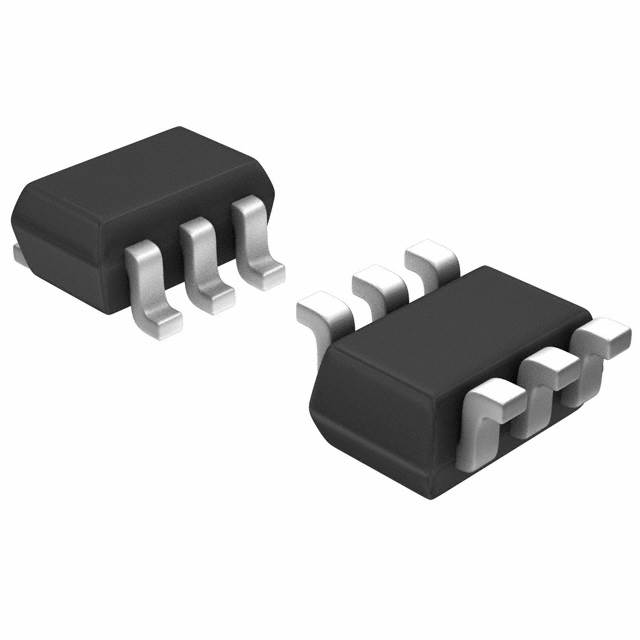
Component Comparison: NX3008NBKS,115 vs C3M0350120D
1. Quick verdict
For low-voltage, low-current switching or level-shifting applications requiring dual MOSFETs in a small footprint and automotive qualification, the NX3008NBKS,115 is the clear choice. Its low gate charge and logic-level gate drive simplify gate driving and reduce switching losses at sub-1A currents.
For high-voltage, high-current power conversion or motor drive applications where blocking voltage and conduction losses dominate, the C3M0350120D outperforms by a wide margin with its 1200 V rating, 7.6 A continuous current, and much lower R_DS(on) at 525 mΩ, enabling more efficient, thermally manageable designs.
2. Spec comparison table
| Spec | NX3008NBKS,115 | C3M0350120D | Notes |
|---|---|---|---|
| Technology | MOSFET (Metal Oxide) | SiCFET (Silicon Carbide) | SiC offers higher voltage and temperature operation, generally better for high power. |
| Configuration | 2 N-Channel (Dual) | N-Channel | Dual MOSFET vs single device; dual useful for half-bridge or complementary circuits. |
| Drain-Source Voltage (V_DS max) | 30 V | 1200 V | C3M0350120D supports 40× higher voltage; critical for high-voltage power systems. |
| Continuous Drain Current (I_D) | 350 mA @ 25°C | 7.6 A (Tc) | C3M0350120D supports ~20× higher current; NX3008NBKS is for low current loads. |
| Pulsed Drain Current | 1.4 A (spiking max) | 20 A | C3M0350120D handles much higher peak currents. |
| Drain-Source On-Resistance (R_DS(on)) | 1.4 Ω @ 350 mA, 4.5 V (typ) | 525 mΩ @ 3.6 A, 15 V (typ) | C3M0350120D offers ~3× lower R_DS(on) at much higher current; important for conduction losses. |
| Gate Charge (Q_g) | 0.68 nC @ 4.5 V (typ) | 19 nC @ 15 V (max) | NX3008NBKS has ~28× lower gate charge, reducing gate drive losses at low voltage. |
| Input Capacitance (C_iss) | 50 pF @ 15 V (max) | 345 pF @ 1000 V (typ) | NX3008NBKS has much lower gate capacitance; easier to drive at low voltages/frequencies. |
| Output Capacitance (C_oss) | 6.5 pF (typ) | 20 pF (typ) | Lower output capacitance reduces switching losses; NX3008NBKS advantage here. |
| Reverse Transfer Capacitance (C_rss) | 2.2 pF (typ) | 3.4 pF (typ) | Lower C_rss reduces Miller effect; NX3008NBKS slightly better. |
| Gate Threshold Voltage (V_GS(th)) | 0.6–1.1 V (typ/max) | 2.0 V (typ) | NX3008NBKS is logic-level gate; easier to drive from low-voltage logic. |
| Gate-Source Voltage Max | ±8 V | −4 V to +15 V | C3M0350120D supports higher max positive gate voltage, but NX3008NBKS better for 5V logic. |
| Drain Leakage Current (I_DSS) | 1 µA @ 25°C, 10 µA @ 150°C (typ) | 1 µA (typ) | Comparable leakage at room temp; NX3008NBKS leakage increases more at 150°C. |
| Gate Leakage Current (I_GSS) | 0.2–1 µA typical | 10 nA (typ), 250 nA (max) | C3M0350120D has lower gate leakage, beneficial for ultra-low power gate drive. |
| Power Dissipation (P_D max) | 445 mW (max) | 50 W (Tc) | C3M0350120D can dissipate >100× more power; suited for high power applications. |
| Package Type | 6-TSSOP (Surface Mount) | TO-247-3 (Through Hole) | NX3008NBKS is compact SMT; C3M0350120D requires more board space and heatsinking. |
| Thermal Resistance Junction-to-Case (R_θJC) | Not specified | 2.5 °C/W (typ) | C3M0350120D designed for effective heatsinking; NX3008NBKS limited by SMT thermal path. |
| Operating Temperature Range (T_J) | -55°C to +150°C | -55°C to +150°C | Comparable junction temp range. |
| ESD Rating | 2000 V (max) | Not specified | NX3008NBKS rated for automotive ESD; C3M0350120D datasheet does not specify. |
| Switching Times (t_on, t_off) | t_turn_on ~15–30 ns, t_turn_off ~69–138 ns | t_turn_on 25 ns (typ), t_turn_off 14 ns (max) | Comparable switching speeds; SiC device faster turn-off, beneficial for hard switching. |
| Transient Thermal Impedance | 0.01–1 K/W (varies with time) | Not specified | NX3008NBKS includes detailed transient thermal data; C3M0350120D does not specify here. |
| Qualification | AEC-Q101 (Automotive) | None specified | NX3008NBKS suitable for automotive; C3M0350120D not automotive qualified. |
| Grade | Automotive | Not specified | NX3008NBKS targets automotive reliability requirements. |
3. Design trade-offs
The NX3008NBKS,115 is a dual 30 V MOSFET array optimized for low current (350 mA continuous) automotive and logic-level applications. Its extremely low gate charge (~0.68 nC) and low input capacitance (50 pF) make it easy to drive directly from 3.3–5 V logic, minimizing gate driver complexity and power loss. The small 6-TSSOP package and dual transistor integration enable compact PCB layouts in space-constrained designs such as level shifters, load switches, or signal multiplexing.
However, the high R_DS(on) of approximately 1.4 Ω at 350 mA means conduction losses rise quickly beyond that current, making this device unsuitable for power switching or load driving above a few hundred milliamps. The thermal dissipation is limited (~445 mW max), and the SMT package limits heat sinking options. Automotive qualification and robust ESD rating make it a reliable choice in harsh environments but not for high power.
The C3M0350120D is a single SiC MOSFET designed for high voltage (1200 V) and high current (7.6 A continuous, 20 A pulsed) applications. Its R_DS(on) of 525 mΩ at 3.6 A is low for a SiC device, enabling significantly improved conduction losses at high currents compared to silicon MOSFETs. The high voltage rating and 50 W power dissipation capability (junction-to-case thermal resistance 2.5 °C/W) require a through-hole TO-247 package and heatsinking, increasing board space and thermal design complexity.
Gate charge is substantially higher (19 nC @ 15 V), necessitating a stronger gate driver and careful gate resistor selection to balance switching speed and EMI. SiC devices have faster switching transitions and lower switching losses, making them advantageous for hard-switching topologies at high voltages. However, the higher gate threshold voltage (~2.0 V) and gate voltage range require compatible gate drivers capable of at least 15 V drive.
From a layout perspective, NX3008NBKS,115 is compact and surface mount, fitting small, dense boards, while C3M0350120D needs substantial copper area and a heatsink for thermal management. Cost-wise, the NX3008NBKS,115 will be significantly cheaper per unit and in volume, reflecting the difference in technology and power rating.
4. Use-case fit
Choose NX3008NBKS,115 when…
- Designing automotive or industrial control signals requiring dual low-voltage MOSFET switches in a compact SMT package.
- Implementing level shifting or small load switching (sub-350 mA) directly driven from 3.3–5 V logic without dedicated gate drivers.
- Space-constrained boards needing dual MOSFETs in a single 6-TSSOP package with automotive AEC-Q101 qualification.
- Applications where switching frequency is