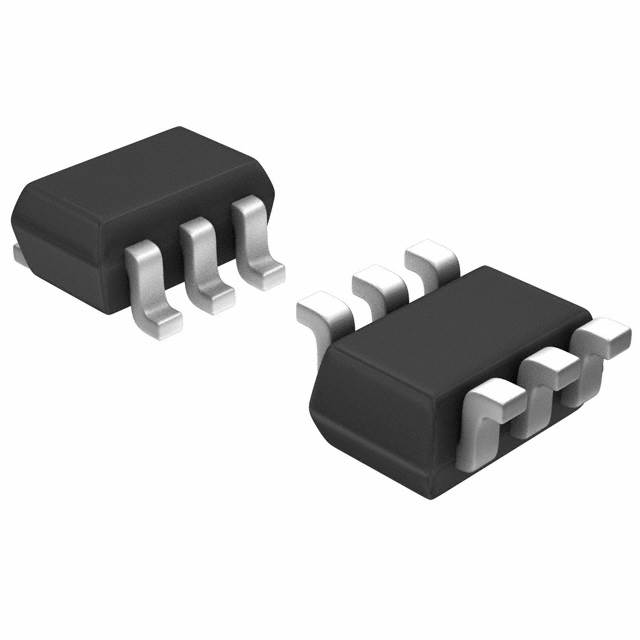
NX3008NBKS,115 vs C3M0075120J MOSFET Comparison
Quick verdict
For low-voltage, low-current applications such as signal switching or load switching up to 30 V and 350 mA, the NX3008NBKS,115 is the better choice due to its integrated dual MOSFET array, low gate charge, and automotive-grade qualification. For high-voltage power conversion or motor drives requiring blocking voltages up to 1200 V and continuous currents up to 30 A, the Wolfspeed C3M0075120J is the obvious candidate thanks to its SiC technology and much higher power dissipation capability.
Spec comparison table
| Spec | NX3008NBKS,115 | C3M0075120J | Notes |
|---|---|---|---|
| Technology | MOSFET (Metal Oxide) | SiCFET (Silicon Carbide) | SiC offers higher voltage capability and thermal performance, better for high power. |
| Configuration | 2 N-Channel (Dual) | Single N-Channel | NX3008NBKS,115 integrates two devices, useful for complementary switching or half-bridge. |
| Drain-Source Voltage (Vds max) | 30 V | 1200 V | C3M0075120J supports very high voltages; NX3008NBKS,115 limited to low-voltage applications. |
| Continuous Drain Current (Id max @ 25°C) | 350 mA | 30 A (Tc) | C3M0075120J handles ~85x higher continuous current, suitable for power stages. |
| Power Dissipation (Pd max) | 445 mW | 113.6 W (Tc) | C3M0075120J dissipates orders of magnitude more power, critical for high-power designs. |
| Rds(on) @ Id, Vgs | 1.4 Ω @ 350mA, 4.5 V | 90 mΩ @ 20 A, 15 V | C3M0075120J has much lower on-resistance at high current, reducing conduction losses. |
| Gate Charge (Qg max) | 0.68 nC @ 4.5 V | 51 nC @ 15 V | NX3008NBKS,115 requires far less gate drive energy, easing driver requirements. |
| Gate-Source Threshold Voltage (Vth max) | 1.1 V @ 250 µA | 4 V @ 5 mA | NX3008NBKS,115 has lower threshold, better for logic-level drive. |
| Input Capacitance (Ciss max) | 50 pF @ 15 V | 1350 pF @ 1000 V | NX3008NBKS,115 has much lower input capacitance, beneficial for fast switching at low voltage. |
| Gate-Source Voltage Max/Min | +8 V / -8 V | +19 V / -8 V | C3M0075120J supports higher maximum gate voltage; NX3008NBKS,115 is limited to 8 V max. |
| Drain Current Spiking Max | 1.4 A | Not specified | NX3008NBKS,115 supports brief spikes ~4x continuous current; no data for C3M0075120J. |
| Operating Temperature Range | -55°C to +150°C (TJ) | -55°C to +150°C (TJ) | Both support wide operating temperature ranges. |
| Thermal Resistance Junction-to-Ambient | 300 K/W (typ per device) | Not specified | NX3008NBKS,115’s high thermal resistance limits power dissipation in open-air conditions. |
| Package | 6-TSSOP (SC-88, SOT-363) | TO-263-8 (D2PAK-7) | NX3008NBKS,115 is smaller, lower-profile; C3M0075120J is larger, better for heat sinking. |
| ESD Rating | 2000 V | Not specified | NX3008NBKS,115 has specified ESD robustness, aiding board-level reliability. |
| Qualification | AEC-Q101 | Not specified | NX3008NBKS,115 is automotive qualified; C3M0075120J is not explicitly. |
| Gate Leakage Current (typ @ 25°C) | 0.2 - 1 µA | Not specified | NX3008NBKS,115 has low gate leakage, reducing static power loss. |
| Rise/Fall Times (typ @ 25°C) | Rise: 11 ns, Fall: 19 ns | Not specified | NX3008NBKS,115 is characterized for switching speed; C3M0075120J data not provided. |
Design trade-offs
The NX3008NBKS,115 and C3M0075120J occupy vastly different application spaces despite both being N-channel MOSFETs. The NX3008NBKS,115 is a dual MOSFET array targeted at low-voltage, low-current switching tasks. Its low gate charge (~0.68 nC) and low input capacitance (~50 pF) make it easy to drive from low-current logic outputs or microcontrollers with minimal power overhead and EMI concerns. With a maximum continuous current of 350 mA and an on-resistance in the range of 1.4 Ω at 4.5 V gate drive, this device is suitable for signal-level switching, load switching, or low-power DC-DC converters.
In contrast, the C3M0075120J is a high-voltage SiC MOSFET designed for demanding power conversion or motor control. It supports a maximum drain-source voltage of 1200 V and continuous currents up to 30 A (with thermal case cooling), orders of magnitude beyond the NX3008NBKS,115. The SiC technology offers faster switching and higher temperature operation, but comes with significantly higher gate charge (51 nC @ 15 V) and input capacitance (1350 pF @ 1000 V). This means the gate driver must be capable of delivering higher peak currents and the switching losses must be carefully managed in the gate driver design.
From a thermal perspective, the NX3008NBKS,115’s thermal resistance of about 300 K/W restricts power dissipation to under 0.5 W without additional heatsinking, suitable for small-signal or low-power loads. The C3M0075120J is rated for over 100 W dissipation at the case, requiring proper thermal management with heatsinks or cooling. Its package (TO-263-8) is larger and better suited for high-current PCB layouts with thicker copper and proper thermal vias.
The gate drive voltage requirements differ significantly. The NX3008NBKS,115 requires logic-level drive (~4.5 V gate drive) with a low threshold voltage (~1.1 V max), simplifying integration with 3.3 V or 5 V logic. The C3M0075120J requires a higher gate drive voltage (typical 15 V) to achieve low Rds(on), and has a threshold voltage around 4 V, so logic-level drive is insufficient. This impacts gate driver design complexity and power consumption.
Layout sensitivity is another critical consideration. The NX3008NBKS,115’s small dual 6-TSSOP footprint is optimized for compact, low-power designs but has high thermal resistance and limited power capacity. The C3M0075120J’s larger D2PAK-7 package facilitates heat dissipation and high-current PCB traces but occupies more PCB area and requires more robust soldering and mechanical support.
Cost at volume is not specified here, but generally, SiC MOSFETs like the C3M0075120J command a significant premium over standard silicon MOSFET arrays like the NX3008NBKS,115, reflecting their performance advantages and manufacturing complexity.
Use-case fit
Choose NX3008NBKS,115 when…
- You need a compact dual MOSFET array for low-voltage (≤30 V), low-current (≤350 mA) switching in automotive or industrial control circuits.
- Your design requires automotive-grade qualification (AEC-Q101) for reliability in harsh environments.
- Minimizing gate drive power and EMI from switching is critical, such as in sensor interfacing or signal multiplexing.
- Your system operates directly from logic-level signals (3.3 V or 5 V) and cannot support high-voltage gate drivers.
- PCB real estate is constrained, and you prefer a small 6-TSSOP package with integrated dual devices.
Choose C3M0075120J when…
- Your application demands high-voltage blocking capability (up to 1200 V) for power factor correction, EV chargers, or motor drives.
- Continuous currents up to 30 A are required, with power dissipation exceeding tens of watts.
- You can provide a robust 15 V gate driver and handle the higher gate charge and switching losses inherent to SiC MOSFETs.
- Thermal management infrastructure (heatsinks, thermal vias) is available to exploit the 113.6 W power dissipation capability.
- You require the benefits of SiC technology such as faster switching speeds and higher temperature operation in industrial or renewable energy equipment.