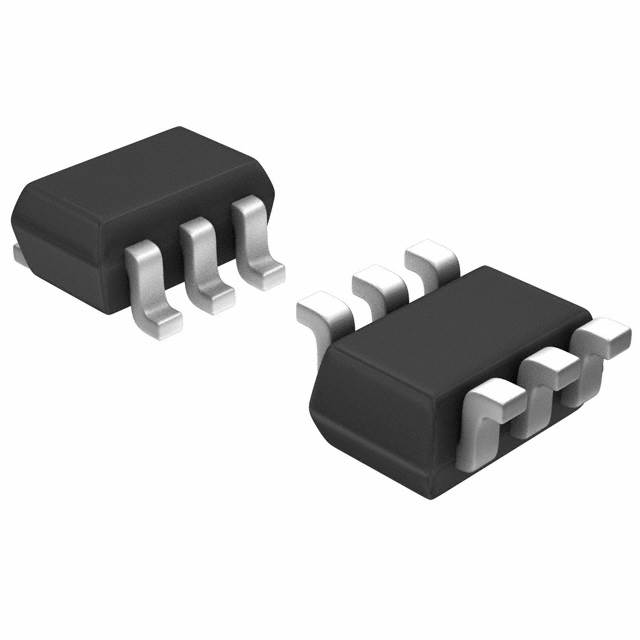
Component Comparison: NX3008NBKS,115 vs C3M0040120D
1. Quick verdict
For low-voltage, low-current switching and signal-level applications, the NX3008NBKS,115’s dual MOSFET array in a compact 6-TSSOP package offers straightforward integration with logic-level gate drive and low power dissipation, making it the clear choice. Conversely, for high-voltage power conversion or motor drive applications requiring blocking voltages up to 1200 V and continuous currents above 60 A, the Wolfspeed C3M0040120D SiC MOSFET is the better fit, despite its higher gate charge and more demanding thermal management.
2. Spec comparison table
| Spec | NX3008NBKS,115 | C3M0040120D | Notes |
|---|---|---|---|
| Technology | MOSFET (Metal Oxide) | SiCFET (Silicon Carbide) | SiC offers higher voltage and temperature capability; MOSFET for low-voltage, signal-level use |
| Configuration | 2 N-Channel (Dual) | Single N-Channel | Dual array useful for small-signal multiplexing; single high-power device for heavy loads |
| Package | 6-TSSOP (SMD) | TO-247-3 (Through Hole) | TSSOP is compact for PCB space savings; TO-247 better for heat dissipation |
| Drain-Source Voltage Max (V) | 30 V | 1200 V | C3M0040120D supports much higher blocking voltage |
| Continuous Drain Current (A) | 0.35 A @ 25°C | 66 A (Tc) | C3M0040120D supports roughly 200× higher continuous current |
| Pulsed Drain Current Max (A) | 1.4 A | 223 A | C3M0040120D handles large transient currents |
| Drain-Source On-Resistance Typ (Ω) | 1.0 – 1.4 Ω @ 350mA, 4.5V | 53.5 mΩ @ 33.3A, 15V | C3M0040120D Rds(on) is orders of magnitude lower at high current |
| Gate Threshold Voltage Typ (V) | ~0.6 – 1.1 V | 2.2 V | NX3008NBKS logic-level gate drive easier; C3M0040120D requires higher gate voltage |
| Total Gate Charge (nC) | 0.52 – 0.68 nC @ 4.5 V | 101 nC @ 15 V | NX3008NBKS gate charge is ~150× lower, reducing driver complexity and switching losses |
| Input Capacitance Typ (pF) | 34 – 50 pF | 2900 pF @ 1000 V | NX3008NBKS much lower input capacitance, enabling faster switching at low gate drive currents |
| Output Capacitance Typ (pF) | 6.5 pF | 103 pF | Lower output capacitance reduces switching losses and EMI |
| Reverse Transfer Capacitance Typ (pF) | 2.2 pF | 5 pF | Lower in NX3008NBKS, better switching performance |
| Gate Leakage Current Typ (nA – µA) | 1 nA – 1 µA | 10 nA | Both low; NX3008NBKS slightly better at low voltage |
| Max Operating Junction Temperature (°C) | 150 °C | 175 °C | C3M0040120D suits higher temperature environments |
| Ambient Temperature Range (°C) | -55 to +150 °C | -40 to +175 °C | NX3008NBKS wider low-temp range; C3M0040120D higher max TJ |
| Power Dissipation Max (W) | 0.445 W | 326 W (Tc) | C3M0040120D dissipates ~700× more power, reflecting application scale |
| Thermal Resistance Junction-to-Ambient (K/W) | 300 K/W (typ) per device | Not specified; 0.46 °C/W junction-to-case | C3M0040120D better thermal conductivity via package and cooler mounting |
| Switching Times (typical) (ns) | t_rise ~11 ns, t_fall ~19 ns | Rise ~60 ns, Fall ~12 ns | NX3008NBKS faster rise time; fall times comparable |
| Electrostatic Discharge Rating (V) | 2000 V | Not specified | NX3008NBKS ESD rating stated; unknown for C3M0040120D |
| Diode Forward Voltage (V) | Not specified | 4.9 V typ @ 20 A, 25 °C | C3M0040120D body diode forward drop relevant for synchronous rectification |
| Mounting Type | Surface Mount | Through Hole | Affects thermal design, assembly cost, and mechanical robustness |
| Grade / Qualification | Automotive (AEC-Q101) | None specified | NX3008NBKS qualified for automotive use |
| Gate Drive Voltage Max/Min (V) | ±8 V max/min | +15 V / -4 V static max | C3M0040120D requires higher gate drive voltage, complicating driver design |
| Package Dimensions (typical) | 2.2 mm × 1.35 mm (6-TSSOP) | TO-247-3 (~21 mm × ~16 mm) | NX3008NBKS much smaller, suitable for dense PCBs |
3. Design trade-offs
The NX3008NBKS,115 is a low-voltage dual MOSFET array designed primarily for signal-level switching, level shifting, or low-current load switching within automotive or industrial environments. Its logic-level gate threshold (~0.6–1.1 V) and very low gate charge (<1 nC) enable direct interfacing with standard 3.3 V or 5 V logic without complex gate drivers. The low input and output capacitances minimize switching losses and EMI in low-power circuits. However, its on-resistance is relatively high (~1 Ω at 350 mA), restricting it to applications with low conduction current and power dissipation (<0.5 W). The small 6-TSSOP package simplifies PCB real estate but results in poor thermal dissipation (thermal resistance junction-to-ambient ~300 K/W), so continuous power handling is limited.
In contrast, the C3M0040120D is a Silicon Carbide (SiC) MOSFET optimized for high-voltage (1200 V) power conversion, capable of continuous drain currents of 66 A at case temperature and pulsed currents over 200 A. Its extremely low on-resistance (53.5 mΩ at 33 A) drastically reduces conduction losses in high-current applications. The trade-off is a significantly higher total gate charge (101 nC at 15 V), requiring robust gate drivers capable of delivering short, high-current gate pulses and careful PCB layout to minimize gate loop inductance. The TO-247-3 through-hole package facilitates heat sinking and mechanical robustness but increases board space and assembly complexity. The device’s operating junction temperature up to 175°C and superior thermal resistance junction-to-case (~0.46 °C/W) enable operation in harsh conditions and elevated temperatures.
From a switching speed perspective, the NX3008NBKS,115 has faster rise times (~11 ns) but slower fall times (~19 ns), suitable for low-frequency or logic-level switching where switching losses are minimal. The C3M0040120D, despite a longer rise time (~60 ns), offers competitive fall times (~12 ns) and benefits from the inherent fast-switching nature of SiC devices, which translates to higher switching frequencies in power electronics.
Thermally, the NX3008NBKS,115 requires careful derating and minimal power dissipation due to its high thermal resistance and small package, while the C3M0040120D’s large package and low Rds(on) allow for efficient heat sinking and continuous operation at high power levels.
Cost-wise, the NX3008NBKS,115 is expected to be lower cost and simpler to integrate for low-power designs, especially volume automotive applications with AEC-Q101 qualification. The C3M0040120D, a SiC device, is more expensive per unit and requires more sophisticated gate drivers and thermal management, but these costs are justified in demanding high-voltage, high-efficiency power conversion systems.
4. Use-case fit
Choose NX3008NBKS,115 when…
- Switching or multiplexing low-current (<350 mA) loads in automotive or industrial control circuits requiring AEC-Q101 qualification.
- Implementing level shifters or logic-level MOSFET switches on 5 V or 3.3 V logic rails with minimal gate drive complexity.
- Space-constrained PCB layouts where a small 6-TSSOP dual MOSFET reduces board area.
- Applications where power dissipation remains below 0.5 W and thermal design is limited to natural convection or low airflow.
- Circuits requiring dual MOSFETs in a single package for half-bridge or complementary switching schemes at low