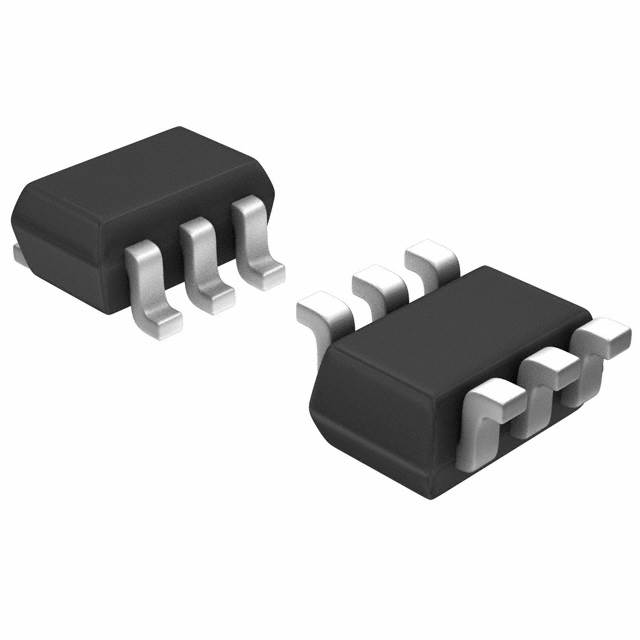
Component Comparison: NX3008NBKS,115 vs BSC011N03LSIATMA1
1. Quick verdict
For low-current, space-constrained applications requiring dual MOSFETs with modest 350mA load and automotive qualification, the NX3008NBKS,115 is the clear choice due to its integrated dual channel, small 6-TSSOP package, and AEC-Q101 grading. Conversely, for high-current, high-efficiency power switching up to 30V and tens of amps, the BSC011N03LSIATMA1 dominates with its very low R_DS(on) of 1.1mΩ at 30A, robust thermal dissipation, and advanced PowerTDFN package.
2. Spec comparison table
| Spec | NX3008NBKS,115 | BSC011N03LSIATMA1 | Notes |
|---|---|---|---|
| Configuration | 2 N-Channel (Dual) | Single N-Channel | Dual MOSFET array vs single transistor; NX3008NBKS better for integrated dual channel. |
| Drain-Source Voltage (V_DS max) | 30 V | 30 V | Equal voltage rating. |
| Continuous Drain Current (I_D @ 25°C) | 350 mA | 37 A (Ta), 100 A (Tc) | BSC011N03LSIATMA1 supports ~100x higher current; critical for high power designs. |
| Pulsed Drain Current (I_D pulse max) | 1.4 A | 920 A | BSC011N03LSIATMA1 handles extremely high pulse currents. |
| Drain-Source On-Resistance (R_DS(on)) | 1.4 Ω @ 350mA, 4.5 V | 1.1 mΩ @ 30 A, 10 V | BSC011N03LSIATMA1 is orders of magnitude lower, enabling much higher efficiency. |
| Gate Threshold Voltage (V_GS(th)) | Typ 1.75 V; Max 1.1 V @ 250µA | 1.2 V (min) – 2 V (max) @ 250µA | NX3008NBKS has lower and tighter threshold; better for low-voltage logic-level drive. |
| Gate Charge (Q_G) | Typ 0.52 – 0.68 nC @ 4.5 V | Typ 45 nC @ 10 V | NX3008NBKS requires much less gate charge; easier to drive with low-power logic. |
| Input Capacitance (C_iss @ 15 V) | 50 pF | 4300 pF | NX3008NBKS has drastically lower input capacitance, reducing switching losses at low currents. |
| Reverse Transfer Capacitance (C_rss) | 2.2 pF | 2128 pF | Lower C_rss in NX3008NBKS reduces Miller effect, aiding high-speed switching at low power. |
| Total Power Dissipation (P_D max) | 990 mW | 2.5 W (Ta), 96 W (Tc) | BSC011N03LSIATMA1 supports far higher power dissipation, suitable for power stages. |
| Package | 6-TSSOP (SC-88, SOT-363) | PG-TDSON-8-7 (8-PowerTDFN) | NX3008NBKS is smaller and dual-channel; BSC011N03LSIATMA1 has thermal-enhanced package. |
| Ambient Temperature Range | -55°C to +150°C | -55°C to +150°C | Equal operating temperature range. |
| Electrostatic Discharge (ESD) Rating | 2000 V | Not specified | NX3008NBKS provides ESD rating; BSC011N03LSIATMA1 datasheet does not specify. |
| Gate Source Voltage Max/Min | ±8 V | ±20 V | BSC011N03LSIATMA1 can tolerate higher gate drive voltage swings. |
| Transconductance (g_fs) | 310 mS | 80 S (80,000 mS) | BSC011N03LSIATMA1 has very high transconductance, enabling lower R_DS(on) and faster switching. |
| Rise/Fall Times | Rise 11 ns, Fall 19 ns (typ) | Rise 9.2 ns, Fall 6.2 ns (typ) | BSC011N03LSIATMA1 switches faster, beneficial in high-frequency applications. |
| Avalanche Current Max | Not specified | 50 A | BSC011N03LSIATMA1 supports avalanche conditions at high current. |
| Avalanche Energy Max | Not specified | 100 mJ | BSC011N03LSIATMA1 rated for avalanche energy, important for inductive load switching. |
| Diode Continuous Forward Current Max | Not specified | 120 A | BSC011N03LSIATMA1’s body diode supports high current; NX3008NBKS not specified. |
| Qualification | AEC-Q101 Automotive | None specified | NX3008NBKS suitable for automotive grade designs. |
| Thermal Resistance Junction-to-Ambient (typ) | 300 K/W (device), 390-445 K/W (per transistor) | Not specified | NX3008NBKS datasheet provides thermal resistance; BSC011N03LSIATMA1 does not specify. |
| Power Dissipation (typ) | 280 mW | 2.5 W (Ta), 96 W (Tc) | BSC011N03LSIATMA1 supports significantly higher continuous and transient power. |
3. Design trade-offs
The fundamental trade-off between these two devices lies in their intended application envelopes and integration level. The NX3008NBKS,115 is a dual low-current MOSFET array optimized for signal-level switching or load switching in space-constrained, low-power automotive environments, evidenced by its AEC-Q101 qualification and tiny 6-TSSOP package. Its low gate charge (~0.68 nC at 4.5 V) and low input/output capacitances (50 pF C_iss) enable low-power microcontroller gate drivers to switch it efficiently without complicated gate drive circuitry. However, its high R_DS(on) (~1.4 Ω at 350 mA) limits it to low-current applications, and its power dissipation rating (under 1 W) restricts continuous high load switching.
In contrast, the BSC011N03LSIATMA1 is a discrete high-current power MOSFET designed for demanding power stages. Its R_DS(on) of 1.1 mΩ at 30 A and 10 V gate drive ensures minimal conduction losses in applications like DC-DC converters, motor drives, or automotive power modules. It supports continuous drain current up to 100 A at junction temperature, which requires careful thermal management but enables operation at high load currents. The much larger gate charge (~45 nC at 10 V) demands a strong gate driver capable of delivering higher peak currents, increasing gate drive power and complexity. Its PG-TDSON package is optimized for thermal dissipation, which integrates with PCB cooling strategies but is physically larger (~5.3 mm x 6.1 mm typical) than the NX3008NBKS’s 2.2 mm x 1.35 mm 6-TSSOP.
From a layout perspective, the NX3008NBKS’s small dual MOSFET array reduces component count and simplifies routing for low-current switching but requires careful attention to thermal dissipation due to its high thermal resistance (~300 K/W junction-to-ambient). The BSC011N03LSIATMA1’s thermal pad and low R_DS(on) mean it benefits from direct PCB copper pours and thermal vias for heat sinking, but the larger footprint and pad count increase PCB area and complexity.
Cost-wise, the NX3008NBKS is likely cheaper per unit and per board area given its low current rating and integration, ideal for cost-sensitive, low-power automotive signal paths. The BSC011N03LSIATMA1 will be more expensive but justifiable where efficiency gains and high current handling translate directly to system-level power savings and reliability.
Firmware-wise, the NX3008NBKS’s low gate charge and logic-level gate threshold (V_GS(th) typ ~1.75 V) allow direct drive from low-voltage microcontrollers without gate drivers, simplifying control. The BSC011N03LSIATMA1 requires dedicated gate drivers capable of delivering 68 nC gate charge at 10 V, increasing complexity in switching timing and EMI management.
4. Use-case fit
Choose NX3008NBKS,115 when:
- You need a compact dual N-channel MOSFET array for low-current load switching or level shifting in automotive or industrial control circuits.
- Your load current is under 350 mA continuous, and switching frequency is low to moderate.
- Gate drive power and board space are at a premium, favoring a low gate charge device.
- AEC-Q101 qualification is required for automotive-grade reliability.
- You want to reduce component count by integrating two MOSFETs in a single package.