Component Comparison: NX3008NBKS,115 vs AIMDQ75R016M2HXTMA1
1. Quick verdict
For low-voltage, low-current switching and signal-level applications (e.g., level shifting, small load switching), the NX3008NBKS,115 is the clear choice due to its low gate charge, logic-level gate drive, and small footprint. For high-voltage power conversion or motor drive applications requiring high current (tens of amps and above) and high voltage (up to 750 V), the AIMDQ75R016M2HXTMA1 dominates thanks to its 103 A rating, 750 V rating, and very low R_DS(on) at higher gate drive voltages.
2. Spec comparison table
| Spec | NX3008NBKS,115 | AIMDQ75R016M2HXTMA1 | Notes |
|---|---|---|---|
| Configuration | Dual N-Channel MOSFET | Single N-Channel MOSFET | Dual device vs single device; NX3008NBKS offers two FETs in one package, useful for half-bridge or dual switching. |
| Drain-Source Voltage (V_DS max) | 30 V | 750 V | AIMDQ75R016M2HXTMA1 supports much higher voltage (750 V vs 30 V), better for high voltage power stages. |
| Continuous Drain Current (I_D max) | 350 mA | 103 A (Tc) | AIMDQ75R016M2HXTMA1 supports nearly 300x higher continuous current, suited for power applications. |
| Drain Current Spiking Max | 1.4 A | Not specified | NX3008NBKS allows brief current spikes up to 1.4 A; AIMDQ75R016M2HXTMA1 datasheet not explicit here. |
| R_DS(on) typ @ 25°C | 1.0 – 1.4 Ω @ 350 mA, 4.5 V gate | 14 mΩ @ 55.8 A, 20 V gate | AIMDQ75R016M2HXTMA1 has orders of magnitude lower R_DS(on), dramatically reducing conduction losses at high current. |
| Gate Threshold Voltage (V_GS(th)) | 0.6 – 1.1 V (typ) | 5.6 V @ 12.3 mA | NX3008NBKS is logic-level gate with low threshold; AIMDQ75R016M2HXTMA1 requires higher gate drive voltage (~15–20 V). |
| Gate Charge (Q_g max) | 0.68 nC @ 4.5 V | 74 nC @ 18 V | NX3008NBKS has extremely low gate charge, enabling fast switching with minimal driver power; AIMDQ75R016M2HXTMA1 requires much stronger gate drive. |
| Input Capacitance (C_iss typ) | 34 – 50 pF @ 25°C, 15 V | 2577 pF @ 500 V | NX3008NBKS has very low input capacitance, easier on gate drivers and faster switching; AIMDQ75R016M2HXTMA1’s large capacitance requires robust gate drivers and slows switching. |
| Power Dissipation Max (P_D max) | 445 mW | 394 W (Tc) | AIMDQ75R016M2HXTMA1 dissipates nearly 1000x more power, supporting high power operation. |
| Operating Temperature Range (T_j) | -55°C to +150°C | -55°C to +175°C | AIMDQ75R016M2HXTMA1 supports higher max junction temperature, useful in rugged or high-temp environments. |
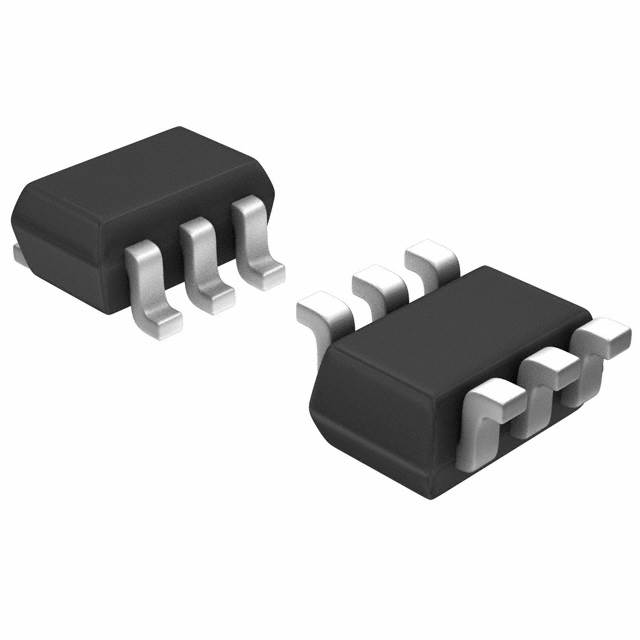
| Package | 6-TSSOP (2.2 mm × 1.35 mm) | PG-HDSOP-22 (PowerBSOP Module) | NX3008NBKS is a tiny logic-level package; AIMDQ75R016M2HXTMA1 is a large power module, much bigger and thermally capable. |
| Technology | Silicon MOSFET | Silicon Carbide FET (SiCFET) | AIMDQ75R016M2HXTMA1 uses SiC technology, offering superior high voltage and temperature performance. |
| ESD Rating | 2000 V | Not specified | NX3008NBKS offers a moderate ESD rating; AIMDQ75R016M2HXTMA1 ESD rating not listed here. |
| Gate-Source Voltage Max | ±8 V | +23 V / -7 V | AIMDQ75R016M2HXTMA1 supports higher gate drive voltages, requiring more robust gate drivers. |
| Transient Thermal Impedance (typ) | ~0.5 K/W (100 ms) | Not specified | NX3008NBKS’s high thermal impedance limits power dissipation; AIMDQ75R016M2HXTMA1’s thermal data not provided but expected to be much better due to package. |
| Qualification | AEC-Q101 Automotive Grade | AEC-Q101 Automotive Grade | Both are automotive qualified. |
3. Design trade-offs
The NX3008NBKS,115 is designed for low-voltage, low-current switching, where its extremely low gate charge (~0.68 nC) and low input capacitance (50 pF max) allow direct drive from low-power logic-level signals (3.3 V or 5 V microcontrollers) without dedicated gate drivers. Its logic-level threshold (~0.6–1.1 V) further supports this. However, its R_DS(on) is quite high at ~1.0–1.4 Ω, which limits it to very low current applications (350 mA max continuous). The small 6-TSSOP package minimizes PCB area, but its thermal resistance (~300 K/W per device) severely constrains power dissipation, so it is unsuitable for any significant power switching.
In contrast, the AIMDQ75R016M2HXTMA1 targets high-power applications with a massive voltage rating of 750 V and continuous drain current of 103 A (at case temperature). Its R_DS(on) of 14 mΩ at 20 V gate drive is low enough to enable efficient power conversion at high currents, limiting conduction losses. However, this comes with a trade-off: the gate charge is very high at 74 nC (over 100x that of the NX3008NBKS), and the gate threshold voltage is also much higher (~5.6 V), requiring dedicated, robust gate drivers capable of delivering up to 18–20 V gate drive signals to fully enhance the device. The large input capacitance (2577 pF) further increases switching losses and demands careful gate driver design and layout to minimize ringing and EMI.
Thermally, the AIMDQ75R016M2HXTMA1’s PowerBSOP-22 package offers superior heat dissipation (power dissipation rating of 394 W at case temperature), enabling operation in high power density environments with adequate PCB cooling. Its SiC technology also provides benefits at high temperature and voltage, such as reduced switching losses and better thermal stability, though these benefits come at increased cost and complexity.
From a layout perspective, the NX3008NBKS,115’s small footprint suits dense, low-power logic boards, while the AIMDQ75R016M2HXTMA1 requires a large, thermally optimized PCB area with heavy copper and possibly heat sinking. The high gate voltages and charges of the AIMDQ75R016M2HXTMA1 also necessitate careful gate driver PCB routing and decoupling to prevent gate ringing and ensure reliable switching.
Cost-wise, the NX3008NBKS,115 will be significantly cheaper, both per unit and in BOM complexity, since it requires minimal external drive components. The AIMDQ75R016M2HXTMA1, as a SiC power module, will have a higher unit cost and necessitate a more complex gate driver and thermal solution, increasing overall system cost.
4. Use-case fit
Choose NX3008NBKS,115 when…
- You need a dual low-voltage MOSFET for signal-level switching, such as level shifting or small load switching under 350 mA.
- Your design runs on 3.3 V or 5 V logic signals without dedicated gate drivers.
- PCB area is constrained, and you require a tiny footprint and simple layout.
- Low switching losses and low gate drive power are critical in low-power applications.
- Automotive-grade logic-level MOSFETs are required with AEC-Q101 qualification.
Choose AIMDQ75R016M2HXTMA1 when…
- Your application requires switching or controlling high voltage up to 750 V, such as in EV inverters, industrial motor drives, or power supplies.
- Continuous current up to 100+ A is required with low conduction losses.
- You have a gate driver capable of providing 18–20 V drive voltages and sufficient current to handle high gate charge.
- Thermal management infrastructure (heat sinks, heavy copper PCB) is available to dissipate hundreds of watts.
- You need the benefits of SiC technology for high-temperature operation or high switching frequency power conversion.
5. Drop-in compatibility
These two parts are not pin- or footprint-compatible. The NX3008NBKS,115 is a small