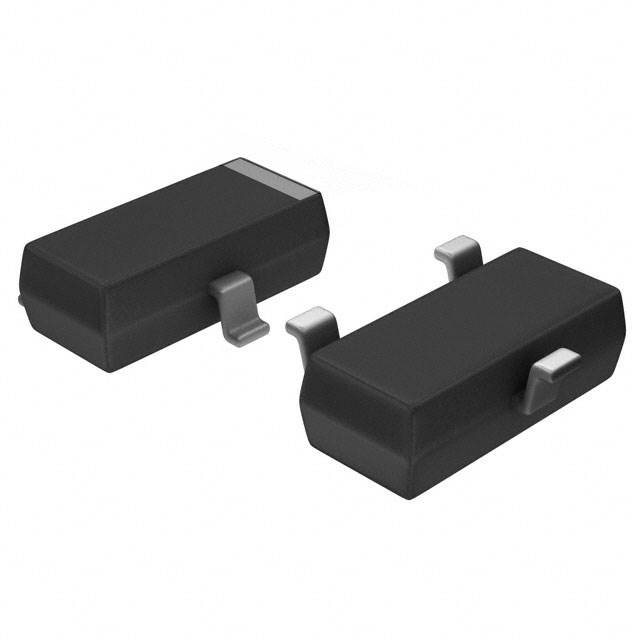
MMBF5485 vs UF3C170400B7S: Component Comparison for Power Electronics Engineers
Quick verdict
For high-frequency, low-current RF switching and amplification up to 400 MHz with minimal noise figure, the MMBF5485 is the clear choice due to its JFET technology optimized for small-signal RF applications. Conversely, for high-voltage, high-current power switching and industrial-grade applications requiring 1700 V blocking and 7.6 A continuous drain current, the UF3C170400B7S excels with its SiC cascode FET technology and robust thermal dissipation.
Spec comparison table
| Spec | MMBF5485 | UF3C170400B7S | Notes |
|---|---|---|---|
| Configuration | N-Channel JFET | N-Channel SiCFET (Cascode SiCJFET) | Both N-Channel; UF3C170400B7S uses SiC cascode for high voltage and power, MMBF5485 is JFET for RF |
| Current rating (continuous) | 10 mA | 7.6 A (Tc) | UF3C170400B7S supports 760x higher current, suitable for power applications |
| Frequency | 400 MHz | Not specified | MMBF5485 designed for RF applications; UF3C170400B7S not intended for RF or high-frequency use |
| Gain | Not specified | Not specified | No data; MMBF5485 likely has gain characteristics as a JFET used in RF, UF3C170400B7S is a power FET |
| Mounting type | Surface Mount (SOT-23-3) | Surface Mount (D2PAK-7) | MMBF5485 is small SOT-23; UF3C170400B7S is large D2PAK suitable for heat dissipation |
| Noise figure | 4 dB | Not specified | MMBF5485 optimized for low noise in RF; UF3C170400B7S not specified, likely higher |
| Output power max | Not specified | 100 W (Tc) | UF3C170400B7S rated for high power dissipation; MMBF5485 not intended for power output |
| Package / Case | TO-236-3, SC-59, SOT-23-3 | TO-263-8, D2PAK (7 leads + tab) | UF3C170400B7S package supports high power thermal management; MMBF5485 package is compact RF |
| Voltage rated | 25 V | 1700 V | UF3C170400B7S handles 68x higher voltage, critical for high-voltage designs |
| Voltage test | 15 V | Not specified | MMBF5485 tested at 15 V; UF3C170400B7S max Vds 1700 V |
| Gate charge (Qg) | Not specified | 23.1 nC @ 15 V | UF3C170400B7S has significant gate charge requiring stronger gate drive |
| Gate-source voltage max | Not specified | ±25 V | UF3C170400B7S supports high gate voltage swings; MMBF5485 data not provided |
| Input capacitance (Ciss) | Not specified | 734 pF @ 1200 V | UF3C170400B7S has substantial input capacitance, affecting switching speed |
| Operating temperature range | Not specified | -55°C to 175°C (TJ) | UF3C170400B7S suitable for harsh environments; MMBF5485 data not specified |
| Rds(on) max | Not specified | 515 mΩ @ 5 A, 12 V | UF3C170400B7S conduction losses known; MMBF5485 likely high Rds(on) as RF JFET |
| Threshold voltage (Vgs_th) | Not specified | 6 V @ 10 mA | UF3C170400B7S requires moderate gate voltage to turn on; MMBF5485 threshold unknown |
Design trade-offs
The MMBF5485 and UF3C170400B7S serve fundamentally different design domains despite both being N-channel FETs. The MMBF5485 is a low-current, low-voltage JFET optimized for RF front-end circuits, such as small-signal amplifiers or switches operating up to 400 MHz. Its low noise figure (4 dB) and small SOT-23 package make it suitable for space-constrained, high-frequency analog circuits. However, its continuous current rating of only 10 mA and voltage rating of 25 V limit it to signal-level applications, not power switching.
In contrast, the UF3C170400B7S is a high-voltage (1700 V), high-current (7.6 A) SiC cascode FET designed for power conversion, traction, or industrial systems requiring robust voltage blocking and thermal dissipation. Its D2PAK-7 package with a large tab is intended for efficient heat sinking to support up to 100 W power dissipation (at case temperature). The device’s large gate charge (23.1 nC at 15 V) and input capacitance (734 pF at 1200 V) necessitate a relatively strong and fast gate driver to achieve efficient switching, especially in hard-switching topologies.
From a PCB layout perspective, the MMBF5485’s small footprint enables compact, densely populated RF boards, but the vulnerability of the JFET gate to static damage and the lack of robust gate protection require careful handling. The UF3C170400B7S demands a PCB layout optimized for thermal management, with wide copper areas or dedicated heat sinks, and careful gate driver design to handle the gate charge and prevent switching losses or device stress.
Thermally, the MMBF5485 operates at low power levels and thus has minimal thermal challenges, while the UF3C170400B7S’s 100 W dissipation rating implies substantial thermal management considerations, including possible forced cooling or thermal interface materials. The UF3C170400B7S’s wide operating temperature range (-55°C to 175°C) suits harsh environments, whereas the MMBF5485 datasheet does not specify this, suggesting typical commercial ranges.
Cost-wise, the MMBF5485 is likely cheaper per unit given its simpler technology and smaller package, but in volume, the UF3C170400B7S’s specialized SiC cascode technology and robust packaging command a higher price justified by extreme voltage and power capabilities.
Use-case fit
Choose MMBF5485 when…
- Designing an RF front-end low-noise amplifier or RF switch operating up to 400 MHz with minimal noise figure.
- Implementing small-signal switching or amplification at voltages below 25 V and currents under 10 mA.
- Space-constrained layouts requiring a compact SOT-23 package.
- Applications where low input capacitance and minimal gate drive current are critical.
- Prototyping or production of analog or mixed-signal circuits with no high power or voltage requirements.
Choose UF3C170400B7S when…
- Designing high-voltage power converters, inverters, or motor drives requiring blocking voltages up to 1700 V.
- Switching continuous currents in the range of several amperes (up to 7.6 A) with significant power dissipation (up to 100 W).
- Applications demanding wide operating temperature ranges (-55°C to 175°C), e.g., automotive or industrial environments.
- Circuits where SiC’s superior switching speed and thermal performance improve efficiency despite higher gate drive complexity.
- Systems requiring robust, high-current packages with effective thermal management (D2PAK-7).
Drop-in compatibility
These devices are neither pin-compatible nor footprint-compatible. The MMBF5485 is housed in a small SOT-23-3 (TO-236-3, SC-59) package with three leads, typically used in low-power RF circuits. The UF3C170400B7S is packaged in a large D2PAK-7 (TO-263-8) with seven leads plus a tab designed for high power dissipation. Their gate, drain, and source pin assignments, as well as physical dimensions, are entirely different. Substituting one for the other would require a complete redesign of the PCB footprint, gate drive circuitry, and thermal management approach. There is no direct drop-in replacement capability.
Alternatives to consider
- 2N5457 (N-Channel JFET, 25 V, similar to MMBF5485): A classic JFET with similar voltage rating and low noise figure, suitable for RF and analog switching.
- C2M0025120D (SiC MOSFET, 1200 V, 50 mΩ, 30 A): A SiC MOSFET alternative for high-voltage power switching with lower Rds(on) and potentially easier gate drive than cascode SiCJFETs.
- BSS138 (Small-signal N-Channel MOSFET, 50 V, SOT-23): An inexpensive, widely available MOSFET for low-voltage switching, less specialized than the MMBF5485 but suitable for many general-purpose applications.