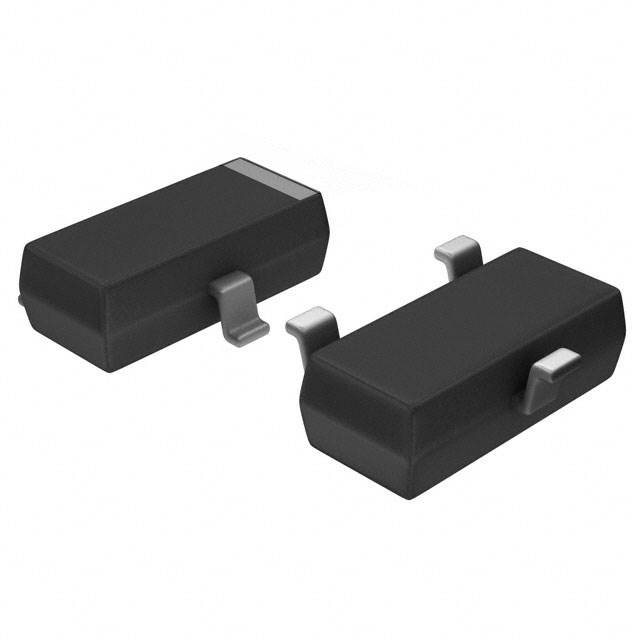
MMBF5485 vs TPM8837E-DF4R Component Comparison
Quick verdict
For low-current, high-frequency RF switching or amplification below 400 MHz, the MMBF5485 JFET is the straightforward choice due to its low noise figure and high voltage rating. For driving inductive loads like DC motors or relays with up to 1A output current and integrated fault protection, the TPM8837E-DF4R half-bridge MOSFET driver offers a more integrated, rugged solution.
Spec comparison table
| Spec | MMBF5485 | TPM8837E-DF4R | Notes |
|---|---|---|---|
| Configuration | N-Channel JFET | Half Bridge (2) MOSFET driver | Different device types; MMBF5485 is a discrete transistor, TPM8837E is an integrated driver |
| Current rating (Amps) | 10 mA | 1 A (output channel) | TPM8837E supports 100× higher current, critical for loads like motors |
| Frequency (MHz) | 400 MHz | Not specified (switching driver) | MMBF5485 supports RF operation; TPM8837E is for low-frequency power switching |
| Gain | Not specified | Not specified | Neither datasheet specifies gain; MMBF5485 is a JFET, typically used in low-noise stages |
| Mounting type | Surface Mount (SOT-23-3) | Surface Mount (8-DFN 2x2 mm) | TPM8837E’s smaller DFN package offers better thermal performance than SOT-23 |
| Noise figure (dB) | 4 dB | Not specified | MMBF5485 noise figure relevant for RF applications; TPM8837E not intended for RF |
| Output power max | Not specified | Not specified | Not comparable |
| Package case | TO-236-3, SC-59, SOT-23-3 | 8-WFDFN Exposed Pad | TPM8837E’s exposed pad aids heat dissipation, important for power applications |
| Technology | JFET | MOSFET (Metal Oxide) | Different transistor technologies, impacting drive and switching characteristics |
| Voltage rated (max) | 25 V | 2 V ~ 11 V (load voltage) | MMBF5485 supports higher voltage; TPM8837E optimized for low-voltage loads |
| Voltage test | 15 V | 1.8 V ~ 5.5 V (supply voltage) | MMBF5485 can handle higher test voltages; TPM8837E limited to low-voltage digital supplies |
| Applications | RF switching, amplification | DC motors, relays, solenoids, stepper motors | TPM8837E targets inductive loads with integrated protections |
| Fault protection | None reported | Current limiting, over temperature, short circuit, UVLO | TPM8837E includes critical protections for motor driver applications |
| Interface | None specified | PWM | TPM8837E designed for PWM motor control; MMBF5485 is a transistor, interface depends on circuit |
| Load type | General purpose RF | Inductive loads | TPM8837E specialized for inductive loads; MMBF5485 general RF transistor |
| Operating temperature | Not specified | -40°C to 150°C (TJ) | TPM8837E rated for wide industrial to automotive temperature range |
| RDS(on) typical | Not specified | 1.1 Ω (LS + HS combined) | TPM8837E conduction losses quantifiable; not applicable for JFET transistor |
Design trade-offs
The MMBF5485 and TPM8837E-DF4R serve fundamentally different roles, reflected in their specs and package types. The MMBF5485 is a discrete N-Channel JFET optimized for RF applications up to 400 MHz with a 4 dB noise figure, suitable for small-signal amplification or switching where low noise and moderate voltage handling (up to 25 V rated) are required. Its SOT-23-3 package is common for discrete transistors but offers limited thermal dissipation, which is acceptable given its low current rating of 10 mA.
In contrast, the TPM8837E-DF4R is a half-bridge MOSFET driver designed for inductive load switching such as DC motors or solenoids, supporting continuous output currents up to 1 A. It includes integrated fault protections (current limiting, over-temperature, short circuit, undervoltage lockout), which simplify system protection and reduce external components. The 8-DFN exposed pad package improves thermal dissipation, critical when switching inductive loads at higher currents and frequencies. However, its voltage range is limited to 2 V to 11 V on the load side and 1.8 V to 5.5 V on the supply side, making it unsuitable for higher-voltage applications.
From a layout perspective, the MMBF5485 is simpler to integrate as a single transistor but requires external biasing and protection circuitry for anything beyond simple switching. The TPM8837E-DF4R requires careful layout of the exposed pad for heat sinking and appropriate decoupling of its supply rails. Its PWM interface requires firmware control, adding complexity but enabling precise motor control.
Thermally, the TPM8837E-DF4R must be managed carefully due to its higher current and switching losses; its exposed pad helps but PCB copper area and thermal vias are necessary. The MMBF5485’s 10 mA rating implies negligible self-heating concerns in typical RF front-end circuits.
Cost-wise, the MMBF5485 is a simple discrete device likely cheaper per unit at low volumes, but the TPM8837E-DF4R integrates multiple transistors and protections, increasing complexity and cost but reducing system-level component count and design risk.
Use-case fit
Choose MMBF5485 when…
- Designing low-noise RF front ends or switching circuits operating up to 400 MHz.
- Your application requires a 25 V-rated transistor with low noise figure (4 dB) and very low current (≤10 mA).
- Board space is limited but you need a simple, single-transistor solution in a standard SOT-23-3 package.
- You do not require integrated protections or high-current drive.
- Your design must handle voltage spikes up to 15 V test voltage without damage.
Choose TPM8837E-DF4R when…
- Driving inductive loads such as DC motors, relays, solenoids, or stepper motors up to 1 A continuous load current.
- Your system benefits from integrated fault protections (current limiting, over temperature, short circuit, UVLO) to improve robustness.
- Operating voltage for the load is within 2 V to 11 V, and supply voltage is between 1.8 V and 5.5 V.
- You require a half-bridge output stage with PWM interface for precise load control.
- Thermal management is critical, and you can leverage the exposed pad 8-DFN package for heat dissipation.
Drop-in compatibility
These parts are not pin-compatible nor footprint-compatible. The MMBF5485 is a discrete 3-pin JFET in a SOT-23-3 package, while the TPM8837E-DF4R is an integrated half-bridge driver in an 8-pin DFN 2x2 mm package with an exposed pad. Substituting one for the other would require redesigning the PCB layout, power supply, control signals, and potentially the entire driver or amplifier circuit.
Alternatives to consider
- BSS138 (N-Channel MOSFET, SOT-23): A common small-signal MOSFET alternative for low-voltage switching with higher current rating than MMBF5485 but no RF optimization.
- DRV8833 (TI, Dual H-Bridge Motor Driver): Integrated motor driver IC with similar application scope as TPM8837E-DF4R but with higher current capability and more control features.
- 2N5457 (N-Channel JFET): Another JFET option for RF and analog switching with higher voltage rating, suitable for replacing MMBF5485 in some low-noise applications.