MMBF5485 vs FDS9435A: Component Comparison for Power Electronics Engineers
Quick verdict
For high-frequency, low-current analog/RF switching or amplification up to 400 MHz, the MMBF5485 JFET is the better choice due to its low noise figure and RF-optimized design. For power switching, load switching, or DC-DC conversion at currents up to 5.3 A and voltages up to 30 V, the FDS9435A P-Channel MOSFET is clearly superior, offering much higher current capacity and low R_DS(on).
Spec comparison table
| Spec | MMBF5485 | FDS9435A | Notes |
|---|---|---|---|
| Configuration | N-Channel JFET | P-Channel MOSFET | Different device types; JFET vs MOSFET affects drive requirements and switching behavior. |
| Current rating (continuous) | 10 mA | 5.3 A (Ta) | FDS9435A supports >500x higher current, suitable for power applications. |
| Frequency | 400 MHz | Not specified (power MOSFET) | MMBF5485 is RF-optimized; FDS9435A not intended for RF switching. |
| Gain | Not specified | Not specified | JFET gain relevant in analog/RF; MOSFET gain in switching applications is implicit. |
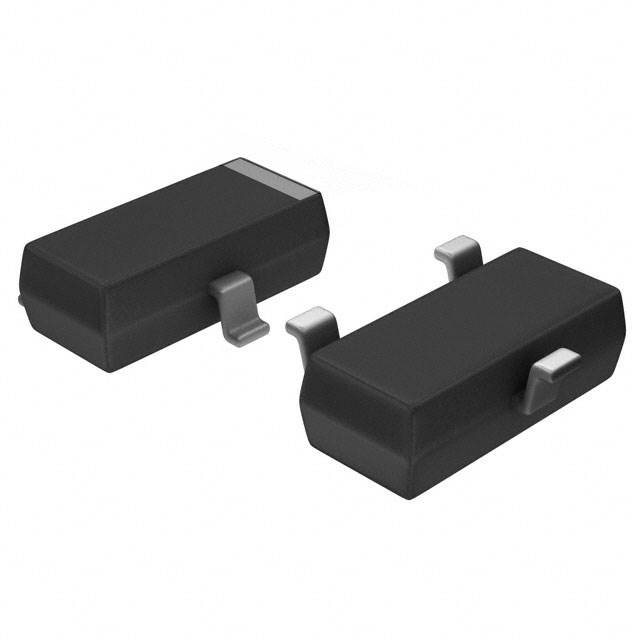
| Mounting type | Surface Mount (SOT-23-3) | Surface Mount (8-SOIC) | SOT-23-3 is smaller footprint; 8-SOIC larger, better for power dissipation. |
| Noise figure | 4 dB | Not specified | Low noise figure favors MMBF5485 in low-noise amplifier stages. |
| Output power max | Not specified | Not specified | No direct power output rating given. |
| Package case | TO-236-3, SC-59, SOT-23-3 | 8-SOIC (3.90 mm width) | Larger package on FDS9435A aids thermal dissipation at higher currents. |
| Voltage rated | 25 V | 30 V | FDS9435A has higher voltage rating, better for 30 V rails; MMBF5485 limited to 25 V max. |
| Voltage test | 15 V | Not specified | Test voltage not directly comparable. |
| Drive voltage (V_GS) | Not specified | Max ±25 V; R_DS(on) specified at 4.5 V, 10 V | FDS9435A requires low-voltage gate drive (4.5–10 V) for low R_DS(on). |
| Gate charge (Q_g) | Not specified | 14 nC @ 10 V | Moderate gate charge on FDS9435A impacts switching speed and gate driver sizing. |
| Input capacitance (C_iss) | Not specified | 528 pF @ 15 V | FDS9435A input capacitance affects gate drive speed and switching losses. |
| Operating temperature range | Not specified | -55°C to 155°C (TJ) | FDS9435A rated for wide temperature range; MMBF5485 data not provided. |
| Power dissipation max (Ta) | Not specified | 2.5 W | FDS9435A can dissipate significant power; MMBF5485 intended for low-power RF use. |
| R_DS(on) max | Not applicable | 50 mΩ @ 5.3 A, 10 V | Low R_DS(on) enables efficient conduction in FDS9435A; not applicable for JFET MMBF5485. |
| V_GS(th) max | Not specified | 3 V @ 250 µA | Threshold voltage info only on FDS9435A; important for gate drive design. |
Design trade-offs
The MMBF5485 and FDS9435A serve fundamentally different roles despite both being “transistors.” The MMBF5485 is an N-Channel JFET optimized for RF frequencies up to 400 MHz, with a low noise figure of 4 dB, making it suitable for low-level signal amplification or RF switching where linearity and noise performance matter more than power handling. Its continuous current rating of only 10 mA and small SOT-23-3 package indicate it is not designed for power switching or load driving.
In contrast, the FDS9435A is a P-Channel MOSFET designed for power switching applications. With a continuous drain current of 5.3 A and a maximum drain-source voltage of 30 V, it is suited for DC-DC converters, load switches, or motor control at moderate voltages and currents. Its 8-SOIC package supports better thermal dissipation, and the 2.5 W power dissipation rating (at ambient) means it can handle significant conduction and switching losses, provided proper thermal design. The R_DS(on) max of 50 mΩ at 5.3 A and 10 V gate drive voltage indicates moderate conduction losses, which must be accounted for in efficiency calculations.
Gate drive requirements differ drastically between the two. The MMBF5485, being a JFET, typically requires biasing with a gate-source voltage but does not have a defined threshold voltage or gate charge like MOSFETs. The FDS9435A requires a gate drive voltage in the 4.5–10 V range to fully enhance the device and minimize R_DS(on), with a gate charge of 14 nC at 10 V, which influences gate driver selection and switching speed limits. The MOSFET’s input capacitance (528 pF) also impacts switching losses and must be considered in high-frequency or PWM applications.
From a layout perspective, the MMBF5485’s small SOT-23-3 footprint is beneficial for compact RF front-ends but limits heat dissipation. The FDS9435A’s larger SOIC package allows for better heat sinking and PCB copper area to reduce thermal resistance, which is essential at multi-amp currents.
Cost-wise, the MMBF5485 tends to be cheaper in unit price and board space but is only useful in low-power, high-frequency analog circuits. The FDS9435A will be more expensive and larger but justifiable where power switching and thermal handling are critical.
Use-case fit
Choose MMBF5485 when…
- Designing low-noise RF front-end amplifiers or switches operating up to 400 MHz with very low current demands (<10 mA).
- Implementing analog signal conditioning circuits where JFET linearity and low noise figure (~4 dB) improve system SNR.
- Space-constrained designs require a compact SOT-23-3 package and minimal PCB area.
- The application involves voltage levels below 25 V and negligible power dissipation.
- You require a low-level N-Channel JFET device for biasing or small-signal switching.
Choose FDS9435A when…
- Switching or controlling loads up to 5.3 A continuous current at voltages up to 30 V.
- Designing high-side P-Channel MOSFET switches or DC-DC converters where low R_DS(on) (50 mΩ) reduces conduction losses.
- Thermal dissipation of up to 2.5 W ambient is needed, with a package (8-SOIC) that supports adequate heat sinking.
- Gate drive voltage can be provided in the 4.5–10 V range, and gate charge (14 nC) can be driven efficiently.
- The design requires operation over a wide temperature range (-55°C to 155°C junction temperature).
Drop-in compatibility
The MMBF5485 and FDS9435A are not pin-compatible or footprint-compatible. The MMBF5485 is housed in a small SOT-23-3 package with 3 leads, whereas the FDS9435A comes in a larger 8-SOIC package with 8 pins. Their different device types (N-Channel JFET vs. P-Channel MOSFET) mean their electrical characteristics and pin functions differ substantially. Substituting one for the other requires a complete redesign of the PCB footprint, gate drive circuitry, and likely the control logic.
Alternatives to consider
- BSS138 (N-Channel MOSFET, SOT-23): Low-voltage, small-signal MOSFET alternative for low-current switching, although not optimized for RF.
- IRLML6401 (P-Channel MOSFET, SOT-23): Small-outline P-Channel MOSFET with low R_DS(on) for low-power switching applications.
- 2N3819 (N-Channel JFET, TO-92): Classic JFET for low-noise, low-current analog circuits, though through-hole and larger package than MMBF5485.