Component Comparison: MMBF5485 vs FDC6305N
Quick verdict
For low-current, high-frequency RF switching or amplification up to several hundred MHz, the MMBF5485’s JFET technology and 400 MHz frequency rating make it the preferred choice. Conversely, for general-purpose low-voltage DC switching or load driving up to a few amps, the FDC6305N’s dual MOSFETs with 2.7 A continuous current rating and 80 mΩ R_DS(on) outperform the MMBF5485 by orders of magnitude in current handling and conduction efficiency.
Spec comparison table
| Spec | MMBF5485 | FDC6305N | Notes |
|---|---|---|---|
| Configuration | N-Channel JFET | Dual N-Channel MOSFET | FDC6305N offers dual devices in one package, increasing integration density. |
| Current rating (continuous) | 10 mA | 2.7 A | FDC6305N supports >200× higher continuous current, enabling power switching and loads. |
| Frequency | 400 MHz | Not specified | MMBF5485 is explicitly RF-rated, suitable for high-frequency analog/RF applications. |
| Gain | Not specified | Not specified | Gain is irrelevant for MOSFETs; MMBF5485’s JFET may provide voltage gain in RF paths. |
| Mounting type | Surface mount | Surface mount | Both support standard SMT processes. |
| Noise figure | 4 dB | Not specified | MMBF5485’s noise figure is relevant for low-noise RF front-ends; FDC6305N is not optimized for noise. |
| Output power max | Not specified | 700 mW | FDC6305N’s power rating supports moderate power dissipation, important for load switching. |
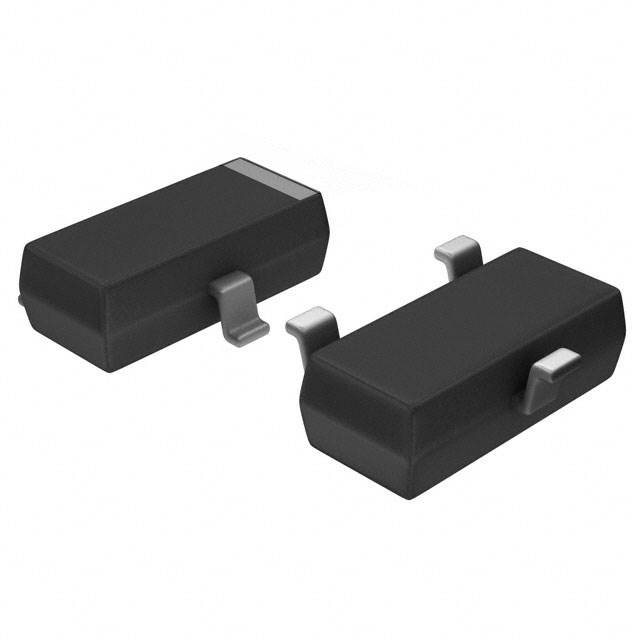
| Package case | TO-236-3, SC-59, SOT-23-3 | SuperSOT™-6 (TSOT-23-6) | FDC6305N’s smaller footprint and dual devices can save PCB area. |
| Voltage rating (Drain-Source) | 25 V | 20 V | MMBF5485 has slightly higher voltage rating, though both are low-voltage devices. |
| Voltage test | 15 V | Not specified | Test voltage is less relevant than max voltage rating. |
| Gate charge (Q_g) max | Not specified | 5 nC @ 4.5 V | FDC6305N’s gate charge indicates moderate gate drive current requirement. |
| Input capacitance (C_iss) | Not specified | 310 pF @ 10 V | FDC6305N has moderate input capacitance, influencing switching speed and gate drive losses. |
| R_DS(on) max @ I_D, V_GS | Not specified | 80 mΩ @ 2.7 A, 4.5 V | FDC6305N’s on-resistance is specified, allowing calculation of conduction losses. |
| V_GS(th) max | Not specified | 1.5 V @ 250 µA | FDC6305N’s low threshold voltage enables logic-level drive. |
| Operating temperature range | Not specified | -55°C to 150°C TJ | FDC6305N supports a wide temperature range, useful for automotive and industrial designs. |
| Technology | JFET | MOSFET | JFET suits low-noise, high-frequency analog use; MOSFET suits power switching. |
Design trade-offs
The MMBF5485 is a JFET optimized for RF applications up to 400 MHz with a noise figure of 4 dB, making it appropriate for low-level signal amplification or RF switching where maintaining signal integrity is critical. Its current rating of only 10 mA severely limits its use to signal-level applications rather than power switching. The lack of a specified R_DS(on) and gate charge makes it unsuitable for power efficiency calculations, but its JFET structure inherently provides low input capacitance and low noise, beneficial in sensitive analog front-ends.
In contrast, the FDC6305N is a dual N-Channel MOSFET array designed for low-voltage power switching with a continuous drain current rating of 2.7 A and a maximum power dissipation of 700 mW. Its low R_DS(on) of 80 mΩ at 2.7 A and 4.5 V gate drive allows for relatively efficient switching at moderate currents. The gate charge of 5 nC means gate drivers must source sufficient current for fast switching, impacting gate driver design and switching losses. The SuperSOT-6 package saves PCB space by integrating two MOSFETs, beneficial for compact power stages or dual-channel switching.
Thermally, the FDC6305N can dissipate up to 700 mW, which requires careful PCB thermal management at high currents, whereas the MMBF5485’s low current and power dissipation make thermal concerns negligible. The MMBF5485’s JFET gate does not require a gate drive voltage in the same way a MOSFET does, simplifying drive circuitry for RF switching but limiting switching speed and power handling.
From a layout perspective, the FDC6305N’s dual devices in a SuperSOT-6 package require careful routing to utilize both transistors effectively and manage switching noise, while the MMBF5485’s single device and SOT-23-3 footprint is simpler but limited to analog/RF signal paths. Volume cost will favor the FDC6305N in power switching applications due to its versatility and integration; the MMBF5485 is a niche component with likely lower demand, affecting availability and pricing.
Use-case fit
Choose MMBF5485 when…
- Designing low-noise RF front-end circuits needing an N-channel JFET with a 400 MHz frequency rating.
- Implementing analog switches or buffer stages where 10 mA current and low noise figure (4 dB) are critical.
- Building high-frequency mixers or amplifiers requiring JFET characteristics in a compact SOT-23-3 package.
- Working in circuits where gate drive simplicity and minimal input capacitance at RF frequencies are priorities.
- Integrating a device into low-current, low-voltage RF signal paths with minimal distortion.
Choose FDC6305N when…
- Switching DC loads or driving small motors, LEDs, or relays up to 2.7 A continuous current.
- Designing dual-channel low-voltage power switches or synchronous rectifiers in a compact footprint.
- Implementing logic-level driven power stages with a gate threshold voltage of 1.5 V max.
- Building circuits requiring moderate power dissipation (up to 700 mW) with low on-resistance (80 mΩ).
- Operating in wide temperature ranges (-55°C to 150°C junction temperature), such as industrial or automotive applications.
Drop-in compatibility
The MMBF5485 and FDC6305N are not pin- or footprint-compatible. The MMBF5485 is a single JFET in a standard SOT-23-3 package (TO-236-3), whereas the FDC6305N is a dual MOSFET in a SuperSOT-6 (TSOT-23-6) package with six pins. Substituting one for the other would require redesign of the PCB footprint and possibly the surrounding circuitry, including gate drive and biasing arrangements. Additionally, their distinct technologies (JFET vs MOSFET) mean electrical characteristics and drive requirements differ substantially, preventing drop-in replacement.
Alternatives to consider
- BSS138: A logic-level N-channel MOSFET in SOT-23, useful for low-voltage switching up to ~200 mA with lower gate charge than FDC6305N.
- 2N5457: An N-channel JFET with similar RF and low-noise characteristics to MMBF5485 but with different pinout and electrical specs.
- Si2302: A small-signal N-channel MOSFET with low R_DS(on) and low gate charge for efficient switching in compact footprints.