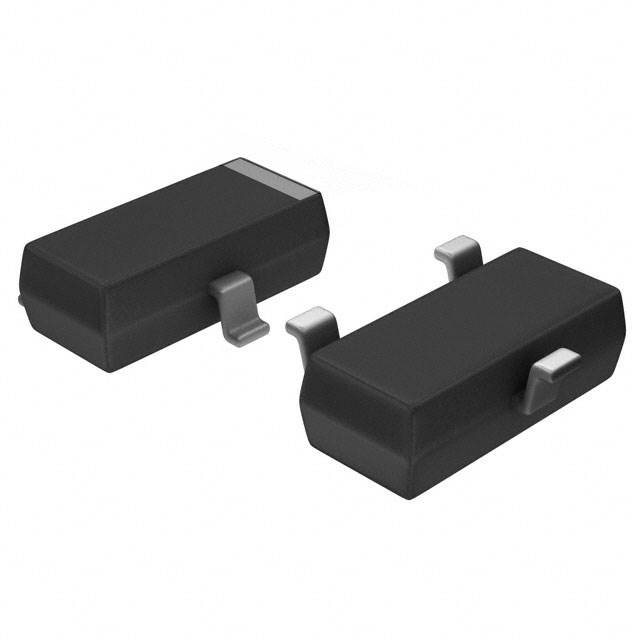
MMBF5485 vs C3M0021120K: Component Comparison for Power Electronics Engineers
Quick verdict
For low-current, high-frequency analog RF applications requiring low noise and minimal footprint, the MMBF5485 is the clear choice due to its JFET technology and 400 MHz bandwidth. For high-voltage, high-current power switching, especially in industrial or automotive power stages, the C3M0021120K excels with its 1200 V rating, 100 A continuous current, and SiC MOSFET efficiency advantages.
Spec comparison table
| Spec | MMBF5485 | C3M0021120K | Notes |
|---|---|---|---|
| Configuration | N-Channel JFET | N-Channel SiC MOSFET | Both N-Channel, but different device physics (JFET vs SiC MOSFET) impacts drive and switching. |
| Current rating (continuous) | 10 mA | 100 A (Tc) | C3M0021120K supports 10,000× higher current; MMBF5485 is for signal-level only. |
| Frequency | 400 MHz | Not specified (power MOSFET) | MMBF5485 supports RF applications up to 400 MHz; C3M is not intended for RF. |
| Gain | Not specified | Not specified | Gain not listed for either; JFETs typically have transconductance but no gain figure here. |
| Mounting type | Surface mount (SOT-23-3) | Through hole (TO-247-4L) | MMBF5485 suits compact, high-density PCBs; C3M0021120K requires more board space and heatsinking. |
| Noise figure | 4 dB | Not specified | MMBF5485 noise figure relevant for low-noise RF designs; C3M not optimized for low noise. |
| Output power max | Not specified | 469 W (Tc) | C3M0021120K handles high power dissipation; MMBF5485 not rated for power stages. |
| Package case | TO-236-3 / SC-59 / SOT-23-3 | TO-247-4 | MMBF5485 in small SOT-23-3; C3M0021120K in large TO-247-4 for thermal management. |
| Voltage rated | 25 V | 1200 V | C3M0021120K supports 48× higher voltage, enabling high-voltage power applications. |
| Voltage test | 15 V | 15 V | Same test voltage, but absolute max differs greatly. |
| Gate charge (Qg) | Not specified | 162 nC @ 15 V | C3M0021120K requires significant gate charge, impacting gate driver design and switching losses. |
| Gate-source voltage max | Not specified | +15 V / -4 V | C3M0021120K has defined Vgs max limits critical for gate drive design. |
| Input capacitance (Ciss) | Not specified | 4818 pF @ 1000 V | Large input capacitance on C3M0021120K increases gate drive losses and switching delays. |
| Operating temperature range | Not specified | -40°C to 175°C (TJ) | C3M0021120K can operate at high junction temperatures; MMBF5485 datasheet does not specify. |
| Rds(on) | Not specified | 28.8 mΩ @ 50 A, 15 V | C3M0021120K has low conduction losses at rated current; no comparable data for MMBF5485. |
| Threshold voltage (Vgs_th) | Not specified | 3.6 V @ 17.7 mA | C3M0021120K requires typical 3.6 V gate drive turn-on; MMBF5485 JFET gate characteristics differ. |
Design trade-offs
The MMBF5485 is a low-current, high-frequency JFET optimized for RF front-end switching or amplification at frequencies up to 400 MHz. Its 10 mA current rating and 4 dB noise figure indicate a device intended for small-signal analog circuits rather than power switching. The SOT-23-3 package supports compact PCB layouts with minimal parasitics, advantageous in RF design where layout inductance and capacitance critically affect performance.
In contrast, the C3M0021120K is a silicon carbide (SiC) power MOSFET designed for high-voltage (1200 V), high-current (100 A) power switching applications. Its TO-247-4 package, with through-hole mounting and a large thermal footprint, facilitates effective heat sinking and thermal management. The 469 W power dissipation rating (measured at case temperature) and wide operating temperature range (-40°C to 175°C) make it suitable for demanding industrial environments.
Gate drive requirements differ significantly: the MMBF5485 JFET requires minimal gate current and no dedicated gate drive voltage swing, whereas the C3M0021120K’s 162 nC gate charge at 15 V necessitates a robust gate driver capable of sourcing and sinking tens of amperes momentarily for fast switching. The large input capacitance (4818 pF) of the C3M0021120K also impacts switching losses and gate driver power budget, which must be accounted for in the design.
From a layout standpoint, the MMBF5485’s small SOT-23-3 footprint reduces PCB area and parasitic inductances, crucial in RF circuits. The C3M0021120K’s large TO-247-4 package requires careful mechanical mounting and thermal interface materials to maintain junction temperature within limits, especially under high load. Switching frequency considerations are also critical: the MMBF5485 is appropriate for hundreds of MHz switching, while the C3M0021120K is optimized for lower frequency power conversion (tens to hundreds of kHz) where switching losses dominate.
Cost-wise, the MMBF5485 is a low-cost discrete transistor suitable for volume consumer or communication devices. The C3M0021120K, a SiC MOSFET, commands a premium price reflecting its advanced technology, robustness, and power capability, making it justified only in applications requiring high voltage, high efficiency, or high temperature operation.
Use-case fit
Choose MMBF5485 when…
- Designing low-noise RF front-end switches or amplifiers operating near 400 MHz.
- Implementing analog signal routing or buffering in compact, surface-mount designs requiring minimal board space.
- Working within tight current limits (≤10 mA) where low noise figure (4 dB) is important.
- Minimizing parasitic capacitance and inductance for high-frequency signal integrity.
- Replacing older JFETs in sensitive analog measurement or communication circuits.
Choose C3M0021120K when…
- Building high-voltage (up to 1200 V) power converters such as motor drives, PV inverters, or industrial power supplies.
- Designing systems requiring continuous drain current up to 100 A with robust thermal handling.
- Implementing high-efficiency power stages where SiC MOSFET advantages reduce conduction and switching losses.
- Operating in harsh environments with junction temperatures up to 175°C.
- Needing rugged, through-hole mounted devices suitable for prototyping or repairable systems.
Drop-in compatibility
These parts are not pin-compatible or footprint-compatible. The MMBF5485 is a small SOT-23-3 surface-mount JFET with three leads, while the C3M0021120K is a large TO-247-4 package SiC MOSFET with four leads. The differences in package size, pin count, and device technology prevent direct substitution without complete redesign of the PCB and gate drive circuitry.
Alternatives to consider
- BSS138 (NXP): Small-signal N-channel MOSFET in SOT-23 package, good for low-voltage switching up to ~50 V, suitable as a low-cost alternative to MMBF5485 in digital switching.
- IPW65R041CFD (Infineon): 650 V SiC MOSFET with low Rds(on) and smaller package, for intermediate voltage power applications bridging the gap between low-voltage MOSFETs and 1200 V devices like the C3M0021120K.
- 2N7002 (ON Semiconductor): Popular N-channel MOSFET for low-voltage switching, surface mount, with low gate charge, useful for low-current DC loads and general-purpose switching.