MMBF5485 vs AUIRFZ44N: Component Comparison for Power Electronics Engineers
Quick verdict
For RF and low-current analog switching or amplification up to 400 MHz, the MMBF5485 JFET is the clear choice due to its low noise figure and high-frequency operation. For power switching and motor control in automotive or industrial applications requiring tens of amps and up to 55 V, the AUIRFZ44N MOSFET dominates with its 49 A current rating and rugged TO-220 package.
Spec comparison table
| Spec | MMBF5485 | AUIRFZ44N | Notes |
|---|---|---|---|
| Configuration | N-Channel JFET | N-Channel MOSFET | Both N-channel, but different device types affect switching and drive characteristics. |
| Current rating (continuous) | 10 mA | 49 A (Tc) | AUIRFZ44N supports 4900× higher current, suitable for power stages vs. signal-level. |
| Frequency | 400 MHz | Not specified | MMBF5485 designed for RF up to 400 MHz; AUIRFZ44N is not suitable for RF switching. |
| Gain | Not specified | Not specified | MMBF5485 JFET provides transconductance gain; MOSFET is a switch with no gain figure. |
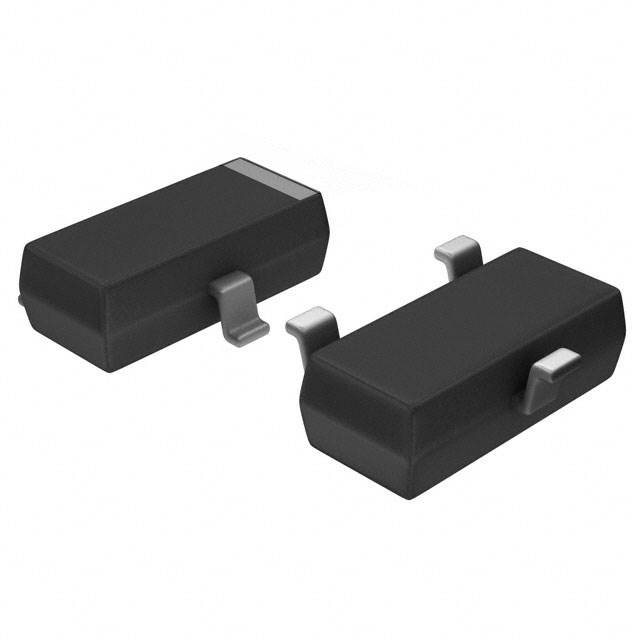
| Mounting type | Surface Mount (SOT-23-3) | Through Hole (TO-220AB) | MMBF5485 integrates easily in small SMT PCBs; AUIRFZ44N requires heatsinking and more PCB space. |
| Noise figure | 4 dB | Not specified | MMBF5485 low noise figure important for RF front ends; AUIRFZ44N not designed for low noise. |
| Output power max | Not specified | Not specified | Neither specifies output power; AUIRFZ44N power dissipation is 94W (Tc) but depends on cooling. |
| Package case | TO-236-3, SC-59, SOT-23-3 | TO-220-3 | TO-220 allows for direct heatsinking; SOT-23-3 is compact but limited power dissipation. |
| Technology | JFET | MOSFET (Metal Oxide) | JFET better for low noise and linear RF applications; MOSFET better for high power switching. |
| Voltage rated | 25 V | 55 V | AUIRFZ44N supports more than double voltage, useful for 12V/24V automotive and industrial. |
| Voltage test | 15 V | Not specified | Test voltage less relevant than max ratings. |
| Continuous drain current (Id at 25°C) | 10 mA | 49 A (Tc) | Huge difference in current capability; MMBF5485 is signal-level only. |
| Drive voltage max Rds(on) | Not specified | 10 V | AUIRFZ44N requires 10 V drive for minimum Rds(on); MMBF5485 JFET gate drive is voltage-controlled with zero gate current. |
| Gate charge (Qg) | Not specified | 63 nC @ 10 V | AUIRFZ44N gate charge impacts switching losses and drive requirements. |
| Gate-source voltage max | Not specified | ±20 V | AUIRFZ44N gate drive limited to ±20 V max; MMBF5485 JFET gate voltage range different. |
| Input capacitance (Ciss) | Not specified | 1470 pF @ 25 V | AUIRFZ44N input capacitance impacts switching speed; MMBF5485 typically lower capacitance for RF. |
| Operating temperature range | Not specified | -55°C ~ 175°C (TJ) | AUIRFZ44N rated for wide automotive temperature range; MMBF5485 data not specified. |
| Power dissipation max | Not specified | 94 W (Tc) | AUIRFZ44N can dissipate significant power with heatsinking; MMBF5485 limited by package. |
| Rds(on) max | Not specified | 17.5 mΩ @ 25 A, 10 V | AUIRFZ44N low Rds(on) reduces conduction losses at high current; MMBF5485 not a power switch. |
| Threshold voltage (Vgs_th) | Not specified | 4 V @ 250 µA | AUIRFZ44N requires ~4 V to turn on; MMBF5485 JFET has different gate biasing, typically depletion mode. |
| Qualification | Not specified | AEC-Q101 | AUIRFZ44N qualified for automotive, increasing reliability in harsh environments. |
Design trade-offs
The MMBF5485 is a JFET optimized for RF and low-current analog switching applications. Its 400 MHz frequency rating and 4 dB noise figure indicate it is suitable for small-signal amplification or RF front-end switching, where low noise and fast switching at high frequency are critical. The SOT-23-3 package allows for compact PCB layouts with minimal parasitics, but the device is limited to about 10 mA continuous current and 25 V maximum voltage, ruling it out for power switching.
In contrast, the AUIRFZ44N is a power MOSFET designed for high-current, high-voltage switching applications. With a 49 A current rating at case temperature and 55 V drain-source voltage maximum, it fits well in automotive and industrial power stages. The TO-220AB through-hole package facilitates heat sinking, which is necessary given its 94 W maximum power dissipation rating. The device’s gate charge of 63 nC at 10 V means gate driving circuits must be robust and possibly include gate drivers capable of sourcing several hundred milliamps for fast switching, especially at high frequencies.
Thermal management is a significant consideration with the AUIRFZ44N. The TO-220 package allows mounting to a heatsink or PCB copper area but requires careful layout to minimize thermal resistance. The MMBF5485, by contrast, dissipates negligible power and needs no heatsinking, making it ideal for dense, low-power RF boards.
From a gate drive perspective, the MMBF5485 JFET gate is voltage-controlled with essentially zero gate current, simplifying drive circuitry but requiring careful biasing to maintain linearity in RF applications. The AUIRFZ44N MOSFET requires a positive gate voltage around 10 V to fully switch on, and its significant gate charge increases switching losses and demands a gate driver capable of handling that charge efficiently. This difference impacts not only the drive electronics but also switching frequency limits and efficiency.
Layout sensitivity is also distinct: the MMBF5485’s high-frequency operation demands minimal parasitic inductance and capacitance in the PCB layout, favoring short gate traces and controlled impedance. The AUIRFZ44N, while sensitive to gate drive parasitic inductance at high switching speeds, is primarily a power device where thermal and conduction losses dominate layout priorities.
Cost-wise, the MMBF5485 in SOT-23 is generally lower cost and smaller footprint but serves only low-power RF applications. The AUIRFZ44N, a legacy automotive-grade MOSFET in a through-hole package, is low cost for power MOSFETs but occupies more PCB area and requires additional thermal management components.
Use-case fit
Choose MMBF5485 when…
- Designing a low-noise RF front-end amplifier or switch up to 400 MHz frequency.
- Implementing a low-current analog switch requiring minimal parasitic capacitance and low noise figure.
- Space-constrained surface-mount PCB designs where compact SOT-23 packaging is required.
- Operating voltages below 25 V and currents below 10 mA.
- Applications where low gate drive power and simple biasing are priorities, such as small-signal RF circuits or sensor interfaces.
Choose AUIRFZ44N when…
- Building high-current DC-DC converters, motor drivers, or automotive power switches requiring up to 49 A continuous current.
- Designing circuits with voltage rails up to 55 V, such as 12 V or 24 V systems with headroom.
- Applications demanding automotive qualification (AEC-Q101) and wide temperature range (-55°C to 175°C junction).
- Situations where low Rds(on) (17.5 mΩ @ 25 A, 10 V gate) reduces conduction losses and improves efficiency.
- Systems where through-hole mounting and effective thermal management (heatsinks) are feasible and necessary.
Drop-in compatibility
These parts are neither pin-compatible nor footprint-compatible. The MMBF5485 in SOT-23-3 is a small surface-mount JFET, while the AUIRFZ44N is a large through-hole MOSFET in a TO-220-3 package. The different device technologies also mean gate drive and biasing requirements are incompatible. Substituting one for the other would require a complete redesign of the gate drive, power stage layout, and thermal management. No direct drop-in substitution is possible.
Alternatives to consider
- BSS138 (N-Channel MOSFET, SOT-23): For low-voltage, low-current switching in a surface-mount package, with better power handling than MMBF5485 but not