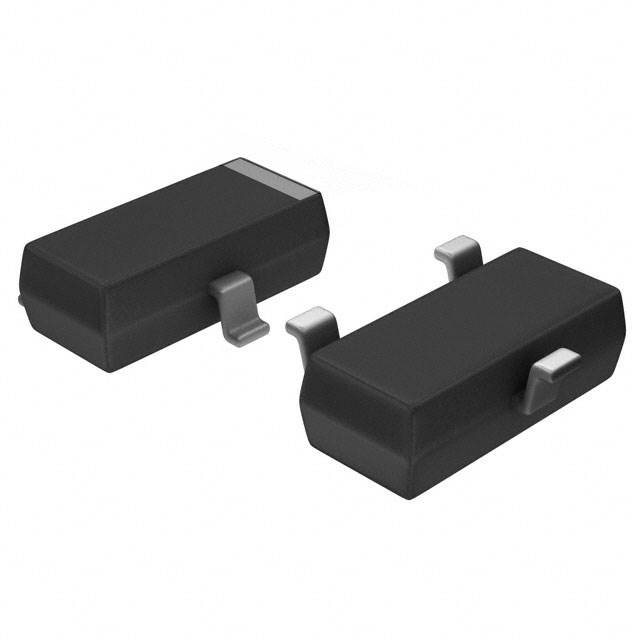
MMBF5485 vs AON7407: Component Comparison for Power Electronics Design
1. Quick verdict
For high-frequency RF switching or low-current analog front-end applications, the MMBF5485 is the clear choice due to its JFET technology, low-noise figure, and 400 MHz frequency capability. Conversely, for power management, load switching, or DC-DC conversion at currents above 1A, the AON7407 dominates with its high continuous drain current rating of 14.5A and low on-resistance, making it suitable for efficient power stages.
2. Spec comparison table
| Spec | MMBF5485 | AON7407 | Notes |
|---|---|---|---|
| Configuration | N-Channel JFET | P-Channel MOSFET | Different polarity and technology; affects drive and switching behavior. |
| Current rating (continuous) | 10 mA | 14.5 A (Ta), 40 A (Tc) | AON7407 supports 1000× higher current, critical for power applications. |
| Frequency | 400 MHz | Not specified | MMBF5485 is designed for RF applications; AON7407 is power MOSFET, not RF optimized. |
| Noise figure | 4 dB | Not specified | MMBF5485 offers low noise figure suitable for sensitive analog/RF circuits. |
| Voltage rating (max) | 25 V | 20 V | MMBF5485 has slightly higher voltage rating; relevant if voltage margin is tight. |
| Voltage test rating | 15 V | N/A | Test voltage less relevant for design but indicates typical operating range. |
| Output power max | Not specified | Not specified | No data to compare. |
| Package case | TO-236-3 / SC-59 / SOT-23-3 | 8-PowerVDFN (3x3 mm) | Different packages; AON7407’s PowerVDFN offers better thermal performance. |
| Supplier device package | SOT-23-3 | 8-DFN-EP (3x3) | AON7407’s larger package supports higher power dissipation. |
| Technology | JFET | MOSFET (Metal Oxide Semiconductor) | JFET better for low-noise/RF; MOSFET better for power switching. |
| Drive voltage max (gate-source) | Not specified | ±8 V | AON7407 gate voltage limits important for gate drive design. |
| Gate charge Qg max @ Vgs | Not specified | 53 nC @ 4.5 V | AON7407 has moderate gate charge; impacts switching losses and driver sizing. |
| Input capacitance Ciss max @ Vds | Not specified | 4195 pF @ 10 V | High input capacitance on AON7407 affects switching speed and gate drive power. |
| Rds(on) max @ Id, Vgs | Not specified | 9.5 mΩ @ 14 A, 4.5 V | AON7407 offers very low on-resistance at high current, reducing conduction losses. |
| Gate threshold voltage Vgs_th max | Not specified | 900 mV @ 250 µA | AON7407 turns on at low gate voltage; useful for logic-level drive. |
| Power dissipation max | Not specified | 3.1 W (Ta), 29 W (Tc) | AON7407 supports high power dissipation with proper cooling, unlike MMBF5485. |
| Operating temperature range | Not specified | -55°C to 150°C (TJ) | AON7407 suitable for harsh environments and high-temp operation. |
| Mounting type | Surface mount | Surface mount | Both surface mount but different form factors. |
3. Design trade-offs
The MMBF5485 is a JFET optimized for RF switching and low-noise analog circuits. Its 400 MHz frequency rating and 4 dB noise figure indicate suitability in front-end circuits where signal integrity is critical. However, its 10 mA current rating and modest package limit its use to low-current, low-power applications. The SOT-23-3 package is compact but offers limited thermal dissipation; thermal management is generally not a concern due to low currents.
In contrast, the AON7407 is a power MOSFET designed for high-current switching with a maximum continuous drain current of 14.5 A at ambient and up to 40 A at case temperature. Its low Rds(on) of 9.5 mΩ at 14 A and 4.5 V gate drive voltage means conduction losses will be minimal in typical DC-DC converters or load switches. The larger 8-DFN-EP package supports higher power dissipation (up to 29 W with proper cooling), crucial for thermal management in power stages.
Gate drive requirements differ substantially. The MMBF5485 JFET requires minimal gate current but is voltage-controlled differently from MOSFETs, often requiring biasing arrangements compatible with JFET operation. The AON7407 MOSFET requires a gate drive voltage up to ±8 V with a gate charge of 53 nC at 4.5 V, which impacts the design of the gate driver stage and switching losses, especially in high-frequency DC-DC converters.
From a layout perspective, the AON7407’s 8-pin DFN package with exposed pad enables better thermal conduction to PCB copper planes, which must be designed accordingly. The MMBF5485’s SOT-23-3 footprint is smaller and simpler but offers limited thermal relief. Designers must consider these thermal and mechanical aspects when choosing between the two.
Cost at volume is not provided, but generally, power MOSFETs like the AON7407 in larger packages tend to be more expensive than small-signal JFETs like the MMBF5485. This cost difference aligns with their intended application domains.
4. Use-case fit
Choose MMBF5485 when…
- Designing low-noise RF front-end switches or buffers operating up to 400 MHz.
- Implementing low-current analog signal routing or multiplexing requiring minimal noise addition.
- Working within a compact SOT-23 footprint and low power dissipation (<10 mA).
- Needing a JFET device to exploit its linearity and low input capacitance in analog circuits.
- Operating voltages up to 25 V with low current requirements.
Choose AON7407 when…
- Building power management stages, such as synchronous buck converters or load switches requiring >10 A continuous current.
- Designing circuits where low conduction losses are critical at 14 A load currents.
- Thermal management requires a package capable of dissipating multiple watts (up to 29 W with cooling).
- Gate drive voltage is available up to ±8 V and gate driver design can accommodate 53 nC gate charge.
- Operating in environments needing wide temperature range (−55°C to 150°C junction temperature).
5. Drop-in compatibility
The MMBF5485 and AON7407 are not pin-compatible or footprint-compatible. MMBF5485 is a 3-pin SOT-23 JFET device, while AON7407 is an 8-pin Power DFN MOSFET with a significantly different pinout and package footprint. Substituting one for the other requires complete redesign of the PCB footprint and driver circuitry due to their different gate control methods, packages, and polarity (N-channel JFET vs. P-channel MOSFET). No drop-in substitution is possible.
6. Alternatives to consider
- BSS138 (N-Channel MOSFET, SOT-23): A small-signal MOSFET alternative to the MMBF5485 for low-current switching with simpler MOSFET drive.
- IRLZ44N (N-Channel MOSFET, TO-220): For high-current power switching where a through-hole package and higher power dissipation are acceptable.
- Si2302DS (P-Channel MOSFET, SOT-23): A low-voltage P-Channel alternative to AON7407 for moderate currents with smaller package size.