MMBF5485 vs AIMCQ120R020M1TXTMA1: Component Comparison for Power Electronics Engineers
Quick verdict
For low-power RF amplification or switching at high frequencies up to 400 MHz with minimal PCB real estate, the MMBF5485 JFET is the appropriate choice due to its low voltage rating and RF-optimized package. Conversely, for high-voltage, high-current power conversion or motor drive applications requiring ruggedness, high blocking voltage (1200 V), and substantial continuous current (116 A), the AIMCQ120R020M1TXTMA1 SiC MOSFET is the clear winner.
Spec comparison table
| Spec | MMBF5485 | AIMCQ120R020M1TXTMA1 | Notes |
|---|---|---|---|
| Configuration | N-Channel JFET | N-Channel MOSFET (SiC) | Both N-channel but different device types (JFET vs SiC MOSFET), impacting drive and switching behavior. |
| Current Rating (Continuous) | 10 mA | 116 A (Tc) | AIMCQ120R020M1TXTMA1 supports over 10,000x higher current, critical for power applications. |
| Frequency | 400 MHz | Not specified (power MOSFET) | MMBF5485 is RF-optimized for 400 MHz; AIMCQ120R020M020M1TXTMA1 not suited for RF frequencies. |
| Gain | Not specified | Not specified | Gain not provided for either; MMBF5485 is a JFET, typically with low noise figure rather than gain. |
| Mounting Type | Surface Mount (SOT-23-3) | Surface Mount (PG-HDSOP-22) | Both SMT but vastly different package sizes and thermal capabilities. |
| Noise Figure | 4 dB | Not specified | MMBF5485 optimized for low noise in RF applications; AIMCQ120R020M020M1TXTMA1 not targeted for noise. |
| Output Power Max | Not specified | Not specified | No direct output power rating. |
| Package Case | TO-236-3, SC-59, SOT-23-3 | 22-PowerBSOP Module | AIMCQ120R020M020M1TXTMA1’s package allows for high power dissipation; MMBF5485 is a small signal package. |
| Technology | JFET | SiC MOSFET | SiC MOSFET offers higher voltage, temperature, and switching performance; JFET better for RF. |
| Voltage Rated | 25 V | 1200 V | AIMCQ120R020M020M1TXTMA1 offers 48x higher voltage rating, suitable for high voltage systems. |
| Voltage Test | 15 V | Not specified | MMBF5485 tested at 15 V; not directly comparable. |
| Continuous Drain Current @ 25°C | 10 mA | 116 A (Tc) | Reiterates current capability difference. |
| Drive Voltage Max Rds(on) | Not specified | 18V, 20V | AIMCQ120R020M020M1TXTMA1 requires high gate drive voltage, impacting driver choice. |
| Gate Charge Qg Max | Not specified | 82 nC @ 20 V | High gate charge implies slower switching and larger gate driver requirements for AIMCQ120R020M020M1TXTMA1. |
| Gate-Source Voltage Max | Not specified | +25 V / -10 V | High gate tolerance aids robustness in AIMCQ120R020M020M1TXTMA1. |
| Input Capacitance Ciss Max | Not specified | 2667 pF @ 800 V | Large input capacitance impacts switching speed and driver losses for AIMCQ120R020M020M1TXTMA1. |
| Operating Temperature Range | Not specified | -55°C to 175°C (TJ) | AIMCQ120R020M020M1TXTMA1 supports wide automotive temperature range. |
| Power Dissipation Max | Not specified | 577 W (Tc) | AIMCQ120R020M020M1TXTMA1 can handle very high power dissipation; MMBF5485 limited by package and current. |
| Qualification | Not specified | AEC-Q101 | AIMCQ120R020M020M1TXTMA1 meets automotive reliability standards. |
| Rds(on) Max | Not specified | 25 mΩ @ 43 A, 20 V | Low Rds(on) at high current reduces conduction losses in AIMCQ120R020M020M1TXTMA1. |
Design trade-offs
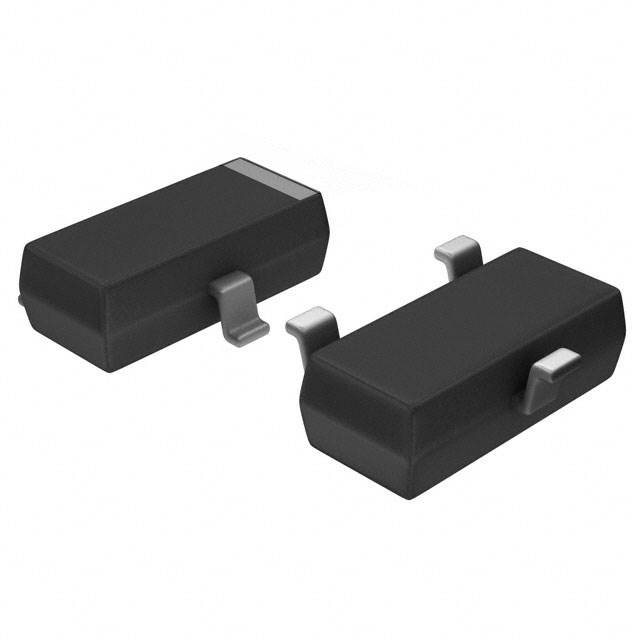
The MMBF5485 and AIMCQ120R020M020M1TXTMA1 cater to fundamentally different design domains. The MMBF5485 is a low-voltage, low-current JFET designed for RF switching or amplification up to 400 MHz, with a noise figure of 4 dB, making it suitable for sensitive analog front-ends or small-signal switching. Its SOT-23-3 package is compact, enabling minimal PCB footprint and straightforward layout with minimal thermal concerns given its low power dissipation.
In contrast, the AIMCQ120R020M020M1TXTMA1 is a robust, high-power SiC MOSFET designed for high-voltage (1200 V) and high-current (116 A) applications such as power supplies, motor drives, or inverters. Its large 22-pin PowerBSOP package supports heat sinking and thermal dissipation up to 577 W at case temperature, critical for maintaining device reliability under heavy load. The SiC technology enables higher switching frequencies and temperature operation (up to 175°C junction), but comes with significant gate charge (82 nC at 20 V) and gate drive voltage requirements (18–20 V typical), necessitating a more capable and complex gate driver stage.
From a layout perspective, the MMBF5485’s small package simplifies placement near RF nodes to minimize parasitic inductances and capacitances, critical at 400 MHz. The AIMCQ120R020M020M1TXTMA1, by contrast, demands careful thermal management, including wide copper pours, thermal vias, and possibly external heat sinks or cooling. Its relatively large input capacitance (2667 pF) increases switching losses and requires careful gate driver design to optimize efficiency and switching speed.
Cost-wise, the MMBF5485 is a low-cost, small-signal device often bought in large volumes for consumer or telecom equipment. The AIMCQ120R020M020M1TXTMA1, being a SiC power MOSFET with automotive qualification and advanced packaging, will be significantly more expensive and is typically reserved for high-reliability or high-performance power electronics.
Use-case fit
Choose MMBF5485 when…
- Designing RF front-end circuits requiring low noise figure and operation at frequencies up to 400 MHz.
- Implementing low-voltage (≤25 V), low-current (≤10 mA) small-signal switches or amplifiers on compact PCBs.
- Minimizing PCB footprint and parasitic effects in sensitive analog or RF circuits.
- Cost sensitivity is paramount and power dissipation is minimal.
- Operating environments do not exceed ambient temperatures typical for small-signal devices.
Choose AIMCQ120R020M020M1TXTMA1 when…
- Designing power conversion systems requiring blocking voltages up to 1200 V and continuous currents exceeding 100 A.
- Implementing SiC-based high-frequency switching (tens to hundreds of kHz) for increased efficiency and thermal performance.
- Operating in harsh environments requiring automotive-grade qualification and extended temperature range (-55°C to 175°C).
- Thermal management strategies are in place to handle up to 577 W dissipation.
- Designing motor drives, inverters, or industrial power supplies where ruggedness and efficiency at high power levels are critical.
Drop-in compatibility
The MMBF5485 and AIMCQ120R020M020M1TXTMA1 are not pin-compatible or footprint-compatible. The MMBF5485 uses a small 3-pin SOT-23-3 package intended for low-power RF applications, while the AIMCQ120R020M020M1TXTMA1 is housed in a large 22-pin PowerBSOP package designed for high power and thermal conduction. Substituting one for the other would require a complete PCB redesign, different gate driver circuitry, and changes to the thermal management scheme. Given the vast difference in device technology (JFET vs SiC MOSFET) and intended application space, these parts are not interchangeable.
Alternatives to consider
- BFR93A (NXP Semiconductors): Low-noise NPN RF transistor suitable for similar low-current, high-frequency applications as the MMBF5485, with better gain characteristics.
- C3M0065120K (Cree/Wolfspeed): 1200 V SiC MOSFET with similar voltage and current ratings as the AIMCQ120R020M020M1TXTMA1, but with a different package and gate charge profile to consider for power applications.
- IRLML6344 (Infineon): Logic-level N-channel MOSFET in SOT-23 package, suitable for low-voltage, low-current switching but with higher current capability than MMBF5485 for mid-power applications.