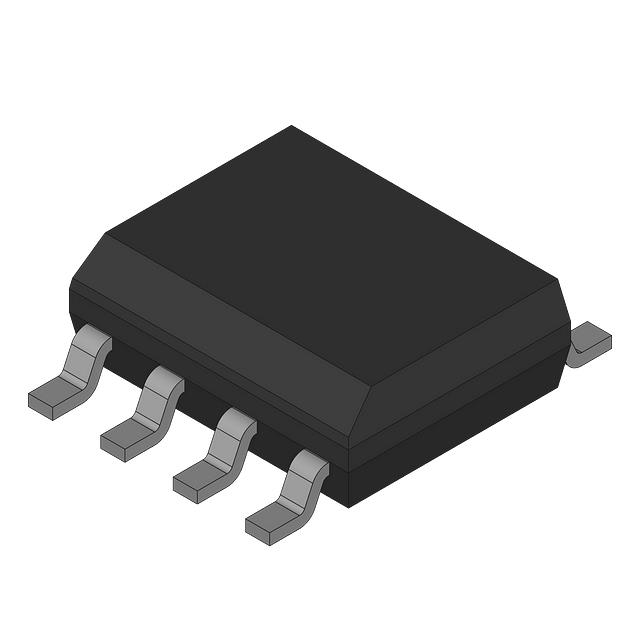
MIC38HC42BM TR vs LM2596T-ADJ: Component Comparison for Power Electronics Engineers
1. Quick verdict
For flexible multi-topology DC-DC controller designs requiring synchronous rectification and support for boost, buck, flyback, or forward converters, the MIC38HC42BM TR offers superior adaptability and higher switching frequencies (up to 500kHz). For straightforward, cost-sensitive buck regulator applications up to 3A with a fixed 150kHz switching frequency and adjustable output voltage, the LM2596T-ADJ remains a practical and well-understood choice.
2. Spec comparison table
| Spec | MIC38HC42BM TR | LM2596T-ADJ | Notes |
|---|---|---|---|
| Function | Step-Up, Step-Down, Step-Up/Step-Down | Step-Down | MIC38HC42BM TR supports multiple topologies; LM2596T-ADJ is buck-only |
| Topology | Boost, Buck, Flyback, Forward Converter | Buck | Broader topology support favors MIC38HC42BM TR for complex designs |
| Supply voltage operating range (Typ) | 7.6V ~ 20V | Up to 40V | LM2596T-ADJ supports a wider input voltage range, better for higher-voltage inputs |
| Maximum output current | Not explicitly stated (controller IC) | 3A | LM2596T-ADJ rated for 3A output current; MIC38HC42BM TR is a controller, load current depends on external MOSFETs |
| Switching frequency (typical) | Up to 500kHz | 150kHz | MIC38HC42BM TR supports higher switching frequency, allowing smaller magnetics and capacitors |
| Duty cycle max | 96% | Not specified | High duty cycle range on MIC38HC42BM TR enables wider output voltage flexibility |
| Synchronous rectifier | Yes | No | MIC38HC42BM TR includes synchronous rectification, improving efficiency |
| Control features | Frequency control | Two-stage current limit with frequency reduction | MIC38HC42BM TR has frequency control; LM2596T-ADJ uses a two-stage current limit reducing frequency under load |
| Output configuration | Positive, Isolation Capable | Positive | Only MIC38HC42BM TR supports isolated outputs, important for certain system architectures |
| Output type | Transistor Driver | Adjustable output voltage | LM2596T-ADJ has integrated fixed switching elements with adjustable output; MIC38HC42BM TR is a controller driving external switches |
| Number of outputs | 1 | 1 | Both single output |
| Mounting type | Surface Mount (8-SOIC) | Through Hole (TO-220-5) | LM2596T-ADJ’s through-hole package aids thermal dissipation, MIC38HC42BM TR’s SOIC is more compact |
| Operating temperature range | -40°C to 85°C (TA) | -40°C to 125°C (TJ) | LM2596T-ADJ supports higher max temperature, useful for harsher environments |
| Maximum junction temperature | Not specified | 150°C | LM2596T-ADJ rated to 150°C max junction temperature |
| Thermal resistance junction-to-ambient (typ) | Not specified | 65°C/W (TO-220) | LM2596T-ADJ TO-220 package offers better thermal conduction than SOIC |
| Quiescent current (typ) | Not specified | ~10mA | LM2596T-ADJ quiescent current typical around 10mA, relevant for low power standby |
| Shutdown standby current (typ) | Not specified | 80µA | LM2596T-ADJ low shutdown current improves efficiency in standby |
| Input voltage max | 20V max (typical supply range) | 40V max | LM2596T-ADJ better suited for higher input voltages |
| Output voltage range | Not specified | 1.23V to 37V (adjustable) | LM2596T-ADJ adjustable output voltage range is wide |
| Feedback voltage (typ) | Not specified | 1.23V | LM2596T-ADJ uses standard 1.23V reference |
| Efficiency (typ) | Not specified | Up to 90% (12V output) | LM2596T-ADJ efficiency up to 90% at 12V output, drops at lower voltages |
| Maximum current limit | Not specified | Typ 4.5A, max 7.5A | LM2596T-ADJ internal current limit designed for up to 4.5A typical, 7.5A max |
| Package case | 8-SOIC (3.90mm width) | TO-220-5 | TO-220 supports easier heat sinking |
| Serial interfaces | None | None | Neither part has digital interfaces |
| Clock sync | No | No | Neither supports external clock synchronization |
3. Design trade-offs
The MIC38HC42BM TR is a versatile synchronous controller IC designed to support multiple topologies including boost, buck, flyback, and forward converters. This flexibility comes with design complexity as it requires external MOSFETs and associated components, which adds to the bill of materials and layout complexity but allows customization for efficiency, current, and voltage specifications beyond fixed integrated solutions. Its maximum switching frequency of up to 500kHz supports smaller passive components, reducing overall system size, but demands careful PCB layout and gate drive design to minimize switching losses and EMI.
In contrast, the LM2596T-ADJ is a monolithic buck regulator IC with integrated power switches, simplifying design, reducing component count, and lowering cost for straightforward step-down applications up to 3A. Its fixed switching frequency of 150kHz is lower, which means larger inductors and capacitors but less stringent layout and gate drive requirements. The TO-220 package facilitates heat dissipation via a heatsink or PCB copper area, supporting better thermal management at the cost of increased PCB real estate compared to SOIC packages.
Efficiency-wise, the LM2596T-ADJ achieves up to 90% at 12V output, dropping significantly at lower voltages (e.g., around 73% at 3.3V output), which is typical for integrated non-synchronous regulators. The MIC38HC42BM TR’s synchronous rectification capability can yield higher efficiencies in step-down or step-up configurations, especially under moderate to high load current, but actual efficiency depends heavily on external MOSFET selection and layout quality.
Thermally, the LM2596T-ADJ’s TO-220 package with a thermal resistance junction-to-ambient around 65°C/W is suited for designs with moderate cooling, while the MIC38HC42BM TR’s small 8-SOIC package (3.9mm width) may require more careful thermal design, particularly since it must drive external MOSFET gates, which can increase power dissipation in the IC due to gate charge losses at high switching frequencies.
From a cost perspective, the LM2596T-ADJ likely offers a lower total solution cost for simple buck converters due to its integration and minimal external parts. However, the MIC38HC42BM TR’s flexibility can reduce overall system cost and size in complex or multi-topology designs by enabling a single controller to serve multiple applications, albeit at increased design effort.
4. Use-case fit
Choose MIC38HC42BM TR when…
- You need a single controller IC capable of handling boost, buck, flyback, or forward converter topologies, enabling design reuse across multiple product lines.
- The application requires synchronous rectification to improve efficiency, especially for moderate to high load currents.
- A higher switching frequency (up to 500kHz) is needed to minimize magnetics and capacitors and reduce solution size.
- Isolation is required in output configuration, such as in isolated flyback or forward converters.
- You are designing a compact surface-mount solution where PCB space is limited, and you can manage the complexity of external MOSFET drivers.
Choose LM2596T-ADJ when…
- The application is a straightforward buck converter with input voltages up to 40V and output current up to 3A.
- Cost and simplicity are prioritized, and a through-hole package is acceptable or preferred for heat dissipation.
- You require an adjustable output voltage regulator with a well-known, established design and stable 150kHz switching frequency.
- Operating temperature range up to 125°C junction is needed for harsher environments.
- You want a minimal external component count and no need for synchronous rectification or multiple topologies.
5. Drop-in compatibility
The MIC38HC42BM TR and LM2596T-ADJ are not pin-compatible nor footprint-compatible. The MIC38HC42BM TR is an 8-pin SOIC surface-mount controller IC requiring external MOSFETs and passive components, whereas the LM2596T-ADJ is a 5-pin TO-220 through-hole monolithic switching regulator with integrated switches.
Substituting one for the other would require a complete redesign of the PCB, power stage, and possibly the system control approach. The MIC38HC42BM TR offers more design flexibility