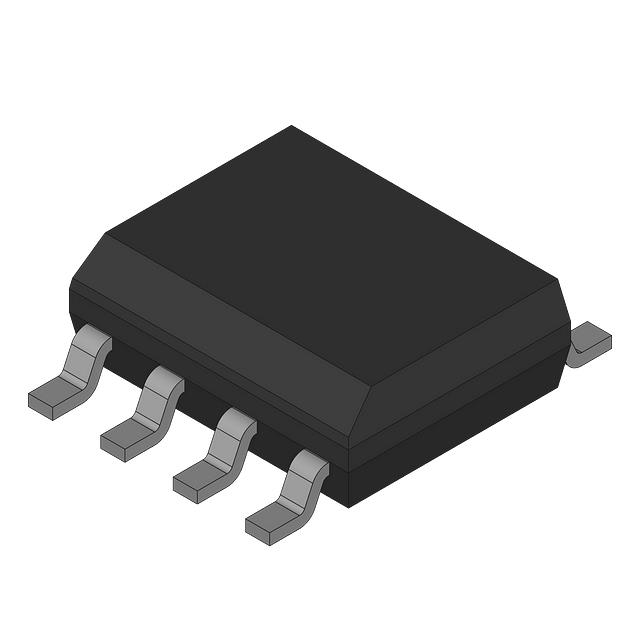
MIC38HC42BM TR vs LM2596T-12: Component Comparison for Power Electronics Engineers
Quick verdict
For flexible multi-topology DC-DC conversion including boost, buck, flyback, and forward converters, the MIC38HC42BM TR is the better choice due to its synchronous rectification, wide input voltage range, and support for isolation. For straightforward, fixed 12 V step-down applications demanding up to 3 A output current with a simple BOM, the LM2596T-12 wins on ease of use, availability, and proven performance.
Spec comparison table
| Spec | MIC38HC42BM TR | LM2596T-12 | Notes |
|---|---|---|---|
| Function | Step-Up, Step-Down, Step-Up/Step-Down | Step-Down | MIC38HC42BM TR supports multiple topologies, LM2596T-12 only buck. |
| Topology | Boost, Buck, Flyback, Forward Converter | Buck | MIC38HC42BM TR is more versatile in topology support. |
| Supply voltage (typ) | 7.6 V ~ 20 V | 40 V max | LM2596T-12 supports higher max input voltage (40V vs 20V max typical for MIC38HC42BM). |
| Switching frequency (typ) | Up to 500 kHz | 150 kHz | MIC38HC42BM TR supports higher switching frequency, beneficial for smaller magnetics. |
| Max duty cycle | 96% | 100% | LM2596T-12 allows up to 100% duty cycle, slightly better for low dropout operation. |
| Output current max | Not explicitly specified; driver output | 3 A | LM2596T-12 rated for 3 A load; MIC38HC42BM TR is a controller, output current depends on external MOSFET. |
| Synchronous rectifier | Yes | No | MIC38HC42BM TR includes synchronous rectification, improving efficiency. |
| Output configuration | Positive, Isolation Capable | Positive | MIC38HC42BM TR supports isolation, useful in isolated power supplies. |
| Output type | Transistor Driver | Fixed | MIC38HC42BM TR is a controller IC (requires external FETs), LM2596T-12 is integrated. |
| Number of outputs | 1 | 1 | Both single-output devices. |
| Mounting type | Surface Mount (8-SOIC) | Through Hole (TO-220-5) | LM2596T-12 through-hole easier for prototyping and thermal management. |
| Operating temperature range | -40°C to 85°C (TA) | -40°C to 125°C (TJ) | LM2596T-12 supports wider operating junction temperature. |
| Package/case | 8-SOIC (3.90 mm width) | TO-220-5 | TO-220 package on LM2596T-12 facilitates heat sinking; MIC38HC42BM TR is compact SOIC. |
| Current limit (max) | N/A (controller IC) | 7.5 A max (internal limit) | LM2596T-12 has built-in current limit; MIC38HC42BM TR depends on external components. |
| Quiescent current (typ) | Not specified | 5 mA | LM2596T-12 quiescent current known; MIC38HC42BM TR datasheet does not specify. |
| Switching frequency range | Up to 500 kHz | 110 kHz to 173 kHz | MIC38HC42BM TR offers wider frequency range, allowing design flexibility. |
| Feedback bias current (typ) | Not specified | 12 nA | LM2596T-12 feedback bias current is very low, reducing error in feedback loop. |
| Thermal resistance junction-to-ambient | Not specified | 65 °C/W (TO-220) | LM2596T-12 thermal resistance known, facilitating thermal design. |
| Thermal resistance junction-to-case | Not specified | 5 °C/W (TO-220) | LM2596T-12 better thermal path with TO-220 package. |
| On/off pin input current (typ) | Not specified | 15 µA | LM2596T-12 includes an enable pin with known input current. |
| Output voltage | Configurable with external components | Fixed 12 V | MIC38HC42BM TR flexible output voltage; LM2596T-12 fixed 12 V output only. |
| Output voltage tolerance | Not specified | ±4% over line and load | LM2596T-12 output voltage tolerance defined; MIC38HC42BM TR depends on design. |
| Storage temperature range | Not specified | -60°C to 150°C | LM2596T-12 rated for wider storage temperature range. |
| ESD rating (Human Body Model) | Not specified | 2 kV | LM2596T-12 ESD rating known; MIC38HC42BM TR datasheet does not specify. |
| Maximum junction temperature | Not specified | 150°C | LM2596T-12 can operate at higher junction temperatures. |
| Lead temperature soldering | Not specified | 260°C for 10 seconds | LM2596T-12 soldering temperature spec available. |
| Inductor value (typ) | N/A (controller only) | 68 µH | LM2596T-12 typical inductor value recommended for stable operation. |
| Input voltage min | 7.6 V (typ) | 15 V (min) | MIC38HC42BM TR supports lower input voltage than LM2596T-12 min spec. |
| Input voltage max | 20 V (typ) | 40 V | LM2596T-12 supports higher input voltages. |
| Output leakage current (typ) | Not specified | 25 µA | LM2596T-12 leakage current specified; MIC38HC42BM TR not specified. |
Design trade-offs
The MIC38HC42BM TR is a flexible controller IC designed for multiple topologies including boost, buck, flyback, and forward converters. Its key advantage is synchronous rectification support, which can improve efficiency by 2–5% in typical buck or boost designs compared to diode rectification, especially at higher currents. However, it requires external MOSFETs and additional components, so the total BOM cost and board area increase. The higher switching frequency capability (up to 500 kHz) allows smaller inductors and capacitors but demands careful PCB layout to mitigate EMI and switching losses, increasing design complexity.
In contrast, the LM2596T-12 is a fixed 12 V output integrated buck regulator with a built-in power switch and diode, simplifying the design and reducing cost and size. Its fixed switching frequency (typical 150 kHz) is lower, which can mean larger magnetics but easier EMI management and less stringent layout requirements. The TO-220 through-hole package facilitates heat sinking for the 3 A output current but is less suitable for compact PCBs. The LM2596T-12 lacks synchronous rectification, so efficiency suffers at higher loads compared to MIC38HC42BM TR designs with synchronous rectifiers.
Thermally, LM2596T-12’s TO-220 package and defined thermal resistance (junction-to-ambient ~65 °C/W) allow straightforward heat dissipation calculations and use of standard heatsinks. The MIC38HC42BM TR’s SOIC package results in tighter thermal constraints, and since it drives external MOSFETs, the total thermal budget depends heavily on the MOSFET selection and layout. Thermal management thus requires more careful system-level analysis.
From a firmware and control standpoint, MIC38HC42BM TR offers frequency control and synchronous rectifier timing but lacks clock synchronization, which can limit noise-sensitive multi-rail systems. LM2596T-12 has no interface beyond an on/off pin, resulting in simpler control but less flexibility.
Cost-wise, LM2596T-12 is generally cheaper in low and medium volumes due to integration and simpler BOM, though the MIC38HC42BM TR’s flexibility might justify higher cost in complex or isolated topologies.
Use-case fit
Choose MIC38HC42BM TR when…
- Designing isolated or non-isolated power supplies requiring boost, buck, or flyback topologies in one design.
- Implementing synchronous rectification for improved efficiency in battery-powered or thermally constrained systems.
- Targeting switching frequencies above 200 kHz to reduce magnetics size and overall solution footprint.
- Need flexible input voltage range from 7.6 V to 20 V with output voltage regulation tailored by external components.
- Developing custom power stages with external MOSFETs for optimized performance and scalability.
Choose LM2596T-12 when…
- Designing a straightforward fixed 12 V buck converter with up to 3 A output current and minimal design effort.
- Rapid prototyping or low-volume production