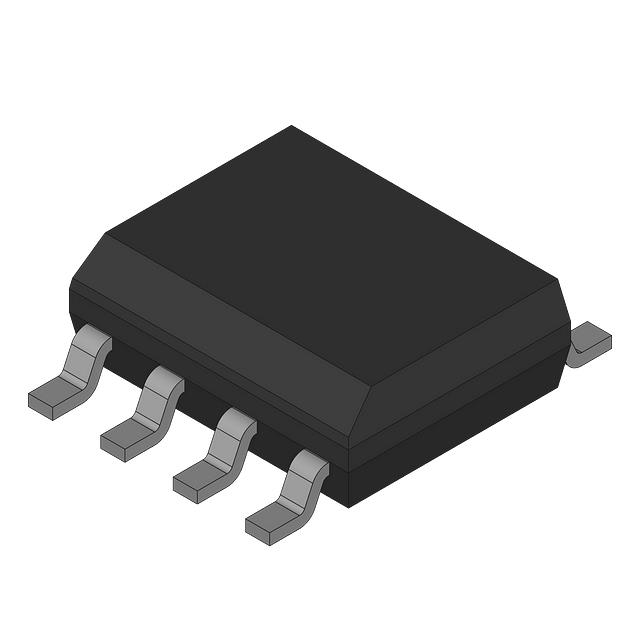
MIC38HC42BM TR vs CSD95377Q4M: Component Comparison for Power Electronics Engineers
1. Quick verdict
For integrated DC-DC controller IC applications requiring flexibility in topology (boost, buck, flyback, forward), the MIC38HC42BM TR is the clear choice due to its broad input voltage range (7.6–20 V), synchronous rectification support, and isolation capability. Conversely, for high-current synchronous buck converter power stages with demanding switching frequencies up to 2 MHz and peak currents up to 70 A, the CSD95377Q4M MOSFET half-bridge driver excels in efficiency and thermal performance.
2. Spec comparison table
| Spec | MIC38HC42BM TR | CSD95377Q4M | Notes |
|---|---|---|---|
| Function | Step-Up, Step-Down, Step-Up/Step-Down DC-DC Controller IC | Half Bridge Driver Power MOSFET | MIC38HC42BM is a controller IC; CSD95377Q4M is a MOSFET driver stage. |
| Topology | Boost, Buck, Flyback, Forward Converter | Synchronous Buck Converter | MIC38HC42BM supports multiple topologies; CSD95377Q4M optimized for synchronous buck only. |
| Clock Sync | No | PWM | CSD95377Q4M requires PWM input; MIC38HC42BM has internal frequency control, no sync input. |
| Control Features | Frequency Control | PWM Interface | MIC38HC42BM offers frequency control; CSD95377Q4M relies on external PWM driver signals. |
| Duty Cycle Max | 96% | N/A | MIC38HC42BM supports high duty cycle for wide input/output ranges; N/A for MOSFET driver. |
| Number of Outputs | 1 | 2 (half-bridge) | CSD95377Q4M includes both high-side and low-side MOSFETs for half-bridge operation. |
| Output Configuration | Positive, Isolation Capable | Half Bridge | MIC38HC42BM supports isolated outputs; CSD95377Q4M is a half-bridge MOSFET stage. |
| Output Type | Transistor Driver | Power MOSFET | MIC38HC42BM drives external transistors; CSD95377Q4M contains integrated MOSFETs. |
| Mounting Type | Surface Mount | Surface Mount | Both are SMT; package style differs. |
| Package Case | 8-SOIC (3.90mm width) | 8-VSON (3.5 × 4.5 mm) | CSD95377Q4M smaller footprint but more complex thermal pad. |
| Supply Voltage Typical | 7.6 V ~ 20 V | 4.5 V ~ 5.5 V (gate drive), 16 V max input | MIC38HC42BM controller supply voltage range is wider; CSD95377Q4M gate drive limited to 5.5V. |
| Input Voltage Max | N/A | 16 V (max) | CSD95377Q4M max drain-to-source voltage 16 V; MIC38HC42BM not directly switching. |
| Switching Frequency Typical | Up to 500 kHz | 2 MHz (typ) | CSD95377Q4M supports much higher switching frequencies. |
| Synchronous Rectifier | Yes | Yes | Both support synchronous rectification; MIC38HC42BM integrates control; CSD95377Q4M is power stage. |
| Operating Temperature Range | -40 °C to 85 °C (TA) | -40 °C to 150 °C (TJ) | CSD95377Q4M has wider temperature range, suitable for harsher environments. |
| Maximum Rated Continuous Current | N/A | 35 A (typ/max) | CSD95377Q4M handles high output currents; MIC38HC42BM is controller, no direct current rating. |
| Peak Output Current | N/A | 70 A (min) | CSD95377Q4M peak current rating supports transient conditions. |
| Power Dissipation Max | N/A | 8 W (max) | CSD95377Q4M dissipates significant power; requires thermal management. |
| Quiescent Current Typical | N/A | 1 µA (typ) | CSD95377Q4M has low quiescent current in gate driver stage. |
| Standby Supply Current Typical | N/A | 130 µA (typ) | CSD95377Q4M standby current relatively low. |
| Operating Supply Current Typical | N/A | 8.6 mA (typ) | CSD95377Q4M gate driver current consumption. |
| Logic Input Voltage Levels | N/A | High: 2.65 V, Low: 0.6 V | CSD95377Q4M logic thresholds defined for PWM input. |
| Bootstrap Circuit | N/A | Yes | CSD95377Q4M includes bootstrap for high-side MOSFET drive. |
| Diode Emulation | N/A | Yes | CSD95377Q4M supports diode emulation mode for discontinuous conduction mode. |
| Forward Voltage (Rds_on eval) | N/A | 120–240 mV (typ) | CSD95377Q4M MOSFET conduction losses low due to low forward voltage drop. |
| Reverse Leakage Current | N/A | 2 µA (typ) | CSD95377Q4M leakage current is minimal. |
| Thermal Resistance Junction-to-Case | N/A | 22.8 °C/W (min) | CSD95377Q4M thermal resistance important for power dissipation management. |
| Thermal Resistance Junction-to-Board | N/A | 2.5 °C/W (min) | CSD95377Q4M optimized for PCB thermal conduction. |
| PCB Footprint Area Typical | N/A | 3.5 mm × 4.5 mm | CSD95377Q4M smaller PCB area but requires good thermal layout. |
| Power Loss Typical (@ 25A) | N/A | 3.74 W | CSD95377Q4M power loss must be considered in thermal design. |
| Switching Voltage Rate | N/A | > 10 kV/µs (max) | CSD95377Q4M can handle fast switching edges, critical for EMI and layout. |
3. Design trade-offs
The MIC38HC42BM TR is a flexible DC-DC controller IC designed to handle multiple topologies, including boost, buck, flyback, and forward converters, with synchronous rectification capability integrated. Its broad supply voltage range (7.6 V to 20 V) and duty cycle up to 96% make it suitable for applications requiring isolated or positive output rails with a single output phase. However, it does not provide integrated power MOSFETs; external transistor selection and gate drive design are necessary, which adds complexity but allows optimization for specific power and efficiency targets.
CSD95377Q4M, on the other hand, is a power stage half-bridge MOSFET driver optimized for synchronous buck converters, integrating both high-side and low-side MOSFETs with a combined continuous current rating up to 35 A and peak currents up to 70 A. It supports switching frequencies up to 2 MHz, enabling designs targeting high power density and fast transient response. The integrated bootstrap circuitry and diode emulation mode simplify the gate drive and reduce switching losses, but the device requires a dedicated PWM interface and is limited to a maximum 16 V input voltage.
From a layout perspective, the MIC38HC42BM TR’s 8-SOIC package is larger (3.9 mm width) and intended for controller integration with external MOSFETs, which means the PCB must accommodate separate power transistors and their thermal management. The CSD95377Q4M’s 8-VSON package is smaller (3.5 × 4.5 mm) but demands careful PCB thermal design, including thermal vias and copper pours, to handle up to 8 W dissipation.
Thermally, the CSD95377Q4M supports junction temperatures up to 150 °C, making it suitable for harsher environments, while MIC38HC42BM TR is rated for ambient temperatures up to 85 °C, typical for controller ICs. The CSD95377Q4M’s low Rds(on) MOSFETs improve conduction losses, but at the cost of higher integration complexity and thermal requirements. The MIC38HC42BM TR relies on external MOSFETs, allowing the designer to tailor efficiency curves by choosing devices optimized for their switching frequency and load conditions.
In firmware and control terms, the MIC38HC42BM TR offers frequency control but no external clock synchronization, which can complicate noise-sensitive multi-rail systems. The CSD95377Q4M requires a PWM input and logic-level compatibility (2.65 V high threshold typical), meaning it must be driven by a dedicated controller or MCU PWM output.
Cost-wise, the MIC38HC42BM TR is typically cheaper as a controller IC