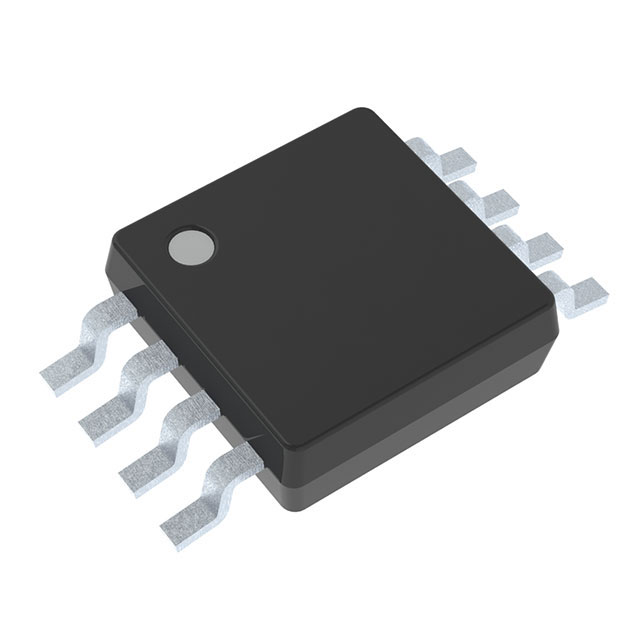
MIC38C43BMM TR vs MIC38HC42BM TR: Detailed Component Comparison for Power Electronics Design
Quick verdict
For compact, thermally constrained designs where PCB real estate is at a premium, the MIC38C43BMM TR in the smaller 8-MSOP package is preferable due to its smaller footprint and similar electrical performance. Conversely, the MIC38HC42BM TR is better suited for designs requiring easier hand soldering or automated assembly processes that favor the wider 8-SOIC package and potentially better thermal dissipation through a larger package.
Spec comparison table
| Spec | MIC38C43BMM TR | MIC38HC42BM TR | Notes |
|---|---|---|---|
| Topology | Boost, Buck, Flyback, Forward | Boost, Buck, Flyback, Forward | Identical; no difference in supported topologies. |
| Function | Step-Up, Step-Down, Step-Up/Step-Down | Step-Up, Step-Down, Step-Up/Step-Down | Identical functionality. |
| Control Features | Frequency Control | Frequency Control | Both support frequency control; no advantage either way. |
| Switching Frequency Typ | 500 kHz | Up to 500 kHz | Equivalent switching frequency capability. |
| Duty Cycle Max | 96% | 96% | Identical maximum duty cycle, allowing deep step-down/up ratios. |
| Supply Voltage Typ | 7.6 V – 20 V | 7.6 V – 20 V | Same input voltage range. |
| Synchronous Rectifier | Yes | Yes | Both support synchronous rectification, improving efficiency in synchronous topologies. |
| Output Configuration | Positive, Isolation Capable | Positive, Isolation Capable | No difference in output configuration. |
| Number of Outputs | 1 | 1 | Single output driver in both. |
| Output Type | Transistor Driver | Transistor Driver | Identical output stage type. |
| Output Phases | 1 | 1 | Single-phase output for both devices. |
| Operating Temperature Range | -40°C to 85°C | -40°C to 85°C | Same operating temperature range, suitable for most commercial and industrial applications. |
| Clock Sync | No | No | Neither supports external clock synchronization. |
| Package Case | 8-MSOP (0.118”, 3.00 mm width) | 8-SOIC (0.154”, 3.90 mm width) | Smaller MSOP package favors compact designs; SOIC offers easier hand soldering and marginally better thermal conduction area. |
| Mounting Type | Surface Mount | Surface Mount | Both are SMT devices. |
| Supplier Device Package | 8-MSOP | 8-SOIC | Package size difference affects layout and thermal management. |
| Serial Interfaces | None | None | No digital serial interface on either part. |
Design trade-offs
The primary difference between the MIC38C43BMM TR and the MIC38HC42BM TR lies in their package footprint and associated thermal characteristics rather than electrical performance or feature set. The MIC38C43BMM TR’s 8-MSOP package is significantly smaller (3.00 mm wide vs. 3.90 mm for 8-SOIC) which benefits high-density PCB layouts and constrained spaces common in portable or embedded power supplies. However, the smaller package inherently offers less copper pad area and less package body mass to dissipate heat, which can be a limiting factor for higher power designs or applications with elevated ambient temperatures.
The MIC38HC42BM TR’s 8-SOIC package provides a larger footprint and pad area, which improves thermal conduction into the PCB copper plane. This can translate into better thermal performance and potentially higher reliability margins under continuous load or elevated ambient conditions. The larger package also simplifies manual rework or prototyping soldering, which is often a practical consideration in engineering development cycles.
From a gate drive and switching perspective, both devices support synchronous rectification and operate up to 500 kHz switching frequency with a maximum duty cycle of 96%. This allows for flexible design in boost, buck, flyback, and forward converter topologies with similar efficiency potential. Neither part supports clock synchronization, which means frequency control is internal and fixed unless externally modulated by non-synchronous means.
Thermally, the MIC38HC42BM TR’s larger package may reduce the need for aggressive PCB copper area or thermal vias, easing layout constraints. Conversely, the MIC38C43BMM TR demands careful thermal design, especially in continuous high-current applications, to avoid junction temperature exceedance given the smaller thermal mass.
Cost-wise, the 8-MSOP package is typically more expensive per unit than 8-SOIC at volume due to packaging complexity and handling. However, this cost delta may be offset by PCB area savings and system-level miniaturization benefits.
Use-case fit
Choose MIC38C43BMM TR when…
- You are designing a highly space-constrained power stage where PCB area is at a premium, such as portable or handheld devices.
- The maximum output current and power dissipation are moderate, allowing the smaller package to operate within safe thermal limits.
- Your application requires a low-profile package to meet enclosure height restrictions.
- The assembly process is automated with fine-pitch SMT capability, minimizing concerns about manual soldering challenges.
- You need a synchronous rectifier-capable controller with flexible topology support but do not require external clock synchronization.
Choose MIC38HC42BM TR when…
- Thermal dissipation is a critical design parameter, such as in continuous high-current or higher ambient temperature environments.
- The design process includes prototyping or rework stages where easier hand soldering and inspection are beneficial.
- PCB real estate is less constrained, and a slightly larger footprint is acceptable for improved thermal performance.
- You require a robust package with potentially better mechanical stability during board assembly and operation.
- Your manufacturing environment favors the 8-SOIC package due to existing pick-and-place tooling or cost sensitivities.
Drop-in compatibility
Based on available data, these two parts are not pin-compatible or footprint-compatible due to different package outlines and pin pitches (8-MSOP vs. 8-SOIC). This means a direct substitution on an existing PCB without redesign is not feasible. Any replacement would require re-layout of the PCB footprint and possibly adjustment of thermal management features such as copper pours and vias to match the differing thermal dissipation characteristics.
Alternatives to consider
- MIC38C44 (Microchip): Similar feature set with possible enhanced synchronous rectification and different package options.
- TL494 (Texas Instruments): Classic PWM controller supporting multiple topologies with a DIP or SOIC package, useful for legacy or modular designs.
- LTC3851 (Analog Devices): Higher integration with synchronous rectifier drivers and more advanced control features for high-efficiency and high-power applications.