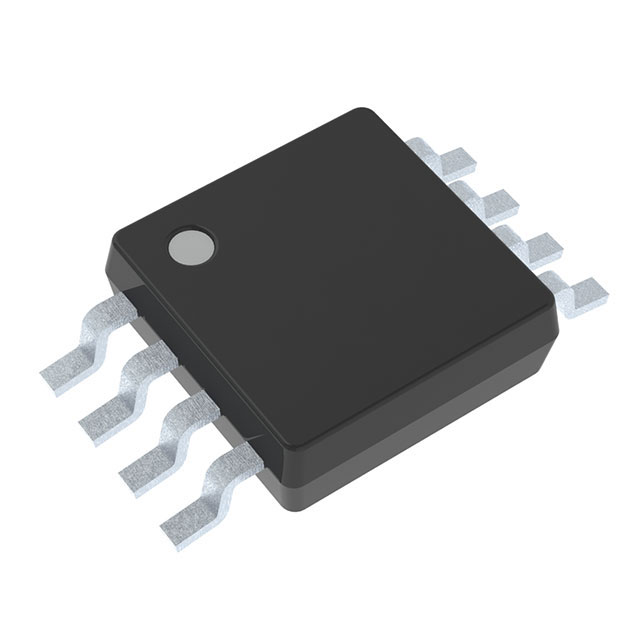
MIC38C43BMM TR vs LM2596T-12: Component Comparison for Power Electronics Design
1. Quick verdict
For flexible DC-DC conversion where step-up, step-down, or isolated topologies are required, the MIC38C43BMM TR offers superior versatility and synchronous rectification, making it the better choice despite added design complexity. For straightforward, fixed 12 V step-down applications with moderate current (up to 3 A) and simpler BOM/layout, the LM2596T-12 is the practical, cost-effective solution.
2. Spec comparison table
| Spec | MIC38C43BMM TR | LM2596T-12 | Notes |
|---|---|---|---|
| Function | Step-Up, Step-Down, Step-Up/Step-Down | Step-Down | MIC38C43BMM TR supports wider topology range, increasing design flexibility. |
| Topology | Boost, Buck, Flyback, Forward Converter | Buck | MIC38C43BMM TR supports isolated and non-isolated topologies; LM2596T-12 is buck-only. |
| Output Configuration | Positive, Isolation Capable | Positive | Only MIC38C43BMM TR supports isolation, important for safety and noise-sensitive designs. |
| Output Type | Transistor Driver | Fixed | MIC38C43BMM TR drives external MOSFETs; LM2596T-12 includes internal switches. |
| Number of Outputs | 1 | 1 | Equal. |
| Mounting Type | Surface Mount (8-MSOP, 8-TSSOP) | Through Hole (TO-220-5) | MIC38C43BMM TR enables smaller PCB footprint, but LM2596T-12 through-hole eases thermal design. |
| Supply Voltage Typical Range | 7.6 V ~ 20 V | 15 V (min) to 40 V (max) | LM2596T-12 supports higher input voltage range; MIC38C43BMM TR has narrower range. |
| Switching Frequency Typical | 500 kHz | 150 kHz | MIC38C43BMM TR’s higher frequency reduces inductor/capacitor size but increases switching losses. |
| Duty Cycle Max (%) | 96% | 100% | LM2596T-12 can run at full duty cycle, useful for low drop-out conditions. |
| Output Current Max | Not explicitly specified in source data | 3A | LM2596T-12 guaranteed 3 A output; MIC38C43BMM TR depends on external MOSFET and design. |
| Current Limit Typical | Not specified | 4.5 A (typical), max 7.5 A | LM2596T-12 includes internal current limit; MIC38C43BMM TR relies on external device limits. |
| Synchronous Rectification | Yes | No | MIC38C43BMM TR’s synchronous rectification improves efficiency, especially at light loads. |
| Control Features | Frequency Control | Fixed Frequency (~150 kHz) | MIC38C43BMM TR allows frequency adjustment for EMI or efficiency optimization. |
| Oscillator Frequency | 500 kHz (typical) | 150 kHz (typical), 110-173 kHz range | Higher frequency in MIC38C43BMM TR allows smaller passive components but may increase switching losses. |
| Quiescent Current Typical | Not specified | 5 mA | LM2596T-12 quiescent current known and moderate; MIC38C43BMM TR data unavailable here. |
| Operating Temperature Range | -40°C to 85°C (TA) | -40°C to 125°C (TJ) | LM2596T-12 supports wider junction temperature, better for high-temp environments. |
| Package Case | 8-TSSOP, 8-MSOP (3.0 mm width) | TO-220-5 | MIC38C43BMM TR enables compact SMT design; LM2596T-12’s TO-220 eases heat sinking. |
| Thermal Resistance Junction to Case | Not specified | 5°C/W | LM2596T-12 can be effectively heatsinked; MIC38C43BMM TR thermal data not provided here. |
| Output Voltage Typical | Configurable (depends on external components) | Fixed 12 V | LM2596T-12 fixed output simplifies design; MIC38C43BMM TR is configurable for various voltages. |
| Output Voltage Accuracy | Not specified | ±4% over line and load | LM2596T-12 output voltage tolerance defined; MIC38C43BMM TR depends on external feedback. |
| Feedback Bias Current Typical | Not specified | 12 nA | LM2596T-12 low feedback bias current reduces error in high-impedance feedback networks. |
| On/Off Pin Input Current Typical | Not specified | 15 µA | LM2596T-12 offers enable pin with low control current. |
| Maximum Junction Temperature | Not specified | 150°C | LM2596T-12 rated for higher junction temperature, important for thermal margin. |
| Storage Temperature Range | Not specified | -60°C to 150°C | LM2596T-12 supports wide storage range. |
| Minimum ESD Rating HBM | Not specified | 2 kV | LM2596T-12 has defined ESD rating; MIC38C43BMM TR data absent here. |
| Serial Interfaces | None | None | Both lack digital interfaces; control is analog. |
3. Design trade-offs
The MIC38C43BMM TR is a flexible, synchronous controller IC capable of driving external MOSFETs in multiple topologies including boost, buck, flyback, and forward converters, and supports isolated outputs. This versatility comes at the cost of increased design complexity: the designer must select and drive external MOSFETs, design the gate drive circuitry, and manage layout carefully to minimize switching noise and optimize efficiency. The synchronous rectification capability of MIC38C43BMM TR reduces conduction losses compared to diode rectification, improving efficiency especially in low-voltage, high-current designs. However, the higher switching frequency (typical 500 kHz) demands careful PCB layout to minimize EMI and switching losses; it also permits smaller inductors and capacitors, which reduces BOM size and potentially cost.
In contrast, the LM2596T-12 is a fixed 12 V, non-synchronous buck regulator with an integrated power switch and fixed switching frequency (~150 kHz). This integration simplifies design and layout, as fewer external components are required and the thermal path is straightforward due to the through-hole TO-220 package. The lower switching frequency reduces switching losses and EMI concerns but necessitates larger inductors and capacitors, increasing the overall solution size. The fixed output voltage and integrated switches limit design flexibility but allow for fast time-to-market and predictable performance. Thermal dissipation is easier to manage with the TO-220 package, which can be mounted to a heat sink to maintain junction temperature within limits. However, the maximum operating junction temperature (150°C) and power dissipation limits require careful thermal design at or near 3 A load.
The MIC38C43BMM TR’s synchronous rectification and frequency control can yield higher peak efficiency and better light-load performance, but demand more complex compensation and driver implementation, including attention to gate charge and dead-time tuning. The LM2596T-12’s fixed frequency and integrated switch simplify compensation and reduce design iteration but at the cost of slightly lower efficiency and less control over EMI and transient response.
From a cost standpoint, the LM2596T-12’s simpler design, integrated switch, and through-hole package typically result in lower per-unit cost and easier manual assembly or prototyping. The MIC38C43BMM TR’s SMT package and external MOSFET requirements increase BOM complexity and cost but allow compact, flexible, and potentially higher-performance solutions ideal for volume production with automated assembly.
4. Use-case fit
Choose MIC38C43BMM TR when…
- You need a DC-DC controller capable of step-up, step-down, or isolated converter topologies, such as in telecom power supplies or industrial automation.
- Your design requires synchronous rectification to maximize efficiency at low output voltages and moderate to high currents.
- High switching frequency (around 500 kHz) is desired to reduce the size of magnetics and capacitors for space-constrained applications.
- Your system needs isolation capability for safety or noise immunity (e.g., medical or industrial isolated supplies).
- You have in-house expertise to manage external MOSFET selection, gate drive, and layout complexity.
Choose LM2596T-12 when…
- Your application requires a fixed 12 V output from a higher voltage source (up to 40 V input) with a maximum load current of 3 A.
- You want a low-cost, integrated solution with minimal external components and simpler PCB layout.
- Through-hole mounting or easy heat sinking is a priority, such as in bench supplies, industrial controls, or legacy systems.
- EMI concerns at 150 kHz switching frequency are easier to manage than higher frequency switching.
- Fast prototyping or drop-in replacement for existing LM2596-based circuits is needed.
5. Drop-in compatibility
These two parts are not