Key Specs
| Spec | Value | Condition | Source |
|---|---|---|---|
| Battery Chemistry | Lithium Iron Phosphate | Digi-Key | |
| Battery Pack Voltage | 3.6V | Digi-Key | |
| Charge Current (Max) | 1.1A | Digi-Key | |
| Current Charging | Constant - Programmable | Digi-Key | |
| Fault Protection | Over Temperature, Over Voltage, Reverse Current | Digi-Key | |
| Interface | - | Digi-Key | |
| Mounting Type | Surface Mount | Digi-Key | |
| Number Of Cells | 1 | Digi-Key | |
| Operating Temperature Range | -40°C ~ 85°C (TA) | Digi-Key | |
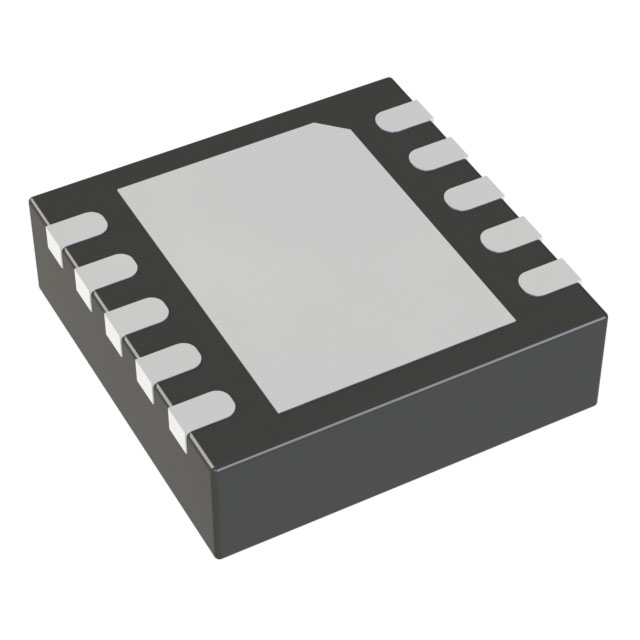
| Package Case | 10-VFDFN Exposed Pad | Digi-Key | |
| Programmable Features | Current, Timer | Digi-Key | |
| Supplier Device Package | 10-DFN (3x3) | Digi-Key | |
| Voltage Supply (Max) | 16V | Digi-Key |
When To Use
Use the MCP73123T-22SI/MF in single-cell Lithium Iron Phosphate battery charging applications where a battery pack voltage of 3.6V and a maximum charge current of 1.1A are required. Its programmable charging current and timer features make it suitable for applications demanding precise charge control without external components. Avoid using this device in multi-cell battery packs or applications requiring supply voltages above 16V; in such cases, select a charger designed for higher cell counts or voltage ratings.
When Not To Use
-
Charging a multi-cell battery pack (>1 cell): The device supports only a single LiFePO4 cell at 3.6V nominal. For multi-cell series packs, a multi-phase buck controller is required to balance cells and manage higher voltage safely.
-
Power supply input above 16V or with fast transient spikes: The maximum supply voltage is 16V; systems with higher bus voltages or load-dump conditions need a high-voltage synchronous buck controller to prevent overvoltage damage.
-
Battery-powered device requiring ultra-low quiescent current standby: The part’s quiescent current is not optimized for μA-level sleep modes. Use a low-IQ PFM buck controller for minimal battery drain during long idle periods.
Application Notes
The internal charge switch node requires careful PCB layout to minimize loop area, reducing EMI and ensuring stable operation. The device’s voltage supply pin is noise-sensitive; proper decoupling with low-ESR capacitors placed close to the pin is essential. Due to the maximum charge current of 1.1A and efficient internal power management, a heatsink is generally not required within the operating temperature range of -40°C to 85°C under typical conditions. However, thermal considerations should be evaluated in high ambient temperature environments or when charging near maximum current limits.
Gotchas
-
[Timer and current programming pin noise coupling]: Engineers often route the timer (TMR) and current set pins (PROG) near the SW node, assuming all pins tolerate switching noise. This causes jitter in the programmed charge current and premature charge termination or false fault flags. Fix by routing these pins with a ground guard trace and keeping them physically distant from the SW trace.
-
[No minimum load requirement on battery pin]: Leaving the battery pin floating or connected to a fully discharged battery with very high internal impedance can cause the charger to enter an undefined state, showing no charge current and no fault indication. Always verify battery presence and minimum voltage before enabling the charger.
-
[Thermal derating above 85°C ambient]: The datasheet’s absolute maximum temperature is 85°C ambient; exceeding this causes gradual reduction of maximum charge current capability, which is not explicitly called out in the main spec table. Ignoring this leads to unexpected thermal shutdown during prolonged high current charge. Validate real-world junction temperature with thermal measurements and adjust current accordingly.
-
[Output capacitor ESR effects on stability]: Using ceramic capacitors with extremely low ESR is common, but in this device, too low ESR can cause high-frequency oscillations in the charge loop. Adding a small series resistor (10–20 mΩ) or mixing capacitor types stabilizes the regulator output and prevents erratic voltage ripple.