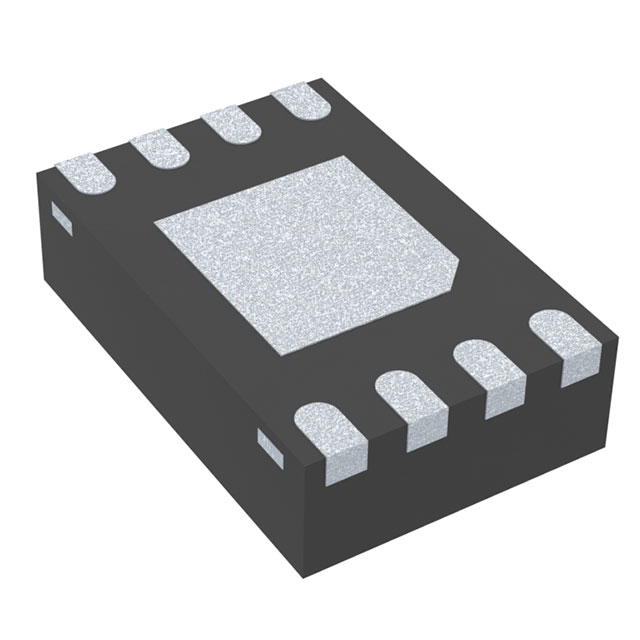
Key Specs
| Spec | Value | Condition | Source |
|---|---|---|---|
| Control Features | Enable, Power Good | Digi-Key | |
| Current Quiescent IQ | 220 µA | Digi-Key | |
| Input Voltage (Max) | 6V | Digi-Key | |
| Mounting Type | Surface Mount | Digi-Key | |
| Number Of Regulators | 1 | Digi-Key | |
| Operating Temperature Range | -40°C ~ 125°C | Digi-Key | |
| Output Configuration | Positive | Digi-Key | |
| Output Current (Max) | 500mA | Digi-Key | |
| Output Type | Adjustable | Digi-Key | |
| Output Voltage (Max) | 5V | Digi-Key | |
| Output Voltage (Min) | 0.8V | Digi-Key | |
| Package Case | 8-VFDFN Exposed Pad | Digi-Key | |
| Protection Features | Over Temperature, Short Circuit, Under Voltage Lockout (UVLO) | Digi-Key | |
| Psrr | 60dB (100Hz) | Digi-Key | |
| Supplier Device Package | 8-DFN (2x3) | Digi-Key | |
| Voltage Dropout (Max) | 0.35V @ 500mA | Digi-Key |
When To Use
-
5V rail post-switching regulator @ 0.5A: The 6V maximum input rating and 0.35V dropout at 500mA ensure this part can efficiently regulate from a 5V line with minimal headroom. A switching regulator might introduce switching noise and complexity, while a linear regulator without this dropout spec risks thermal shutdown or excessive dissipation.
-
Battery-powered system needing adjustable output from 0.8V to 5V @ 300mA: The adjustable output voltage range down to 0.8V combined with a low quiescent current of 220µA suits battery-powered applications requiring tight voltage control. Using a switching regulator could cause EMI issues and increased quiescent current, draining the battery faster during idle.
-
Compact industrial sensor node with thermal constraints: The 8-VFDFN exposed pad package and built-in over-temperature and short-circuit protection allow reliable operation up to 125°C without external thermal management. Using a linear regulator lacking these protections risks thermal runaway, while a switching controller may require bulky external components and complex layout.
When Not To Use
-
Load current exceeds 500mA (e.g., 1A rail): The 500mA maximum output current rating disqualifies this part. Use a high-current synchronous buck with external FETs to handle the higher current with proper efficiency and thermal management.
-
Input voltage above 6V (e.g., 12V automotive supply): The 6V maximum input voltage is too low for higher voltage rails. Use a synchronous buck controller designed for higher input voltages to avoid device breakdown or latch-up.
-
Ultra-low quiescent current required for coin cell devices: The 220µA quiescent current is too high for applications dominated by sleep current budgets. Use a low-IQ PFM buck regulator optimized for sub-µA sleep modes to maximize battery life.
Application Notes
-
The exposed pad on the 8-VFDFN package must be soldered to a large PCB thermal pad with multiple vias to the inner ground plane for optimal heat dissipation; floating or insufficient thermal vias degrade junction temperature and reliability.
-
the Enable pin is active high; ensure the enable line is not left floating during startup to avoid uncertain regulator state or oscillations.
-
The Power Good (PG) output is an open-drain transistor; it requires a pull-up resistor to a suitable logic voltage and should be routed away from noisy switching nodes to prevent false triggering.
-
Output capacitors must have low ESR to maintain stability; use ceramic capacitors close to the output pin and keep the PCB traces short and wide to reduce inductance.
-
Keep input bypass capacitors physically close to the input pin and ground to minimize input voltage ripple, which can cause output voltage fluctuations or regulator instability.
Design Equations
Output voltage: Vout = 0.8V × (1 + R2/R1)
R1 is typically 1.21kΩ–10kΩ (1% tolerance). Solve for R2: R2 = R1 × (Vout/0.8 - 1). Example: for 5V with R1=1.21kΩ → R2 ≈ 3.74kΩ (use 3.74kΩ 1%).
Gotchas
-
[Ignoring thermal derating above 85°C]: The device’s maximum operating temperature is 125°C, but the dropout voltage and current capability degrade near the upper limit. Assuming full 500mA output at 125°C leads to thermal shutdown or output voltage sag under load.
Fix: Verify junction temperature with thermal imaging under worst-case load; derate output current or improve PCB cooling accordingly. -
[Floating Enable pin at power-up]: Designers sometimes leave the Enable pin unconnected, assuming internal pull-ups. This causes unpredictable startup behavior—regulator may oscillate between ON and OFF or fail to start.
Fix: Tie Enable explicitly to logic high or low through a defined resistor; verify with scope during power sequencing. -
[Output capacitor ESR too high]: Using electrolytic capacitors with high ESR on the output can destabilize the regulator loop, causing output voltage ringing or oscillations under load transients.
Fix: Use low-ESR ceramic capacitors placed close to the output pin; check transient response on the scope. -
[Power Good pin routing near switching nodes]: Routing PG near noisy input or output traces induces false triggering, leading to incorrect system fault reports or erratic logic states.
Fix: Route PG trace away from the SW node and shield with ground traces; use scope to verify clean PG signal during load changes.