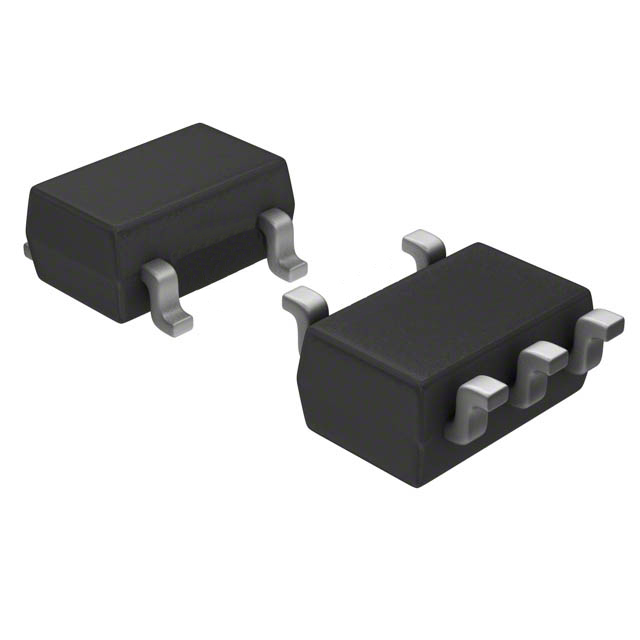
Key Specs
| Spec | Value | Condition | Source |
|---|---|---|---|
| 3db Bandwidth | 30 kHz | Digi-Key | |
| Amplifier Type | Current Sense | Digi-Key | |
| Mounting Type | Surface Mount | Digi-Key | |
| Number Of Circuits | 1 | Digi-Key | |
| Operating Temperature Range | -40°C ~ 85°C | Digi-Key | |
| Output Type | - | Digi-Key | |
| Package Case | SC-74A, SOT-753 | Digi-Key | |
| Quiescent Current (Typ) | 1.1µA | Digi-Key | |
| Slew Rate | - | Digi-Key | |
| Supplier Device Package | SOT-23-5 | Digi-Key | |
| Voltage Input Offset | 100 µV | Digi-Key | |
| Voltage Supply Span (Max) | 28 V | Digi-Key | |
| Voltage Supply Span (Min) | 1.6 V | Digi-Key |
When To Use
-
Always-on battery state-of-charge monitoring on 2×AA cells (3V) → < 5mA load: The 1.1 µA quiescent current draws only 9.6 mWh/year from a 3V supply — 44× less than a 48µA-class CSA’s 421 mWh/year overhead. On a 3V/2Ah AA pack, the quiescent draw difference alone is 413 mWh/year, enough to cut a 5-year field deployment to under 2 years. A standard IoT CSA wastes battery capacity just sitting idle; this part does not.
-
Wide-voltage rail monitoring with aggressive standby targets (1.6V to 28V supply): The 1.6V minimum supply covers single-cell lithium near end-of-discharge; the 28V maximum accommodates industrial 24V rails with transient headroom. The 1.1µA supply current makes it viable across all these rails in duty-cycled monitoring where a 30kHz bandwidth is sufficient. A 200µA+ CSA on a 24V rail draws 180× more standby power than needed.
-
Coin-cell-powered leakage current monitor (3V CR2032) → µA to mA sense range: The 1.1µA quiescent current is comparable to a sleep-mode microcontroller, enabling the MAX9938HEUK+T to run continuously on a 225mAh CR2032 without materially shortening battery life. The 100µV input offset is acceptable for measuring currents in the 1mA–100mA range with a 10mΩ–100mΩ shunt (10mV–1mV full-scale drop). No class of current-sense amplifier achieves 1.1µA IQ while covering 1.6V to 28V supply range — this combination is the defining selection criterion.
When Not To Use
-
High-frequency switching node sensing (>100 kHz): The 30 kHz bandwidth is insufficient for fast switching current edges. Choose a higher-bandwidth current-sense amplifier to avoid signal distortion and missed transient events.
-
Measuring currents >50A on high-voltage rails: The limited 28 V supply max and shunt resistor power dissipation make this unsuitable. Use a Hall-effect current sensor to avoid excessive shunt losses and to enable galvanic isolation.
-
Applications requiring galvanic isolation from high-side rails: This device has no built-in isolation and is limited to direct sensing. Use an isolated current-sense amplifier to prevent latch-up or damage from high common-mode voltages.
Application Notes
-
The SOT-23-5 package’s small size demands tight PCB layout: keep the sense resistor and the IN+ pin and the IN− pin traces as short and symmetrical as possible to minimize parasitic inductance and noise pickup.
-
the V+ pin and the GND pin supply the amplifier; their power and ground returns must be routed on thick copper planes near the device to ensure a low-impedance thermal and electrical path, critical since the SOT-23-5’s thermal dissipation is limited.
-
Avoid routing high di/dt switching nodes (SW) near the input pins to prevent capacitive coupling-induced offset errors; shield the input traces with grounded guard rings if board space allows.
-
The output pin (pin 3) is sensitive to capacitive loading; excessive output capacitance or long cables can cause instability or oscillations—keep output trace short and well-terminated.
-
Ensure the device supply voltage remains within 1.6 V to 28 V at all times, including transient conditions, to avoid latch-up or permanent damage.
Pin numbers are package-specific. Verify against the datasheet pinout diagram before routing.
Related Calculators
- Current Sense / Shunt Resistor Calculator — Size your shunt resistor for this amplifier
Gotchas
-
[Input offset drift with temperature ignored]: Designers often assume the 100 µV offset is constant across −40°C to 85°C. In reality, offset voltage can drift, causing measurement inaccuracies visible as slow baseline shifts on the output. Fix by characterizing offset over temperature in the target environment or applying software compensation.
-
[PCB rework damage due to small pad size]: The SOT-23-5 package’s tiny pads can lift or delaminate if hot-air reflow is done repeatedly without proper thermal profiling. This manifests as intermittent open circuits or noisy output signals. Fix by using low-stress rework profiles and minimizing reflow cycles on the same footprint.
-
[Ground loop noise through poorly routed GND pin]: Routing the GND pin (pin 5) through a noisy return path shared with high-current switching nodes causes erratic output jumps and noise. Symptoms include output spikes unrelated to load changes. Fix by isolating the amplifier ground return with a dedicated low-noise ground plane section.
-
[Output saturation during supply undervoltage]: If the supply voltage dips near or below 1.6 V, the output may saturate or become nonlinear, even if the input current is within range. This appears as clipping on the output waveform during startup or transient dips. Fix by monitoring supply voltage and ensuring it stays above 1.6 V in all operating states.