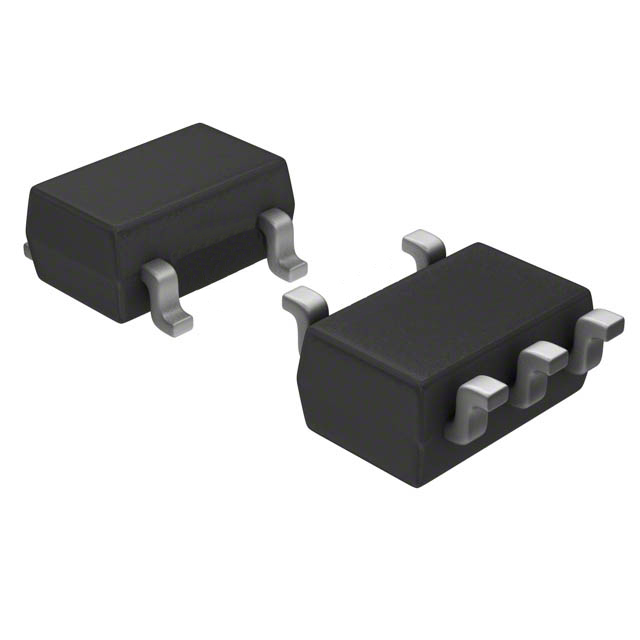
Key Specs
| Spec | Value | Condition | Source |
|---|---|---|---|
| Amplifier Type | Current Sense | Digi-Key | |
| Gain Bandwidth Product | 125 kHz | Digi-Key | |
| Mounting Type | Surface Mount | Digi-Key | |
| Number Of Circuits | 1 | Digi-Key | |
| Operating Temperature Range | -40°C ~ 85°C | Digi-Key | |
| Output Type | - | Digi-Key | |
| Package Case | SC-74A, SOT-753 | Digi-Key | |
| Quiescent Current (Typ) | 1.1µA | Digi-Key | |
| Slew Rate | - | Digi-Key | |
| Supplier Device Package | SOT-23-5 | Digi-Key | |
| Voltage Input Offset | 100 µV | Digi-Key |
When To Use
-
Battery current monitoring → 10A @ low frequency: The 125 kHz gain-bandwidth product matches well with slow-changing battery currents, allowing accurate measurement without noise amplification. The low 1.1µA quiescent current keeps overall system power low. Using a higher-bandwidth amplifier here risks amplifying switching noise and causing unstable output.
-
Low-side current sensing in industrial control → 5A @ ambient -40°C to 85°C: The single current-sense circuit with a 100 µV input offset voltage ensures precise sensing over the full industrial temperature range. Alternative amplifiers with higher offset voltage would produce large measurement errors, potentially causing incorrect control decisions and thermal runaway.
-
Compact portable device current sense → <1A @ 0.5W PCB dissipation: The SOT-23-5 package minimizes PCB area and is perfect where board space is limited. Its small footprint reduces layout complexity compared to larger packages, but requires careful thermal design; a similar amplifier in a bigger package would take more area and complicate rework on tight boards.
When Not To Use
-
High-frequency motor drive current sensing (>1 MHz): The 125 kHz gain-bandwidth product is insufficient for capturing fast switching transients. Use a higher-bandwidth current-sense amplifier to avoid aliasing and inaccurate current waveforms.
-
Measuring sub-100 µV shunt drop in precision instrumentation: The 100 µV input offset voltage exceeds the application’s error budget. Use a lower-offset current-sense amplifier to prevent offset-induced measurement drift.
-
High-side current sensing with galvanic isolation: This part is not isolated and cannot handle high common-mode voltages on the high side. Use an isolated current-sense amplifier to prevent latch-up or damage from voltage transients.
Application Notes
- The SOT-23-5 package requires minimal PCB area but limits thermal conduction; place the device close to a large copper pour connected to ground to improve heat dissipation.
- Pins 1 and the input pins pin are noise-sensitive; route these traces away from switching nodes like SW or high-current paths to reduce interference.
- Guard routing around the input pins is recommended to prevent leakage currents and maintain input bias integrity, especially in humid or contaminated environments.
- Avoid running noisy power traces or switching signals beneath the device on the PCB to reduce coupling into the sensitive input terminals.
- Since the device has a single current-sense channel, ensure system-level fault detection includes multiple points if redundancy is needed.
Related Calculators
- Current Sense / Shunt Resistor Calculator — Size your shunt resistor for this amplifier
Gotchas
-
[Offset drift vs. temperature ignored]: Engineers may assume the 100 µV input offset remains constant over temperature, but it can drift significantly across -40°C to 85°C. This causes apparent current offset that looks like sensor failure or load variation. Fix by characterizing offset drift in the target environment or applying calibration compensation.
-
[Inadequate thermal path in SOT-23-5]: The small package size leads to poor heat sinking; placing the device on a thin or isolated PCB region causes thermal buildup and potential measurement drift under load. Fix by adding thermal vias and copper pours connected to the device’s exposed pad or ground pin.
-
[No slew rate specified]: Assuming slew rate is fast enough for transient current measurement can cause unexpected output lag or distortion during fast load changes. Fix by verifying response with transient test signals and consider adding a faster amplifier if necessary.
-
[Input pin leakage from flux or contaminants]: Flux residue or PCB contamination near input pins can create leakage currents, skewing the low-level input signals, leading to erratic output or noise. Fix by thorough cleaning and optional conformal coating with low ionic content around the input area.