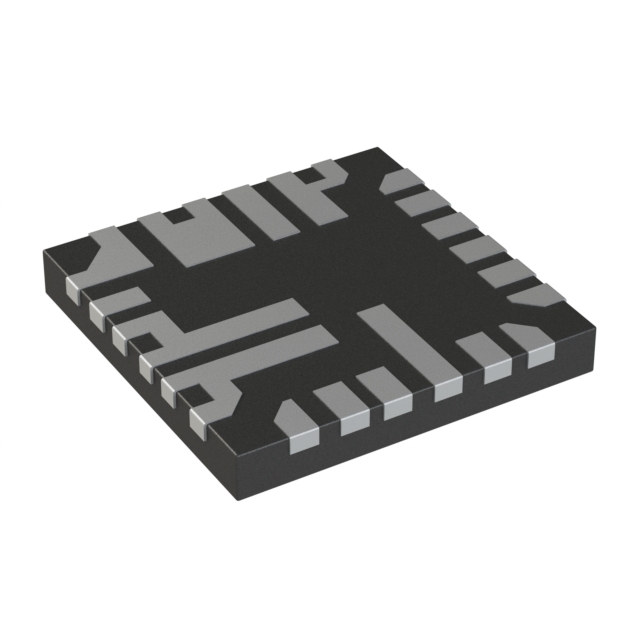
Key Specs
| Spec | Value | Condition | Source |
|---|---|---|---|
| Battery Chemistry | Lithium Iron Phosphate | Digi-Key | |
| Battery Pack Voltage | 3.6V | Digi-Key | |
| Charge Current (Max) | 3.15A | Digi-Key | |
| Current Charging | Constant - Programmable | Digi-Key | |
| Fault Protection | Over Current, Over Temperature, Over-Under Voltage, Short Circuit | Digi-Key | |
| Interface | USB | Digi-Key | |
| Mounting Type | Surface Mount | Digi-Key | |
| Number Of Cells | 1 | Digi-Key | |
| Operating Temperature Range | -40°C ~ 85°C | Digi-Key | |
| Package Case | 24-PowerUFQFN | Digi-Key | |
| Programmable Features | Current, Timer, Voltage | Digi-Key | |
| Supplier Device Package | 24-FC2QFN (3x3) | Digi-Key | |
| Voltage Supply (Max) | 13.7V | Digi-Key |
When To Use
-
Single-cell LiFePO4 battery charging @ 3.15A max: The MAX77757HEFG360+T’s 3.15A programmable constant charge current and 3.6V nominal battery voltage rating match a single-cell LiFePO4 pack perfectly. Using a generic Li-ion charger without LiFePO4-specific voltage and current profiles risks overvoltage and thermal runaway due to chemistry mismatch.
-
USB-powered portable device with 13.7V max input: The 13.7V absolute input voltage rating covers typical USB PD and QC adapters without derating, preventing latch-up or device damage during transient surges. A charger with a lower input voltage rating would fail to handle USB adapter voltage spikes, causing permanent damage or system brownout.
-
Compact surface-mount charger in 3x3mm 24-FC2QFN package: The small form factor suits space-constrained mobile or wearable designs requiring robust fault protections including OCP, OTP, and UV/OV. Using a larger or through-hole charger IC in these applications risks mechanical stress and poor thermal performance, leading to thermal shutdown or solder joint failures.
When Not To Use
-
Multi-cell battery packs (>1 cell): The MAX77757HEFG360+T is limited to a single cell at 3.6V nominal; using it on multi-cell packs violates voltage and cell count specs. Use a multi-phase buck controller designed for higher voltage and current balance across multiple cells.
-
Output currents exceeding 3.15A: Applications requiring charge or load currents above 3.15A surpass the MAX77757HEFG360+T’s max current rating. For such scenarios, a high-current synchronous buck with external FETs ensures safe operation and thermal management.
-
Battery-powered IoT nodes with ultra-low sleep current: The internal bias current of this charger is above what’s tolerable for μA-level sleep modes. Select a low-IQ PFM buck regulator instead to extend battery life during standby.
Application Notes
-
The SW (switching) node must have a low-inductance ground return path and be routed with minimal loop area to reduce EMI and voltage spikes that can trigger false fault detection.
-
Pins 4 and the I/O interface pins pin are noise-sensitive; route these traces away from the SW node and high di/dt loops to avoid signal integrity issues or erroneous USB interface resets.
-
Place the input and output ceramic capacitors as close as possible to VIN and BAT pins respectively, with short, wide traces to minimize ESR and ESL, which directly affects loop stability and transient response.
-
Implement guard traces connected to ground around the thermal pad and sensitive analog pins to shield from switching noise coupling and improve temperature measurement accuracy.
-
The fault protection circuitry monitors OCP, OTP, OV/UV, and short circuit conditions internally; ensure external layout does not induce false triggers by avoiding shared ground returns with high-current paths.
Gotchas
-
[Underestimating input voltage derating at elevated temperature]: The MAX77757HEFG360+T’s 13.7V max voltage rating is absolute max; at high ambient temperatures near 85°C, input voltage margin shrinks due to device and package derating not shown in the main spec table. Ignoring this causes latent latch-up or early failure during USB adapter voltage spikes. Measure input voltage under worst-case temperature and keep a 10% margin below 13.7V to avoid overstress.
-
[Using high ESR output capacitors]: Some tantalum or aluminum electrolytics with high ESR can destabilize the internal control loop, causing output voltage oscillations or erratic charge current regulation. This manifests as ripple or periodic dips on the BAT pin under load. Use low-ESR ceramic capacitors per datasheet recommendations and verify stability on the bench.
-
[Routing SW node traces under sensitive analog pins]: Placing the switching node trace under noise-sensitive pins (e.g., USB interface or fault detection pins) induces coupling noise, causing intermittent USB disconnects or false fault flags during load transients. Use layer stacking or guard traces to isolate SW from analog signal routing.
-
[Charger startup with no battery connected]: The device may latch in a fault or fail to enable charging properly if powered without a battery attached, as the internal current and voltage sense circuitry relies on battery presence for regulation feedback. Confirm battery connection and minimum load on BAT pin at power-up to ensure correct startup behavior.