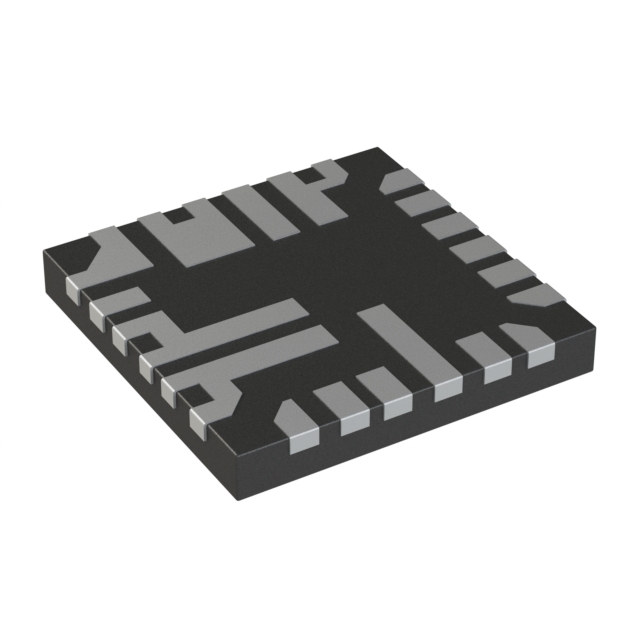
Key Specs
| Spec | Value | Condition | Source |
|---|---|---|---|
| Battery Chemistry | Lithium Ion | Digi-Key | |
| Battery Pack Voltage | 4.2V | Digi-Key | |
| Charge Current (Max) | 3.15A | Digi-Key | |
| Current Charging | Constant - Programmable | Digi-Key | |
| Fault Protection | Over Current, Over Temperature, Over Voltage, Reverse Battery, Short Circuit | Digi-Key | |
| Interface | USB | Digi-Key | |
| Mounting Type | Surface Mount | Digi-Key | |
| Number Of Cells | 1 | Digi-Key | |
| Operating Temperature Range | -40°C ~ 85°C | Digi-Key | |
| Package Case | 24-PowerUFQFN | Digi-Key | |
| Programmable Features | Current | Digi-Key | |
| Supplier Device Package | 24-FC2QFN (3x3) | Digi-Key | |
| Voltage Supply (Max) | 13.7V | Digi-Key |
When To Use
-
Single-cell Li-ion battery charging @ 3A: The MAX77751CEFG+ supports a 4.2V single-cell lithium-ion battery with a programmable charge current up to 3.15A, making it ideal for fast charging applications within this range. Using a general-purpose synchronous buck controller without integrated battery charging features risks battery overvoltage or incomplete charge termination, potentially causing thermal runaway.
-
USB-powered device with up to 13.7V input: The device’s 13.7V maximum supply rating fits well with USB power adapters and power banks that can reach up to 13.7V under load. Using an LDO regulator here would cause excessive power dissipation and thermal stress, leading to early thermal shutdown.
-
Compact surface-mount design in harsh environments: The 24-PowerUFQFN package and -40°C to +85°C rating make it suitable for compact, automotive-grade or industrial applications exposed to wide temperature ranges. Employing a low-IQ PFM buck designed for low power would fail due to insufficient current capacity and lack of thermal fault protection, leading to latch-up or permanent damage under high load.
When Not To Use
-
Output current demand > 3.15A: The maximum charge current rating of 3.15A limits this part’s use in higher current applications. Use a multi-phase buck controller to meet higher current requirements with balanced thermal and electrical stress.
-
Input voltage or supply rail > 13.7V: The 13.7V max supply rating disqualifies this part for higher voltage rails or automotive 24V battery systems. Use a high-current synchronous buck with external FETs designed for higher voltage and current handling.
-
Low noise, low dropout regulation with <1V differential: The switching nature and USB interface make this part unsuitable when low output noise and very small dropout voltage are critical. Use an LDO regulator for sub-1V input/output differentials and noise-sensitive analog supplies.
Application Notes
-
The switching node (SW) pin must be routed with low inductance and short traces to minimize switching noise and voltage spikes; use a solid copper pour with thermal vias connected to the exposed pad for heat dissipation.
-
Pins 5 and the I2C or USB interface lines pin are noise-sensitive; keep these signal traces away from the SW node and switching loops to prevent communication errors.
-
Guard routing around the battery sense and current sense pins is necessary to reduce interference from high di/dt switching currents; separate these traces from noisy power ground returns.
-
Use a low-ESR output capacitor as specified in the external BOM to maintain stable charge current regulation and avoid oscillations during fast transient loads.
-
Ensure proper USB input filtering per the datasheet recommendations to prevent voltage dips or false fault triggers during plug/unplug events.
Gotchas
-
[Charge current programming interaction]: Setting the charge current near the 3.15A maximum without verifying PCB thermal capability causes local hotspot formation and premature thermal shutdown. The part’s thermal derating curves are not in the main table but critical for sustained current. Fix: Use thermal simulation and verify that the PCB copper area and thermal vias support continuous operation at the programmed current.
-
[Incorrect SW node layout causing erratic switching]: Routing the SW node trace too long or with high parasitic inductance can cause ringing and false overvoltage fault trips, leading to intermittent shutdown or reduced charge current. Fix: Keep SW node trace <10mm, use a solid ground plane beneath, and avoid vias in the switching loop.
-
[Minimum load required for stable operation]: The MAX77751CEFG+ requires a minimum load current to maintain regulation during startup; no load or very light load may cause the charge timer to time out or the part to enter fault mode. Fix: Add a dummy load resistor or ensure the battery voltage is within the recommended range at startup.
-
[Output capacitor ESR dependency]: Using output capacitors with ESR outside recommended limits can cause charge current ripple and instability, which is not obvious from the main specs. This manifests as ripple voltage spikes and potential false fault detection. Fix: Follow BOM capacitor specifications exactly and verify ESR via impedance measurements.