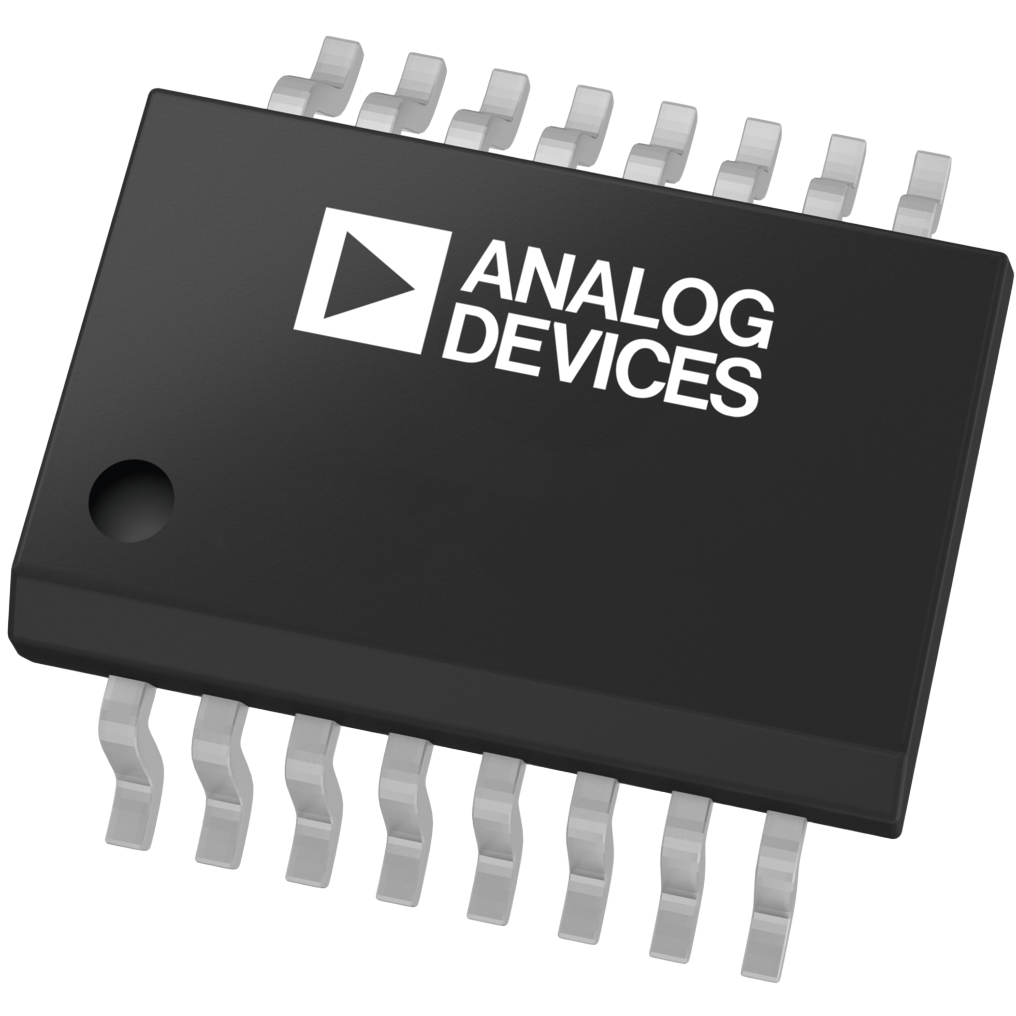
Key Specs
| Spec | Value | Condition | Source |
|---|---|---|---|
| Function | Step-Up | Digi-Key | |
| Input Voltage (Max) | 5.5V | Digi-Key | |
| Input Voltage (Min) | 2.7V | Digi-Key | |
| Mounting Type | Surface Mount | Digi-Key | |
| Number Of Outputs | 2 | Digi-Key | |
| Operating Temperature Range | -40°C ~ 85°C (TA) | Digi-Key | |
| Output Configuration | Positive and Negative (Dual Rail) | Digi-Key | |
| Output Current (Max) | 440mA (Switch) | Digi-Key | |
| Output Type | Adjustable | Digi-Key | |
| Output Voltage (Max) | 24V, -9V | Digi-Key | |
| Output Voltage (Min) | -1.27V, 2.7V | Digi-Key | |
| Package Case | 16-SSOP (0.154”, 3.90mm Width) | Digi-Key | |
| Supplier Device Package | 16-QSOP | Digi-Key | |
| Switching Frequency (Typ) | 220kHz, 400kHz | Digi-Key | |
| Synchronous Rectifier | No | Digi-Key | |
| Topology | Boost | Digi-Key |
When To Use
-
2.7V to 5.5V input → 24V @ 0.4A: The input voltage range of 2.7V to 5.5V and the typical output current capability of 440mA make this part ideal for stepping up low-voltage battery or USB supplies to a regulated 24V rail. Using a synchronous buck controller here would fail outright, as the input is below the output voltage, causing reverse current or latch-up.
-
Dual output rails, +24V and -9V, at low current: MAX685EEE+ supports dual rail outputs with positive voltages up to 24V and negative rails down to -9V typical, making it well-suited for analog front-ends requiring both rails. A standard buck converter cannot generate negative rails, so a single-output topology would either require a separate inverting stage or fail to provide proper bipolar supply.
-
Fixed-frequency boost at 400kHz for compact inductors: The fixed switching frequency options at 220kHz and 400kHz enable use of small 22µH inductors, minimizing solution size. A high-frequency buck controller designed for over 500kHz would be incompatible, as its switching frequency minimum is above 480kHz max, risking unstable operation or EMI issues.
When Not To Use
-
Output current demand > 440mA switch rating: The maximum switch current is 440mA typical; exceeding this risks thermal runaway and switch failure. Use a high-current synchronous buck with external FETs to handle higher currents with controlled losses and improved thermal management.
-
Quiescent current critical for battery-powered sensor: The typical idle quiescent current is 500µA, too high for ultra-low power applications where standby drain must be in single-digit microamps. Use a low-IQ PFM buck controller to maximize battery life in μA sleep-mode loads.
-
Input voltage close to output voltage (<1V differential): The minimum input voltage is 2.7V and the part is a boost topology; it cannot regulate efficiently or at all when input and output are nearly equal. Use an LDO regulator for low dropout and low noise in small differential voltage scenarios.
Application Notes
-
The switching node (SW) pin requires careful layout with short, low-inductance traces to the inductor and catch diode to minimize ringing and EMI. Place the catch diode as close as possible to SW and PGND pins.
-
the FBP pin and the FBN pin, the positive and negative feedback inputs, are noise sensitive. Keep feedback resistors and related traces short and shielded from SW switching noise to avoid erratic regulation and false POK triggering.
-
The POK (Power-OK) open-drain output requires an external 100kΩ pull-up resistor to the desired logic voltage. Ensure this resistor is placed close to the IC to maintain signal integrity and avoid floating or slow rising edges.
-
The device has a shutdown input with a typical 50ns high-impedance window; avoid noisy or slow logic transitions on this pin to prevent unintended switching or partial shutdown states during start-up.
-
Use a low-ESR capacitor of at least 1.0µF on the input supply pin to ensure stable operation and avoid oscillations or excessive ripple that can cause intermittent regulation faults.
Design Equations
Output voltage: Vout = -9.0V × (1 + R2/R1)
R1 is typically 1.21kΩ–10kΩ (1% tolerance). Solve for R2: R2 = R1 × (Vout/-9.0 - 1). Example: for 5V with R1=1.21kΩ → R2 ≈ 3.74kΩ (use 3.74kΩ 1%).
Gotchas
-
[Incorrect feedback resistor tolerance]: Designers often assume ±5% feedback resistors yield stable output voltage, but the FBP and FBN thresholds have tight windows (±36mV max for FBN threshold, ±160mV for FBP). Excess resistor tolerance or temperature drift can cause false POK trips or output voltage misregulation. Fix by using 1% or better resistors and verifying POK thresholds on the bench under worst-case temperature.
-
[Layout-induced switching noise on feedback pins]: Long or poorly shielded traces on FBP/FBN pick up switching node noise, causing output voltage ripple or intermittent POK toggling. Symptoms include unstable output voltage or POK line flickering. Fix by routing feedback traces away from SW, using ground guard traces, and placing feedback components close to the IC.
-
[Startup load below minimum load current]: The datasheet specifies a minimum load current of 11mA; operating below this can cause the device to enter an undefined state or output voltage overshoot on startup. Symptoms include output voltage spikes or failure to regulate. Fix by adding a minimum load resistor or ensuring load conditions exceed 11mA at startup.
-
[Ignoring input voltage absolute max on transient spikes]: The absolute max on VDD and VP is +6V, but input sources with transient spikes (e.g., automotive or USB power with ESD) can exceed this briefly, causing latch-up or permanent damage. Symptoms include device failure after initial power-up or intermittent shutdown. Fix by adding transient voltage suppression or input clamping circuits rated below 6V.